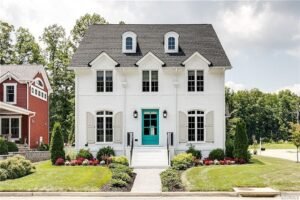


A $300,000 DSCR loan at 7.50% has principal and interest of about $2,098 per month. Add $300 for taxes and $125 for insurance, and the qualifying payment is $2,523. With verified market rent of $3,000, the debt service coverage ratio is 1.19 ($3,000 ÷ $2,523), leaving $477 monthly before repairs, vacancy, management, and capital expenses. Over five years, that is $28,620 of gross payment-over-rent cash flow if rent and expenses stay flat. What affects DSCR pricing is whether an investor can make that 1.19 ratio stronger, reduce leverage, or present a cleaner file before the deal reaches underwriting.
DSCR pricing is not built around your W-2, tax returns, or debt-to-income ratio. It is built around property cash flow, leverage, credit profile, liquidity, and execution risk. A broker who closes DSCR deals daily can shop those variables across multiple wholesale investors instead of forcing your deal into one bank’s narrow pricing box.
Duane Buziak, NMLS #1110647
Table of Contents
- Why DSCR ratio moves your rate
- What affects DSCR pricing beyond the ratio
- Leverage, property type, and market rent
- Why broker access changes execution
- FAQ
Why DSCR Ratio Moves Your Rate
The first pricing breakpoint is the DSCR itself. A 1.00 DSCR means rent covers the monthly housing payment exactly. A 1.20 DSCR means rent exceeds that payment by 20%. Many DSCR programs price most aggressively around 1.20 to 1.25 or higher, although exact cutoffs vary by wholesale investor, property type, and leverage.
A file at 0.85 DSCR can still be financeable, especially with lower LTV and strong credit, but it is a tougher risk profile. The investor may require a higher rate, more points, lower maximum leverage, or additional reserves. At 1.00 to 1.19, the property is covering debt but has less margin if taxes rise, insurance resets, or the unit sits vacant. Above 1.25, competition among DSCR investors is generally stronger because the rental income provides more room for error.
The rent figure must hold up. Underwriters usually rely on an appraisal rent schedule, market-rent analysis, or an executed lease, depending on the program. If your lease says $3,000 but three nearby closed rental comps support $2,650 to $2,750, the underwriter may size the loan using the lower supported number. That can turn a 1.19 ratio into 1.09 quickly.
For a market reference, the U.S. Census Bureau publishes rental-vacancy data that investors can use as a broad supply-and-demand checkpoint: https://www.census.gov/housing/hvs/. It does not replace neighborhood-level rent comps, but it reinforces why a broker will scrutinize rental evidence in areas with more available inventory.
What Affects DSCR Pricing Beyond the Ratio
LTV is the biggest lever you control
Loan-to-value often changes pricing more than investors expect. A 75% LTV purchase has materially more cushion than an 80% or 85% LTV purchase. At 75% LTV on a $400,000 rental, the loan is $300,000 and the investor brings $100,000 before closing costs. At 80% LTV, the loan rises to $320,000, increasing the payment and reducing the DSCR at the same rent.
As a conventional benchmark, Fannie Mae’s LTV matrix permits up to 85% LTV for certain eligible one-unit investment-property purchases. DSCR loans are business-purpose products with separate underwriting, but the 85% figure shows why higher leverage is never free. More leverage typically means a higher rate, points, reserve requirements, or a tighter minimum DSCR.
Credit score matters even though personal income usually does not drive qualification. A borrower with a 760 score, no recent housing late payments, and established real estate experience generally receives better execution than a 680-score borrower with recent derogatory credit. The spread can be meaningful over a five-year hold. A rate difference of 0.50% on a $300,000 loan changes principal-and-interest payments by roughly $100 per month.
Reserves and liquidity reduce perceived risk
DSCR investors want to know whether you can carry the property through a repair, turnover, or delayed lease-up. Six months of PITIA reserves is common in stronger files, while requirements may rise to nine or 12 months for lower DSCR, short-term rental exposure, cash-out refinances, or larger loan balances.
Reserves are not just cash in a checking account. Eligible accounts can include seasoned personal or business bank funds, brokerage assets, and sometimes retirement assets subject to program rules. A clean reserve story matters most when the deal sits near a pricing cutoff. If your property is at 1.02 DSCR, showing $30,000 to $40,000 in documented liquidity can keep the file in a workable lane.
Loan purpose changes the quote
Purchase loans usually price better than cash-out refinances because the collateral and transaction are easier to evaluate. Cash-out DSCR refinances can still be powerful for BRRRR operators who stabilized a property, raised rent, and want capital for the next acquisition. Expect lenders to examine seasoning, payoff statements, renovation documentation, and the post-refinance DSCR.
Fix & Flip, ground-up construction, and transitional multifamily financing are extensions of the same investor-capital relationship, but they price differently because the property is not yet producing stabilized rent. Once the project is leased and the income is documented, a DSCR refinance can replace short-term capital with longer-term rental financing.
Leverage, Property Type, and Market Rent
A clean single-family long-term rental is usually the easiest DSCR property type to price. Condos, 2-to-4-unit properties, rural homes, mixed-use buildings, and short-term rentals can be financeable, but each may trigger a rate adjustment, lower LTV cap, or stronger reserve requirement.
Consider a three-unit property in Richmond, Virginia, purchased for $600,000 with a $450,000 loan at 75% LTV. If the three units produce $5,700 in documented monthly rent and PITIA is $4,250, the DSCR is 1.34. That is a substantially stronger file than a $480,000 loan at 80% LTV with the same rents and a $4,520 payment, which falls to 1.26. Both may work, but the first structure gives the broker more pricing options and protects cash flow.
Current investor lending conditions reward well-documented rentals and decisive borrowers. Wholesale DSCR appetite remains active, but quoted rates and points can move daily with bond markets, property concentration, and each investor’s capacity. Competition is strongest for stabilized properties with 1.20-plus DSCR, 75% LTV or lower, 720-plus credit, and six months of reserves. A rushed contract, weak rent support, or incomplete entity documents can erase that advantage.
Why Broker Access Changes Execution
A DSCR broker is not limited to a single credit box. One wholesale investor may like 80% LTV on a long-term rental, while another may price a 1.00 DSCR cash-out refinance more competitively. Another may be better for a five-unit-plus multifamily asset, a new LLC, or a short-term-rental calculation.
| Pricing dimension | Single-source DSCR option | Brokered wholesale DSCR access |
|---|---|---|
| DSCR lender access | One guideline set and one rate sheet | Multiple investor guidelines compared for fit |
| LTV tiers | May cap a scenario at 75% LTV | Can identify 75%, 80%, or eligible higher-leverage options |
| Rate and leverage tradeoff | Limited ability to trade points, rate, and LTV | Can compare lower-rate/lower-LTV against higher-leverage structures |
| Close speed | Dependent on one underwriting queue | Program selection can match the contract timeline |
| Entity flexibility | May have narrow LLC documentation rules | Can match vesting and guarantor rules to the deal |
Closing costs commonly run about 2% to 5% of the loan amount before any discount points, depending on title work, appraisal complexity, state fees, and chosen structure. Investors Paradise can also coordinate Duane’s preferred Title Company, which saves an additional $2,000 on average where available. Do not let a low note rate distract from total cash-to-close, prepayment terms, or the rate needed to hit your target DSCR.
A soft credit pull mortgage review can help identify the best lane before a hard inquiry. That means no credit hit mortgage application just to discuss a deal, and it is useful when you are comparing a purchase, cash-out refinance, or BRRRR exit. A no hard inquiry mortgage pre approval is not a final loan approval, but it can prevent wasted time on a structure that misses DSCR after taxes, insurance, and realistic rent are applied.
FAQ
What is a good DSCR for the best pricing?
A DSCR of 1.20 to 1.25 or higher is commonly a stronger pricing tier. Lower ratios can qualify, but usually require a tradeoff in rate, LTV, points, or reserves.
Can I get a DSCR loan with a 1.00 ratio?
Often, yes. A 1.00 ratio means the rent covers PITIA, but available leverage and pricing depend heavily on credit, property type, and reserve strength.
Does personal income affect DSCR pricing?
Personal income is generally not used to qualify the same way it is for conventional financing. Credit, liquidity, ownership structure, and property cash flow still affect the quote.
Does a lower LTV improve DSCR loan pricing?
Usually. Moving from 80% to 75% LTV lowers the loan payment, strengthens DSCR, and reduces collateral risk for the investor.
Are short-term rentals eligible for DSCR loans?
Many programs allow them, but projected income methods, reserve requirements, and pricing vary. A long-term lease is usually simpler to underwrite.
Can an LLC buy a property with DSCR financing?
Yes. LLC-friendly vesting is a common DSCR feature, though personal guarantees and entity documents are typically required.
Is Investors Paradise legit for DSCR financing?
Investors Paradise is a DSCR and investor-purpose mortgage brokerage led by Duane Buziak. The process focuses on matching investor scenarios to wholesale options, not forcing every deal into one product.
Can I get mortgage pre approval without hard pull?
A soft pull mortgage broker can often provide an initial scenario review without a hard inquiry. A hard pull may still be required later for final underwriting and loan approval.
Legal disclaimer: This content is educational and not a commitment to lend or an offer of credit. DSCR loan availability, rates, points, LTV, reserves, property eligibility, and closing timelines change by investor, state, credit profile, appraisal, and underwriting. Business-purpose DSCR financing is available nationwide through wholesale investor relationships; consumer mortgage origination is limited to jurisdictions where Duane Buziak is licensed.
The strongest DSCR quote starts before you write the offer: validate rents with real comps, choose leverage that leaves cash-flow margin, document reserves, and run the structure through a soft pull before the contract clock starts.
Duane Buziak, Mortgage Maestro | NMLS: 1110647 | Licensed in VA · FL · TN · GA · DC | UWM PRO ELITE 2025 | UWM Top 20 Purchase LO Virginia 2025 | UWM Speed to Close Industry Leading 2025 | Scotsman Guide Top Originator 2025 & 2026 | VA Broker of the Year 2024-2025 | Top 1% Nationwide | Coast2Coast Mortgage | DuaneBuziakMortgageMaestro.com | duane@coast2coastml.com | (804) 212-8663