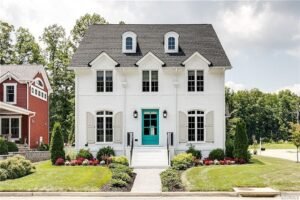


A Tampa rental priced at $350,000 with a $280,000 DSCR loan can be screened without immediately putting a hard inquiry on your credit. Assume market rent of $2,800 per month, principal and interest of $2,005 at 7.75%, and $420 for taxes, insurance, and HOA. The $2,425 total payment produces a 1.15 debt service coverage ratio, leaving $375 monthly before repairs and vacancy. Over five years, that is $22,500 in scheduled pre-maintenance cash flow. A soft pull can help a broker determine whether your credit profile supports that leverage before you commit to a contract or authorize a full application.
Duane Buziak, NMLS #1110647
Table of Contents
- Can investors use soft pulls?
- What a soft pull actually tells a DSCR broker
- Soft pull versus hard-pull approval
- How leverage, rent, and reserves change the answer
- A practical process before you write an offer
- Frequently asked questions
Can Investors Use Soft Pulls?
Yes. Investors can use soft pulls for an early DSCR loan prequalification, scenario review, and rate-and-leverage conversation. A soft credit pull mortgage review generally does not create the hard inquiry that appears when you proceed to a full mortgage application. That makes it useful when you are comparing a Florida short-term rental purchase, a Virginia BRRRR refinance, or several offers at once.
The limit is straightforward: a soft pull is not a final approval. It cannot replace the hard credit report, property valuation, entity review, insurance quote, lease or market-rent analysis, reserve verification, and final underwriting conditions required before closing. Think of it as a smart first filter, not permission to remove every financing contingency.
For investor-purpose financing, the major advantage is speed. DSCR underwriting focuses on property cash flow rather than W-2 income, tax returns, debt-to-income calculations, or an employer verification. That can make a no hard inquiry mortgage pre approval conversation far more useful to an active investor than a generic consumer preapproval.
The Consumer Financial Protection Bureau explains that soft inquiries do not affect credit scores. A hard inquiry can occur when you formally apply for credit, so ask the broker precisely when the file moves from soft-pull screening to full underwriting.
What a Soft Pull Actually Tells a DSCR Broker
A soft pull gives the broker a working view of credit depth, revolving utilization, payment history, collections, bankruptcies, housing events, and an estimated score range. That is enough to identify whether a deal is likely to fit a 75% LTV, 80% LTV, or potentially higher-leverage DSCR lane before you spend money on an appraisal.
It also helps locate avoidable problems early. A 720-plus profile with low revolving utilization may support stronger pricing than a 660 profile with high card balances. On a $280,000 loan, even a 0.50% rate difference can change principal and interest by roughly $90 per month. That can push a thin 1.05 DSCR deal below the program floor.
Rental income still drives the core decision. In the Tampa example, $2,800 divided by the $2,425 housing payment equals 1.15. Many DSCR programs look for a ratio around 1.00 to 1.25 depending on credit, property type, loan size, occupancy strategy, and leverage. A 1.00 ratio means the documented rent covers the proposed housing payment exactly. Stronger ratios usually widen the available pricing and leverage choices.
The rent must be defensible. A broker may use an appraiser’s market-rent schedule, an executed lease, or both. Zillow reported Tampa’s observed rent index at more than $2,000 in recent market data, but neighborhood, bedroom count, condition, and rental strategy control the actual conclusion. Review local benchmarks at Zillow’s Tampa rental market page. A renovated four-bedroom near demand drivers may support a different rent than a dated two-bedroom several miles away.
Soft Pull Versus Hard-Pull Approval
A mortgage pre approval without hard pull is valuable because it gives you a credible buying range without forcing a full-credit event before you have a property. But it should never be described as a commitment to lend. A real DSCR approval follows the property, not just the borrower.
| Decision point | Soft-pull prequalification | Full DSCR underwriting |
|---|---|---|
| DSCR lender access | Broker compares multiple wholesale investor programs | One selected program issues conditions and final terms |
| LTV tiers | Preliminary 70%, 75%, or 80% scenarios | Final LTV depends on appraisal, rent, credit, and property |
| Rate and leverage tradeoff | Estimated pricing based on credit range and deal facts | Locked pricing after hard pull and complete review |
| Close speed | Often same-day scenario feedback | Typically 7-10 business days when appraisal and conditions cooperate |
| Credit impact | No hard inquiry from the soft-pull review | Hard inquiry generally required before final approval |
For cost planning, expect DSCR closing costs commonly around 2% to 5% of the loan amount, depending on points, appraisal, title, escrow, state charges, and lender fees. Duane’s preferred Title Company saves an additional $2,000 on average. That savings does not replace required prepaid items, reserves, or underwriting fees.
How Leverage, Rent, and Reserves Change the Answer
A soft pull mortgage broker should model more than the maximum loan amount. The right question is whether the property remains investable after debt service, reserves, repairs, vacancy, and your intended exit.
At 80% LTV on a $350,000 purchase, the $280,000 loan requires a $70,000 down payment before costs. Reducing leverage to 75% drops the loan to $262,500 and raises the down payment to $87,500, but it also lowers the payment. If that improves the DSCR from 1.15 to 1.22, the stronger ratio may justify the additional cash for an investor focused on durable monthly cash flow.
Reserve requirements often run from three to 12 months of PITIA, with higher requirements possible for lower credit, larger balances, multiple financed properties, or short-term-rental exposure. On the Tampa example, six months of $2,425 PITIA equals $14,550 in reserves. Those funds are not necessarily spent at closing, but they must generally be verified.
Current investor lending conditions reward clean files and realistic rent. DSCR investor appetite remains active, especially for stabilized rentals, cash-out refinances with sensible leverage, and experienced operators. Yet rates and pricing adjust quickly with bond markets, property type, DSCR level, and credit. Competition for rentable inventory means a five-minute soft review can be the difference between writing a disciplined offer and chasing a deal that never pencils.
For comparison, Fannie Mae’s published eligibility matrix shows how conventional investment-property leverage is limited by occupancy and transaction type. DSCR loans are business-purpose alternatives with their own guidelines, but the comparison illustrates why investors should evaluate leverage alongside rental coverage instead of assuming every property qualifies the same way.
A Practical Process Before You Write an Offer
Start with the address, purchase price, expected rent, property taxes, insurance estimate, HOA dues, and your target leverage. Include the ownership structure if you plan to close in an LLC. A broker can then run the soft credit review, calculate estimated DSCR, and compare available wholesale investor programs rather than forcing your deal into one institution’s box.
Next, pressure-test the rent. Use nearby comparable rentals with similar beds, baths, square footage, renovation level, parking, and lease strategy. If your model requires $3,000 rent but current comparable leases are $2,650 to $2,750, the deal is not fixed by a favorable soft pull.
Once you have a ratified contract and choose the path forward, authorize the full application. That is when the hard report, appraisal, title, entity documents, reserves, and final insurance figures enter the file. The same relationship can extend into Fix & Flip financing, a BRRRR refinance after stabilization, ground-up construction, multifamily, or a cash-out refinance, but each transaction must stand on its own collateral and exit plan.
Frequently Asked Questions
Can investors use soft pulls without hurting credit?
Yes. A soft inquiry generally does not affect your score, while a full mortgage application usually requires a hard inquiry.
Is a soft pull a guaranteed DSCR approval?
No. It is a preliminary credit screen. Final approval requires property, rent, appraisal, reserve, title, and underwriting review.
Can I get a no credit hit mortgage application for a DSCR loan?
You can start with a no-credit-hit prequalification review, but final DSCR financing normally requires a hard credit pull.
Does DSCR use my personal income?
DSCR programs primarily qualify the property’s rental income against its proposed housing payment. Credit, liquidity, and experience can still affect terms.
What DSCR ratio do I need?
Many programs target roughly 1.00 to 1.25 or better. The acceptable minimum changes with LTV, credit, property type, and investor guidelines.
Can I buy in an LLC?
Often, yes. LLC-friendly structuring is a common feature of business-purpose investment property financing, subject to program and title requirements.
How much cash do I need beyond the down payment?
Plan for closing costs, prepaid items, and reserves. A common reserve target is three to 12 months of PITIA.
How quickly can a DSCR loan close?
A clean, appraisal-ready file can often close in 7-10 business days, although appraisal timing, title issues, and conditions can extend that timeline.
Legal disclaimer: This article is for educational purposes only and is not a commitment to lend, a loan approval, legal advice, tax advice, or investment advice. Loan terms, rates, points, LTV, DSCR requirements, reserves, and closing timelines are subject to change and final underwriting approval. Business-purpose DSCR financing is secured by investment property and is not intended for owner-occupied consumer-purpose transactions.
A soft pull is not about avoiding underwriting. It is about getting the right numbers before you burn time, credit capacity, earnest money, and opportunity on a property that does not support your next move.
Duane Buziak, Mortgage Maestro | NMLS: 1110647 | Licensed in VA · FL · TN · GA · DC | UWM PRO ELITE 2025 | UWM Top 20 Purchase LO Virginia 2025 | UWM Speed to Close Industry Leading 2025 | Scotsman Guide Top Originator 2025 & 2026 | VA Broker of the Year 2024-2025 | Top 1% Nationwide | Coast2Coast Mortgage | DuaneBuziakMortgageMaestro.com | duane@coast2coastml.com | (804) 212-8663