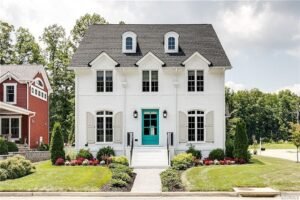


A Richmond duplex priced at $420,000 with $5,250 in verified monthly rent can support a $315,000 DSCR loan at 75% LTV. At a 7.75% rate with a 30-year amortization, estimated principal and interest are $2,256 per month; add $525 for taxes and $175 for insurance, and the total PITIA is $2,956. The debt service coverage ratio is $5,250 ÷ $2,956 = 1.78. That leaves $2,294 in monthly property-level cash flow before maintenance, management, and vacancy. Over five years, that is $137,640 of gross operating spread before rent increases or appreciation. A secure soft pull prequalification lets an investor size this deal before a hard inquiry lands on their credit report.
Duane Buziak, NMLS #1110647
Table of Contents
- Why a soft pull matters before you write an offer
- What secure prequalification checks
- DSCR math, leverage, and rate tradeoffs
- How a broker shops the right investor execution
- When a hard pull becomes necessary
- FAQ
Why secure soft pull prequalification matters before you write an offer
Investors do not need another vague approval letter. They need a credible buying range, a leverage target, and a clear answer on whether the property’s rent will carry the debt. A soft credit pull mortgage review provides that starting point without the score impact associated with a hard inquiry.
A soft inquiry is visible to the consumer but generally does not affect credit scores. The Consumer Financial Protection Bureau explains the difference between soft and hard inquiries. That matters when you are evaluating two duplexes, a short-term rental, and a BRRRR refinance in the same quarter. Preserving flexibility is not a gimmick. It keeps your credit profile cleaner while you determine which deal deserves a full application.
A no hard inquiry mortgage pre approval is still preliminary. It is not a final approval, a rate lock, or permission to waive every financing contingency. It is a disciplined way to assess FICO, liquidity, recent mortgage history, entity structure, and likely program eligibility before committing to a property.
What a secure soft pull review actually checks
For a DSCR loan, the property carries much of the qualification burden. The review still needs a real borrower profile. Wholesale DSCR investors commonly examine middle credit score, housing history, reserves, ownership vesting, purchase price, expected market rent, and loan purpose. Personal tax returns and W-2s may not be required for a business-purpose rental loan, but credit and liquidity still matter.
A soft pull mortgage broker can usually identify whether the file is trending toward a 1.00 DSCR, 1.15 DSCR, or 1.25 DSCR execution. That distinction affects both leverage and price. A property that barely breaks even may qualify, but it will usually price differently than a stabilized rental with substantial surplus cash flow.
For example, a typical tiering conversation can look like this: 680+ FICO with a 1.20 DSCR may support 75% to 80% LTV on a standard long-term rental; 720+ FICO and 1.25+ DSCR can open stronger leverage options; a 1.00 to 1.14 DSCR file may require lower LTV, additional reserves, or a rate adjustment. Some programs allow no-ratio structures, but the tradeoff is commonly lower leverage, higher pricing, or both.
Reserve requirements also deserve attention before an offer. Many DSCR executions ask for three to six months of PITIA in verified liquid reserves. On the Richmond duplex example, six months of $2,956 PITIA equals $17,736. An investor with $8,000 available should know that gap before paying for an appraisal, inspection, and earnest money.
DSCR math decides the loan size
The debt service coverage ratio loan formula is direct:
Monthly qualifying rent ÷ monthly PITIA = DSCR.
In the worked example, $5,250 in rent divided by $2,956 in PITIA produces a 1.78 ratio. That is materially stronger than a 1.00 threshold, where rent only equals the monthly debt obligation. Most DSCR programs use a market-rent analysis, lease, appraisal rent schedule, or a combination depending on the property type and program.
Rental evidence must be defensible. For a Richmond duplex, an investor should compare each unit against same-bed, same-bath rentals in the immediate submarket rather than use a citywide number. Zillow’s rental market data is a useful directional reference, but the appraiser’s rent schedule and the investor’s underwriting rules determine qualifying rent.
Current investor lending conditions reward clean, cash-flowing files. Rates and pricing change daily, but wholesale DSCR appetite remains strongest for stabilized long-term rentals with clear market rent, 70% to 80% leverage, and solid reserves. Competition for well-located properties remains real in Virginia, Florida, Tennessee, Georgia, and across national investor markets, so speed and certainty often matter as much as squeezing out the last eighth of a point.
| Decision point | Soft-pull prequalification | Single-source retail option | Why it matters to an investor |
|---|---|---|---|
| DSCR investor access | Broker compares multiple wholesale DSCR investors | One institution’s product menu | Different investors treat ratio, STR income, and LLC vesting differently |
| LTV tiers | Tests likely 70%, 75%, and 80% leverage paths | May offer fewer leverage choices | Higher leverage can preserve capital for the next acquisition |
| Rate and leverage tradeoff | Shows whether a lower rate requires more down payment | Terms are limited to one credit box | A 5% down-payment difference on $420,000 equals $21,000 |
| Close speed | File can be positioned before contract submission | Program selection may start after application | Well-documented DSCR files can target 7-10 day closings |
| Closing-cost planning | Typical costs often run about 2%-4% of loan amount, excluding prepaid items | Costs vary by program and provider | Duane’s preferred Title Company saves an additional $2,000 on average |
Why broker access changes the conversation
A broker does not have to force every property into one DSCR box. One wholesale investor may be more competitive at 80% LTV. Another may prefer a 1.00 DSCR file with lower leverage. Another may have a better solution for a seasoned operator buying in an LLC, refinancing a stabilized BRRRR, or pulling cash out to fund the next acquisition.
That flexibility matters when a deal changes during due diligence. Maybe the appraisal market rent comes in at $4,850 rather than $5,250. At the same $2,956 PITIA, DSCR falls to 1.64, still strong. But if rent drops to $3,100, the ratio is only 1.05. That could shift the file from a high-leverage execution to a lower-LTV option, require a rate adjustment, or make another property the better use of capital.
The same investor relationship can extend beyond a stabilized rental purchase. Fix and Flip financing can fund acquisition and renovation, then transition into a DSCR refinance once the property is leased. BRRRR operators use that sequence to recycle capital. Ground-up construction and small multifamily projects require different underwriting, but the same discipline applies: verify leverage, exit strategy, liquidity, and timeline before tying up the asset.
When a hard pull becomes necessary
A mortgage pre approval without hard pull is the early-stage filter. A hard pull generally becomes appropriate after you identify the property, choose an execution, and want a full approval path. At that point, the broker needs a complete application, entity documents if applicable, asset statements, purchase contract, insurance estimate, and appraisal order.
Do not confuse protecting your credit with avoiding documentation. A secure process protects sensitive data, uses a legitimate permissible-purpose credit review, and gives the investor a practical answer quickly. It should also tell you what could break the deal: insufficient reserves, undisclosed mortgage lates, a lower-than-expected appraisal rent, title issues, or a property condition problem.
FAQ: Secure Soft Pull Prequalification
Does a soft pull affect my credit score?
Usually no. A soft inquiry generally does not affect your credit score, although you can see it on your own credit report.
Is a soft pull the same as final loan approval?
No. It is a preliminary qualification review. Final approval requires a full hard-pull application, property underwriting, appraisal, title review, and investor conditions.
Can I qualify for a DSCR loan without W-2s or tax returns?
Many business-purpose DSCR programs qualify from property cash flow rather than personal income. Credit, reserves, and property underwriting still apply.
What DSCR ratio do I need?
Many programs target 1.00 or higher, while 1.15 to 1.25+ can improve leverage and pricing. Requirements vary by property, FICO, LTV, and investor.
Can I buy in an LLC?
Yes, many DSCR programs permit LLC vesting. The guarantor and entity documents must meet the selected wholesale investor’s requirements.
How much down payment should I expect?
A common range is 20% to 30%, though leverage can vary based on DSCR, credit score, property type, and program guidelines.
Can a soft pull help with a cash-out refinance?
Yes. It can estimate likely leverage, reserve needs, and whether projected or current rent supports the refinance payment before a full application.
How fast can a DSCR loan close?
A clean file can often target 7-10 days, but appraisal timing, title, insurance, and investor conditions can extend the timeline.
Move before the next deal forces your hand
The best time for a no credit hit mortgage application review is before your agent calls with a property that needs an offer tonight. Know your DSCR capacity, reserve target, and leverage ceiling now. Then when the numbers work, you are making an investment decision, not scrambling for a financing answer.
This content is for educational purposes only and is not a commitment to lend, an offer of credit, legal advice, tax advice, or investment advice. Loan terms, rates, DSCR requirements, LTV, reserves, eligibility, and closing timelines are subject to change and final underwriting approval. Business-purpose financing is intended for investment properties and is not for owner-occupied consumer use.
Duane Buziak, Mortgage Maestro | NMLS: 1110647 | Licensed in VA · FL · TN · GA · DC | UWM PRO ELITE 2025 | UWM Top 20 Purchase LO Virginia 2025 | UWM Speed to Close Industry Leading 2025 | Scotsman Guide Top Originator 2025 & 2026 | VA Broker of the Year 2024-2025 | Top 1% Nationwide | Coast2Coast Mortgage | DuaneBuziakMortgageMaestro.com | duane@coast2coastml.com | (804) 212-8663