
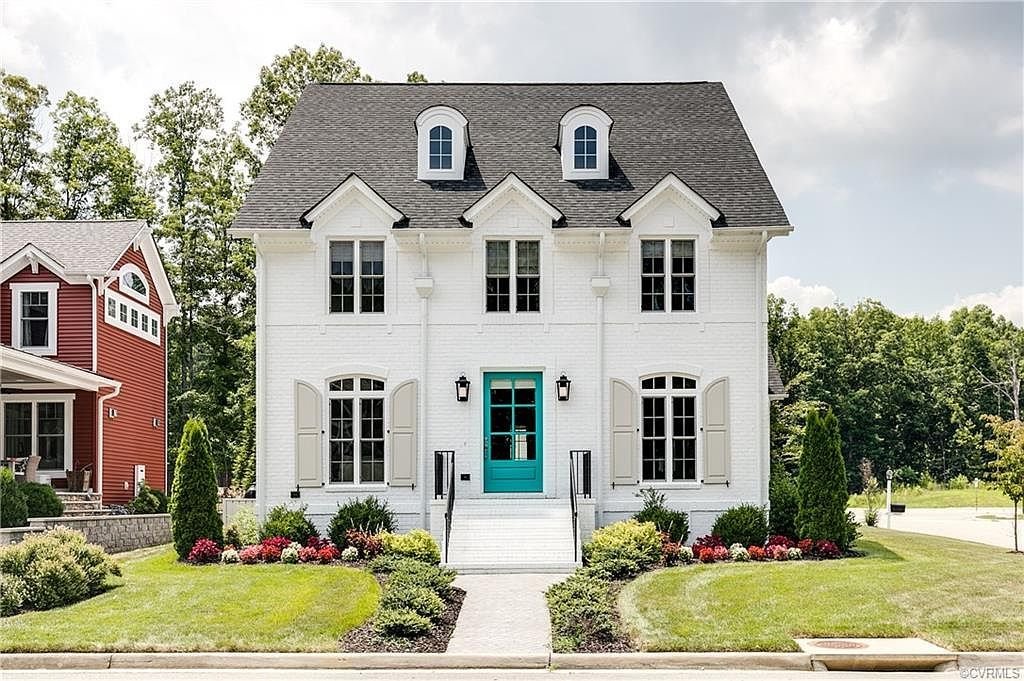

A Richmond, Virginia investor buys a dated three-bedroom rental for $165,000, puts $35,000 into renovations, and has $200,000 total basis. After stabilization, the appraisal lands at $285,000 and market rent is $2,450 per month. A 75% DSCR cash-out refinance produces a $213,750 loan. At a 7.75% fixed rate, the estimated principal-and-interest payment is about $1,530 monthly. Add $310 for taxes, insurance, and association costs, and total monthly debt service is $1,840. The DSCR is $2,450 divided by $1,840, or 1.33. Monthly cash flow is roughly $610 before repairs, vacancy, and management. Five years of holding that property at $610 monthly creates $36,600 of pre-tax operating cash flow, before principal paydown and any future appreciation.
That is why experienced operators refinance BRRRR properties with a DSCR loan instead of waiting for a conventional underwriting file to catch up with their portfolio. The refinance is not merely an exit from expensive short-term capital. It is the moment when forced appreciation becomes reusable acquisition capital.
By Duane Buziak, NMLS #1110647
Table of Contents
- What makes a BRRRR refinance work
- How DSCR underwriting changes the refinance
- LTV, rates, and cash-out tradeoffs
- Timing your stabilization and appraisal
- DSCR refinance comparison
- Costs, reserves, and closing strategy
- FAQ
What makes a BRRRR refinance work
BRRRR means Buy, Rehab, Rent, Refinance, Repeat. The refinance succeeds when the stabilized property value and documented rent support enough proceeds to replace acquisition and rehab capital without crushing the property’s monthly margin.
Start with two numbers: the appraised value and the market rent. In the Richmond example, a $285,000 appraisal at 75% loan-to-value creates a $213,750 maximum loan. That leaves $13,750 above the investor’s $200,000 basis before refinance costs. It is not a full capital recycle, but it is close enough to redeploy a meaningful down payment into the next project.
Rental evidence matters as much as the appraisal. For a renovated three-bedroom property in Richmond, current rental comps should be truly comparable: similar bedroom count, condition, square footage, parking, and neighborhood. Redfin Richmond rental-market data and active local listings can help validate whether $2,450 is supportable, but the appraiser and DSCR investor will ultimately rely on their acceptable rent documentation. Do not underwrite your deal on the highest asking rent on the screen.
A BRRRR refinance can work at less than 100% capital recovery. Investors get too attached to the idea that every dollar must come back immediately. A 70% or 75% LTV loan that leaves $400 to $700 monthly in true operating margin may be stronger than an aggressive cash-out structure that barely breaks even.
How DSCR underwriting changes the refinance
A DSCR loan qualifies the asset primarily on rental income relative to its housing expense, rather than using your W-2 income, tax returns, or debt-to-income ratio as the central approval test. The debt service coverage ratio loan calculation is straightforward:
Gross monthly rent ÷ monthly PITIA = DSCR.
PITIA generally means principal, interest, taxes, insurance, and association dues where applicable. In the worked example, $2,450 rent divided by $1,840 PITIA equals 1.33. Many DSCR programs target 1.00 or higher, while stronger pricing and leverage often appear at 1.10, 1.20, or 1.25 DSCR. Published wholesale DSCR program matrices commonly use 1.00 as a baseline threshold, with exceptions available at lower leverage or through a debt-service-ratio exception.
That distinction is why DSCR is built for operators with growing portfolios. Your personal income may be irregular because you are rehabbing, acquiring, or reinvesting. The property still has to carry itself. A 1.25 DSCR gives more room for vacancies, repairs, and rate movement than a 1.00 file, and that margin matters after closing.
Business-purpose DSCR financing can also be structured in an LLC, subject to program and title requirements. That is useful for investors separating operations, liability planning, and accounting. It does not eliminate the need for personal guarantees, liquidity review, or clean entity documentation.
LTV, rates, and cash-out tradeoffs
The current investor lending market remains active, but leverage is priced with more discipline than it was during the cheapest-rate cycle. In practical terms, a 75% cash-out refinance may price roughly 0.375% to 0.875% higher than a 65% to 70% refinance, depending on credit, DSCR, property type, prepayment structure, and points. A 80% LTV option can exist for stronger files, but the payment may reduce cash flow enough to make the extra proceeds expensive capital.
For a single-family rental or two-to-four-unit property, a useful planning framework is 65% to 70% LTV for cleaner payment performance, 75% LTV for the standard capital-recovery target, and higher leverage only when rent coverage is clearly strong. Condos, rural properties, short-term-rental income, and properties with thin rental demand can receive more conservative treatment.
Competition among DSCR wholesale investors is real right now. Some investors compete on speed, others on high leverage, lower minimum DSCR, short-term-rental treatment, or a more flexible cash-out seasoning rule. That is precisely where a broker relationship matters. One bank offers one box. A broker can compare multiple investor-purpose outlets and match the file to the actual exit strategy.
Timing your stabilization and appraisal
Do not order the refinance just because the rehab crew has left. Stabilization means the home is rent-ready, leased or supportably rentable, utilities and insurance are in place, and the renovation is visible to an appraiser. Fresh paint alone does not create a refinanceable value. The value comes from a meaningful condition change, a defensible comparable-sales set, and a rent level that survives underwriting.
Cash-out seasoning is a major checkpoint. Some DSCR programs may allow a refinance based on current appraised value after a shorter ownership period, while others require six months or more before cashing out on the new value. If you financed the purchase with a Fix & Flip loan, plan the DSCR exit before you close the acquisition loan. The wrong seasoning assumption can trap capital longer than expected.
A soft credit pull mortgage review can identify likely pricing and leverage without immediately creating a hard inquiry. Investors Paradise can review a no hard inquiry mortgage pre approval scenario, property rent, estimated payoff, entity setup, and reserve position before you commit to an appraisal or rate lock. It is a practical way to test whether the refinance clears your minimum cash-flow target.
DSCR refinance comparison
| Decision point | Conservative DSCR refinance | Higher-leverage DSCR refinance | Why it matters |
|---|---|---|---|
| Broker access | Multiple wholesale DSCR investors | Multiple wholesale DSCR investors | Program fit can differ by property, entity, and seasoning. |
| LTV tier | 65% to 70% | 75% to 80%, when eligible | Lower LTV generally protects payment and pricing. |
| Rate and leverage tradeoff | Typically lower rate and stronger DSCR | Often higher rate, points, or reserve demand | More proceeds are not automatically better proceeds. |
| Close speed | Often 10 to 21 days after a complete file | Often 10 to 21 days, with more review risk | Appraisal, title, insurance, and entity documents control timing. |
| Cash-flow cushion | Usually wider | Usually narrower | Aim to retain room for vacancy and repairs. |
Costs, reserves, and closing strategy
Expect DSCR refinance closing costs to commonly run about 2% to 5% of the loan amount, depending on points, appraisal complexity, title charges, prepaid items, and whether the deal includes a cash-out component. On a $213,750 loan, that is roughly $4,275 to $10,688. Duane’s preferred Title Company saves an additional $2,000 on average, which can materially improve a near-full BRRRR recycle.
Reserve requirements are equally real. Many programs ask for three to six months of PITIA, while higher loan balances, lower DSCR, or larger portfolios can require more. In the example, six months of $1,840 PITIA is $11,040 in verified reserves. Do not spend every available dollar on the next purchase before the refinance file is underwritten.
Keep the decision focused on net proceeds and durable cash flow. Refinance when the loan pays off the bridge debt, produces useful capital, and leaves enough operating margin to own the property through an ordinary rough quarter. If the numbers only work with perfect occupancy and zero repairs, the right answer may be to lower leverage or wait for stronger rents.
FAQ
Can I refinance BRRRR properties before six months of ownership?
Sometimes. DSCR cash-out seasoning rules vary by wholesale investor, source of acquisition funds, and whether the loan is treated as rate-and-term or cash-out. Review seasoning before buying the property.
What DSCR do I need for a BRRRR refinance?
A 1.00 DSCR is a common baseline, but 1.10 to 1.25 can produce stronger pricing, higher leverage, or easier underwriting. Lower ratios may be possible with compensating factors.
Can a DSCR loan refinance property held in an LLC?
Often, yes. Business-purpose DSCR programs are commonly LLC-friendly, though the entity, guarantors, insurance, title, and operating agreement must meet program requirements.
How much cash can I pull out on a DSCR refinance?
It depends on appraised value, LTV cap, payoff amount, rent coverage, credit profile, and reserve requirements. A 75% LTV is a common planning target for stabilized rentals.
Do I need tax returns for investment property financing?
Many DSCR files do not require tax returns for income qualification because the property’s rent drives the analysis. Credit, liquidity, entity documents, and property records still matter.
Can Investors Paradise provide a mortgage pre approval without hard pull?
A soft-pull prequalification can help screen DSCR eligibility, leverage, and pricing direction without an immediate hard credit inquiry. A full application may later require additional credit authorization.
Are DSCR rates higher than conventional investment-property rates?
They can be, especially at higher LTVs or lower DSCRs. The tradeoff is faster, asset-based underwriting and less dependence on personal-income documentation.
Is Investors Paradise legit for DSCR refinancing?
Investors Paradise is led by Duane Buziak, a mortgage broker who closes DSCR and investor-purpose transactions through a wholesale network. Every file remains subject to investor guidelines, appraisal, title, credit, and final underwriting.
Rates, terms, program availability, and approvals are subject to change without notice. This article is educational only and is not a commitment to lend, an offer of credit, legal advice, tax advice, or investment advice. All loans are subject to credit approval, appraisal, title review, property eligibility, reserves, and applicable investor guidelines.
Your next BRRRR should not be funded by optimism. Build the exit around verified rent, conservative leverage, enough reserves, and a refinance structure that leaves the property able to perform after you move on to the next deal.
Duane Buziak, Mortgage Maestro | NMLS: 1110647 | Licensed in VA · FL · TN · GA · DC | UWM PRO ELITE 2025 | UWM Top 20 Purchase LO Virginia 2025 | UWM Speed to Close Industry Leading 2025 | Scotsman Guide Top Originator 2025 & 2026 | VA Broker of the Year 2024-2025 | Top 1% Nationwide | Coast2Coast Mortgage | DuaneBuziakMortgageMaestro.com | duane@coast2coastml.com | (804) 212-8663