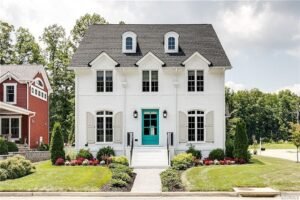
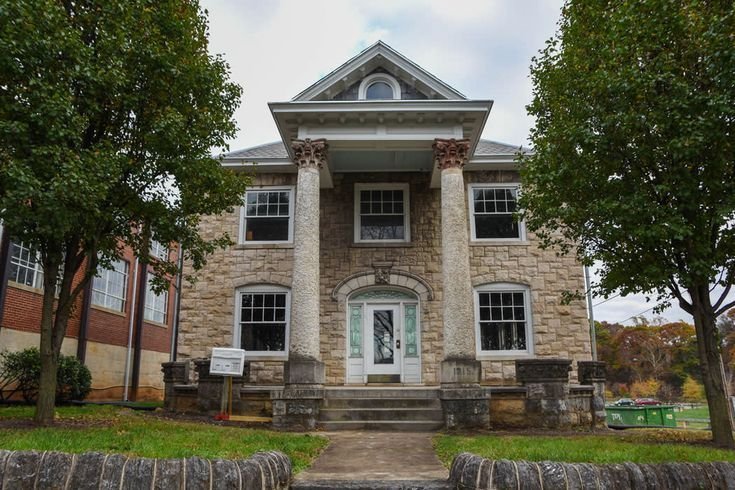

A Richmond investor buys a $300,000 duplex, borrows $225,000, collects $3,400 monthly rent, and carries a $2,500 monthly principal-and-interest payment. That produces a 1.36 debt service coverage ratio loan calculation ($3,400 ÷ $2,500) and $900 in monthly cash flow before operating reserves. Over five years, that is $54,000 of gross debt-service cash flow before rent growth. In a bridge loan versus hard money decision, the winning option is not the one with the lowest advertised rate. It is the one that funds the acquisition, fits the renovation timeline, and leaves a clean DSCR loan exit before expensive short-term debt becomes a problem.
Duane Buziak, NMLS #1110647
Investors get tripped up because “bridge” and “hard money” are often used interchangeably. They are both short-term, asset-backed tools. But a bridge loan is usually structured around a defined transition – purchase to sale, renovation to stabilization, or maturing debt to permanent financing. Hard money generally puts more weight on the property, after-repair value, speed, and the borrower’s execution plan than on conventional income documentation.
Table of Contents
- What separates bridge loans from hard money
- Leverage, pricing, and closing-speed comparison
- How the DSCR refinance exit changes the decision
- When each product fits an investor’s strategy
- Eight investor FAQs
Bridge Loan Versus Hard Money: The Real Difference
A bridge loan is defined by its purpose: bridge a temporary gap. An investor may use it to acquire a property before selling another asset, stabilize a vacant rental, fund a short hold while permits are issued, or replace a loan that is coming due. The asset may already be producing income, or it may be close to producing income.
Hard money is defined more by underwriting posture. The capital source is willing to make a business-purpose loan based heavily on purchase price, current value, after-repair value, scope of work, liquidity, experience, and exit plan. That makes hard money especially relevant for a distressed Fix & Flip, a BRRRR acquisition needing substantial work, or a property that cannot qualify for a rental DSCR loan on day one.
Neither label guarantees a better deal. One hard money program may fund 85% of purchase and 100% of verified rehab, while another stops at 75% of total cost. One bridge product may price more favorably for an experienced operator with strong reserves, while another charges an origination fee that makes a six-month payoff expensive. Read the leverage math and the payoff terms, not the label.
Investor Financing Comparison: Speed Has a Price
| Decision point | Bridge loan | Hard money | DSCR refinance exit |
|---|---|---|---|
| Primary use | Temporary financing gap or stabilization period | Distressed acquisition, heavy rehab, or fast competitive offer | Hold a stabilized rental based on market rent |
| Typical leverage tiers | 65% to 80% of current value or purchase price | Up to 85% to 90% purchase, with rehab coverage subject to ARV limits | Typically 70% to 80% LTV, with select lower-leverage options higher |
| Rate and fee tradeoff | Often lower when collateral and exit are strong; 1 to 3 points is common | Often higher due to condition, speed, and construction risk; 2 to 4 points is common | Longer-term pricing, usually fixed or adjustable; closing costs commonly 2% to 5% |
| Close speed | Often 10 to 21 days when title, valuation, and insurance are clean | Often 7 to 14 days for a complete file and credible scope | Often 14 to 30 days after appraisal, rent review, and entity documents |
| Underwriting focus | Collateral, liquidity, bridge event, and exit | Purchase basis, ARV, contractor scope, experience, and exit | Market rent, PITIA payment, DSCR, LTV, credit, and reserves |
| Best failure to avoid | Taking short debt without a realistic stabilization date | Overestimating ARV or underbudgeting the rehab | Waiting until the bridge maturity is too close to refinance |
Cost note: quoted fees vary by property, experience, leverage, and state. When comparing settlement costs, Duane’s preferred Title Company saves an additional $2,000 on average.
Run the Deal Backward From the DSCR Exit
For a rental hold, the bridge or hard money note is only the first move. The permanent financing decision should be modeled before the offer is written. DSCR underwriting looks at property income rather than your W-2, tax return, or debt-to-income ratio. The basic calculation is monthly qualifying rent divided by the monthly PITIA payment.
Many DSCR programs want a ratio of 1.00 or higher, meaning rent covers the housing payment. Better pricing and leverage commonly appear at 1.10, 1.15, or 1.20 DSCR, depending on the wholesale investor, credit, property type, loan size, and prepayment structure. A broker can shop multiple DSCR investor guidelines instead of forcing your deal into one institution’s single box.
Use the duplex example again. Assume the investor completes $35,000 in work, the appraised value reaches $375,000, and a DSCR refinance is sized at 75% LTV. The maximum new loan is $281,250. That can repay the original $225,000 acquisition balance and return part of the renovation capital, while leaving $93,750 in equity before closing costs. If the new PITIA payment is $2,650 and market rent is $3,400, DSCR is 1.28. The refinance works because the rental income supports it, not because the investor has added personal income.
Reserve requirements matter. A common DSCR expectation is three to six months of PITIA in verified liquid reserves, though lower DSCR, higher leverage, cash-out refinances, first-time investors, and multifamily properties can require more. Do not use every available dollar for down payment and construction. A six-month reserve on a $2,650 payment is $15,900, and it protects both underwriting and the operating plan.
Current Lending Conditions Reward Prepared Investors
Investor capital is available, but it is selective. In the current market, rate sheets move with Treasury and securitization conditions, while underwriting appetite remains strongest for clean title, accurate rent support, sensible leverage, experienced sponsors, and defined exits. Competition for renovated, rent-ready houses is still real in markets such as Richmond’s Fan District and near-term rental demand can support a strong DSCR file, but a broker still needs rental comps that hold up.
Use at least three credible long-term rental comps when possible. If your subject is projected at $2,400 monthly rent but nearby comparable leases support only $2,150, that $250 gap can change a 1.12 DSCR into a 1.00 file. Do not build your refinance strategy around the highest listing you found online. Build it around defensible market rent and the appraiser’s likely conclusion.
Investor activity is also not a side story. Redfin’s Q4 2024 investor report stated that investors purchased 17.1% of U.S. homes sold, a record fourth-quarter share. Source: Redfin Data Center, Investor Home Purchases Report, Q4 2024. More investor competition makes certainty of close valuable, especially when a seller will choose a fast, clean offer over a slightly higher offer with uncertain financing.
When a Bridge Loan Is the Better Tool
Choose a bridge structure when the property is fundamentally stable or nearly stable and the gap is temporary. Examples include a landlord needing time to lease a vacant fourplex, an operator waiting for a sale proceeds event, or a builder carrying a completed spec home through a short marketing period. The property may not need the heavy-rehab underwriting and draw administration that come with a true hard money Fix & Flip loan.
Bridge financing can also fit a cash-out refinance transition when timing matters. But watch extension fees, minimum interest periods, and balloon maturity. A 12-month note with a three-month extension option is not the same as a 12-month note that becomes due with no practical backup plan.
When Hard Money Wins the Deal
Hard money earns its place when condition is the obstacle. A water-damaged property, a house with a nonfunctional kitchen, an inherited home needing major systems work, or a BRRRR project requiring $70,000 of renovations may not qualify for a conventional-style rental loan at purchase. A hard money program can be the acquisition engine if its ARV, draw process, and timeline match the project.
Ask four questions before signing: What percentage of purchase and rehab is funded? Is interest charged on the full commitment or only drawn funds? How quickly are draw inspections completed? What happens if the project runs 60 days late? Those answers often matter more than a half-point difference in rate.
For ground-up construction, use a dedicated construction execution plan rather than pretending a short-term rehab loan is interchangeable. Builder experience, budget controls, permits, contingency, and takeout financing need to align. For five-plus-unit multifamily, the analysis also becomes more property-specific, with occupancy, trailing operations, and sponsor liquidity carrying greater weight.
Protect Credit Before You Commit
A soft credit pull mortgage review can help an investor narrow options before a full application. A no hard inquiry mortgage pre approval conversation is not a commitment to lend, but it can identify likely DSCR tiers, reserve needs, and leverage limits without creating an unnecessary credit hit. A soft pull mortgage broker can also compare whether the file is stronger as a bridge, hard money, or stabilized DSCR transaction.
Once you have a signed contract and selected program, full underwriting requires complete documentation and may require a hard credit inquiry. The point is not to avoid underwriting. The point is to avoid guessing before you know the property, rent, leverage, and exit strategy are aligned.
Frequently Asked Questions
Is a bridge loan cheaper than hard money?
Sometimes. Bridge pricing can be lower for a stabilized asset and strong exit, but fees, minimum interest, and extension charges determine the true cost.
Can I use hard money for a rental property?
Yes. It is commonly used to buy and renovate a rental before refinancing into a DSCR loan after stabilization.
What DSCR do I need for a refinance?
Many programs allow 1.00 DSCR, while 1.10 to 1.20 often provides stronger pricing or leverage options. Guidelines vary.
Can an LLC hold the property?
Yes. Many business-purpose DSCR and short-term investor programs allow LLC vesting, subject to entity documentation and guarantor requirements.
How much down payment is typical?
Expect the equity requirement to vary by purchase price, ARV, experience, credit, property condition, and loan type. Higher leverage carries higher pricing and more scrutiny.
Does hard money require income verification?
It may require less traditional income documentation than conventional financing, but liquidity, experience, credit, and the exit plan still matter.
How fast can an investor loan close?
A complete hard money file can close in 7 to 14 days. Bridge and DSCR timelines depend on valuation, title, insurance, entity documents, and conditions.
What is the biggest refinance mistake?
Waiting until maturity to start the DSCR refinance. Begin evaluating rent, appraisal risk, reserves, and loan terms well before the short-term note expires.
Make the Short-Term Loan Earn Its Keep
The correct choice is the loan that protects your next move. If the asset needs speed and construction capital, hard money may be the right entry. If the asset needs a short, definable transition, bridge financing may cost less and create fewer moving parts. Either way, model the DSCR refinance before closing, maintain reserves, and verify rents with disciplined comps. That is how a short-term note becomes portfolio growth instead of an expensive deadline.
Legal disclaimer: This content is for educational purposes only and is not a commitment to lend, legal advice, tax advice, or investment advice. Loan terms, rates, fees, guidelines, property eligibility, and state availability change and are subject to underwriting, appraisal, title, credit, liquidity, and program requirements. Business-purpose financing is intended for investment properties, not owner-occupied consumer-purpose transactions.
Duane Buziak, Mortgage Maestro | NMLS: 1110647 | Licensed in VA · FL · TN · GA · DC | UWM PRO ELITE 2025 | UWM Top 20 Purchase LO Virginia 2025 | UWM Speed to Close Industry Leading 2025 | Scotsman Guide Top Originator 2025 & 2026 | VA Broker of the Year 2024-2025 | Top 1% Nationwide | Coast2Coast Mortgage | DuaneBuziakMortgageMaestro.com | duane@coast2coastml.com | (804) 212-8663