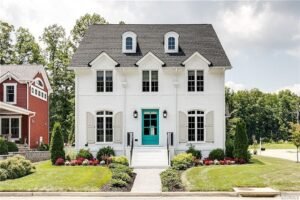


A Richmond, Virginia investor buys a $250,000 duplex with a $187,500 DSCR loan at 75% LTV. Verified market rent is $2,650 per month, while the proposed principal, interest, taxes, insurance, and association dues total $2,120. That produces a 1.25 DSCR ($2,650 ÷ $2,120) and $530 in monthly property-level cash flow before repairs and vacancy. Over five years, that is $31,800 of gross cash flow before rent growth, principal paydown, or appreciation. The difference between winning that deal and losing it can be a credible mortgage preapproval guide process completed before the listing hits peak competition.
For investors, preapproval is not just a letter. It is a financing plan that identifies the correct leverage tier, tests rental income, reviews reserves, and gives the seller confidence that your offer can close. DSCR financing changes the conversation because the property can qualify on rental cash flow rather than your W-2 income, tax returns, or debt-to-income ratio.
Duane Buziak, NMLS #1110647 works from the investor side of the transaction: structure the deal, test the numbers, identify the right wholesale option, and keep the file moving toward closing.
Table of Contents
- What investor preapproval actually means
- Start with a soft credit pull
- Calculate DSCR before making an offer
- Choose leverage based on the deal
- Compare broker access and closing speed
- Avoid common preapproval mistakes
- Mortgage preapproval guide FAQs
What Investor Preapproval Actually Means
A conventional buyer often hears “preapproved” and assumes the work is done. For a rental acquisition, the letter is only one output. The real work is confirming that the property type, projected rent, loan amount, reserve requirement, entity structure, and credit profile fit an active DSCR program.
A no hard inquiry mortgage pre approval starts by reviewing the investor’s credit profile through a soft pull mortgage broker process. That gives a useful first look without immediately creating a hard inquiry. A soft credit pull mortgage review can identify score bands, existing mortgage history, recent inquiries, and potential documentation issues before you submit a live offer.
That matters when you are analyzing multiple properties. Investors should not burn credit indiscriminately while comparing a Norfolk triplex, a Tampa short-term rental, and a Nashville BRRRR refinance. A mortgage pre approval without hard pull review gives you direction first, then a full application and required credit authorization when it is time to move forward.
The Consumer Financial Protection Bureau explains that preapproval is based on a review of your financial information and is not a final approval. For DSCR investors, the same principle applies with an added layer: the property’s expected rent and operating structure must work.
Start With the Property, Not Just Your Credit
DSCR stands for debt service coverage ratio. The basic formula is monthly gross rent divided by the monthly housing payment, commonly called PITIA: principal, interest, taxes, insurance, and association dues when applicable.
Using the duplex example, $2,650 in rent divided by $2,120 in PITIA equals 1.25. Many DSCR programs target at least 1.00x coverage, while stronger pricing and higher leverage commonly appear at 1.10x, 1.20x, or better. A 1.00x deal means rent equals the payment. It can qualify, but it leaves little room for vacancy, maintenance, or rent collection delays.
Rental evidence is where good preapproval gets specific. A broker may use an appraisal rent schedule, current leases, or market rent analysis depending on the program. Before offering, compare at least three similar rentals by bedroom count, condition, location, parking, and utilities. If nearby two-bedroom units lease from $1,250 to $1,375, underwriting a $1,600 rent projection because the property has fresh paint is not disciplined.
For market context, use the rental trend tools published in Zillow Research’s housing data, then validate the number against current local rental comps. In active investor markets, rent assumptions are scrutinized more closely because pricing, taxes, and insurance can move faster than old comparable data suggests.
Build the Right Leverage Tier Before You Offer
The strongest offer is not always the one with the largest loan. Higher leverage preserves cash for repairs and the next acquisition, but it can increase rate, reserve requirements, and DSCR pressure. Lower leverage can improve pricing and make an appraisal-rent shortfall easier to absorb.
A typical DSCR conversation may start around 75% LTV for a purchase or rate-and-term refinance. Strong files can reach higher leverage depending on credit, DSCR, property type, and program parameters. Cash-out refinance leverage is often more conservative because the transaction extracts equity. Fix & Flip and ground-up construction require a different draw and budget review, but they should still be planned as part of the longer investor relationship – acquisition, stabilization, refinance, then repeat.
For a BRRRR operator, the preapproval question is not merely “Can I buy it?” It is “What refinance value and rent will support the exit?” If a $190,000 purchase needs $55,000 in rehab and the stabilized appraisal comes in at $320,000, a 75% refinance ceiling is $240,000. That may repay purchase and rehab costs, but only if the final rent supports the new payment and the seasoning rules fit the plan.
Reserve requirements deserve the same attention. Many DSCR programs require six months of PITIA reserves, with additional reserves possible for multiple financed properties, lower DSCR, or larger balances. On a $2,120 PITIA payment, six months equals $12,720. That is not a closing cost. It is a liquidity requirement, and it needs to be visible before you write the offer.
DSCR Broker Access vs. One-Program Shopping
A broker can compare wholesale DSCR options rather than force every property into one product box. Current investor lending conditions remain competitive, but rate sheets are highly sensitive to leverage, credit score, prepayment terms, property type, and DSCR. A 1.25x single-family rental at 70% LTV generally presents differently than a 0.85x mixed-use property at 80% LTV.
| Decision point | Limited single-program route | Broker-led DSCR review |
|---|---|---|
| DSCR source access | One published menu and one set of overlays | Multiple wholesale DSCR options matched to the property |
| LTV tiers | May cap leverage early | Can compare 70%, 75%, and higher eligible tiers |
| Rate and leverage tradeoff | Less flexibility to balance rate, points, and cash in | Structure can prioritize leverage, payment, or prepayment flexibility |
| Closing speed | May move through a standard queue | Investor file can be packaged around rent, entity, and reserves early |
| Closing cost planning | Standard title and settlement estimates | Duane’s preferred Title Company saves an additional $2,000 on average |
Closing costs often run roughly 2% to 5% of the loan amount, depending on points, title charges, escrow setup, appraisal, state charges, and entity requirements. On a $187,500 loan, that is approximately $3,750 to $9,375 before seller credits or any no-out-of-pocket closing options that may fit the transaction.
Do Not Let a Preapproval Letter Hide a Weak Deal
The fastest way to lose time is to submit a generic no credit hit mortgage application without a property-level payment analysis. Taxes can reset after a sale. Insurance can surprise investors in Florida coastal markets. Association dues can turn an apparent 1.15 DSCR deal into a 0.98 deal. Short-term rental income may be treated differently than long-term lease income depending on the program.
Also avoid treating a soft pull as a final green light. It is a smart first step, not a binding commitment. A full file still needs property valuation, title review, asset verification, entity documents when applicable, and final underwriting conditions.
For investors using LLC ownership, confirm vesting early. DSCR programs are often LLC-friendly, but the entity must be correctly formed, documented, and aligned with the purchase contract. Waiting until the week of closing to change vesting can create preventable delays.
The Fannie Mae Selling Guide rental income guidance is useful context for conventional rental-income documentation, but DSCR business-purpose underwriting follows its own program rules. That distinction is the point: investment property financing should fit the strategy, not force the strategy into an owner-occupant template.
Mortgage Preapproval Guide FAQs
1. Does a soft pull affect my credit score?
A soft pull generally does not affect your score the way a hard inquiry can. It is useful for early scenario planning, subject to full review when you proceed.
2. Can I get a DSCR loan in an LLC?
Often, yes. Many DSCR programs allow eligible LLC vesting, though guarantor, entity, and title requirements vary by program.
3. What DSCR do I need?
Many programs look for 1.00x or higher, while stronger DSCR can improve available leverage or pricing. Below-1.00x options may exist with tradeoffs.
4. How much down payment should I expect?
A 25% down payment aligns with 75% LTV, a common investor target. Higher leverage may be available for strong scenarios, while unique properties may require more cash in.
5. Can I qualify without tax returns?
DSCR loans commonly focus on property income instead of personal income documentation. Credit, reserves, property value, and rent still matter.
6. How fast can a DSCR purchase close?
A clean, appraisal-ready file can move quickly, often around 7 to 10 business days in the right scenario. Title, appraisal, insurance, and borrower responsiveness control the real timeline.
7. Can I use DSCR financing for a BRRRR refinance?
Yes, if the stabilized value, rent, seasoning, and cash-out rules support the exit. Build the refinance analysis before buying the distressed asset.
8. Is a preapproval a final loan approval?
No. It is an informed preliminary assessment. Final approval depends on the completed file, property review, appraisal, title, and program conditions.
A disciplined preapproval should make you faster without making you reckless. Bring the rent comps, purchase contract, entity plan, and reserve picture to the first conversation, then let the numbers determine the financing structure.
Legal Disclaimer: This article is for educational purposes only and is not a commitment to provide financing, an offer to extend credit, tax advice, legal advice, or investment advice. Program availability, rates, terms, LTV, DSCR requirements, reserves, and closing timelines are subject to change and depend on borrower, property, appraisal, title, and underwriting review. Business-purpose DSCR financing may be available nationwide through wholesale partners; consumer mortgage origination is offered only where properly licensed.
Duane Buziak, Mortgage Maestro | NMLS: 1110647 | Licensed in VA · FL · TN · GA · DC | UWM PRO ELITE 2025 | UWM Top 20 Purchase LO Virginia 2025 | UWM Speed to Close Industry Leading 2025 | Scotsman Guide Top Originator 2025 & 2026 | VA Broker of the Year 2024-2025 | Top 1% Nationwide | Coast2Coast Mortgage | DuaneBuziakMortgageMaestro.com | duane@coast2coastml.com | (804) 212-8663