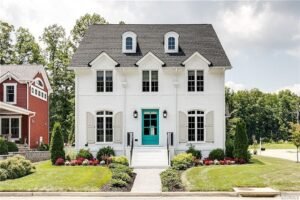


A $300,000 Jacksonville, Florida rental purchase with a $255,000 DSCR loan at 85% LTV can tell the story fast. Assume market rent of $2,850 per month and a proposed monthly principal, interest, taxes, insurance, and association dues payment of $2,040. The debt service coverage ratio is $2,850 divided by $2,040, or 1.40 DSCR. That leaves $810 per month before maintenance, vacancy, and management – $9,720 per year and $48,600 over five years before rent growth. With DSCR versus conventional, the key question is not whether the borrower can document enough W-2 income to carry the payment. It is whether the property’s rent carries the debt.
Duane Buziak, NMLS #1110647
Table of Contents
- DSCR versus conventional: the qualification divide
- A side-by-side financing comparison
- Where leverage, rates, and reserves change the answer
- The right fit for BRRRR, flips, construction, and multifamily
- How to choose before writing the offer
- Eight questions investors ask
DSCR Versus Conventional Starts With What Is Being Underwritten
Conventional investment property financing is built around the borrower. Underwriting typically reviews personal income, employment, tax returns, debt-to-income ratio, credit, assets, and the property. The rental income may help, but it does not replace personal qualification. That can work well for an investor with stable documented income, a low debt load, and enough room under debt-to-income limits.
A DSCR loan, also called a debt service coverage ratio loan, is business-purpose investment property financing built around the asset. The main calculation is straightforward:
Gross monthly rent ÷ proposed monthly PITIA = DSCR.
PITIA means principal, interest, taxes, insurance, and applicable association dues. A 1.00 ratio means the property’s rent equals its proposed housing expense. Many wholesale DSCR investors price most favorably around 1.20 or higher. Programs can reach down to 1.00, and select no-ratio options exist, but lower coverage usually means a higher rate, lower maximum LTV, more reserves, or all three.
That distinction matters when a portfolio owner has substantial write-offs, recently changed jobs, owns several properties, or wants title held in an LLC. Conventional underwriting can be a smart lower-rate lane for a clean file. It becomes restrictive when the investor’s personal tax return is no longer the best representation of buying power.
For Jacksonville single-family rentals, a broker should not accept the seller’s projected rent at face value. Use the lease when it is credible, then compare it with appraiser-supported market rent. A 3-bedroom home with three nearby rental comps at $2,750, $2,825, and $2,900 supports a much stronger underwriting conversation than a listing claim of $3,200 with no backup. Zillow’s Observed Rent Index is also a useful market-level reference point, but the final qualifying figure comes from the program’s appraisal and rent schedule requirements.
DSCR Loan vs. Conventional: The Numbers That Move the Deal
| Decision point | DSCR financing | Conventional investment financing |
|---|---|---|
| Primary qualification | Property rent, DSCR, credit, liquidity, and asset quality | Personal income, debt-to-income, credit, assets, and property income |
| Broker access | Multiple wholesale DSCR investors with different ratio, LLC, and property rules | Agency and conventional program options subject to borrower eligibility |
| Typical purchase leverage | Often 75% to 80% LTV for stronger files; up to 85% or 90% in select scenarios | Commonly 75% to 85% LTV, with borrower-level limits and mortgage insurance considerations |
| Rate and leverage tradeoff | Higher leverage, lower DSCR, cash-out, or short-term rental treatment can raise pricing | Strong documented income and credit can produce attractive pricing, but DTI may cap scale |
| LLC vesting | Often permitted at closing or through an assignment structure, program dependent | Usually requires personal vesting and can be less flexible for entity ownership |
| Close speed | Often 7 to 10 business days when appraisal, insurance, title, and documents are ready | Often 21 to 35 days because income and asset documentation are deeper |
| Reserves | Commonly 3 to 12 months of PITIA, based on credit, LTV, and portfolio size | Often 2 to 6 months, with more required for multiple financed properties |
| Closing costs | Commonly about 2% to 5% of loan amount, depending on points and third-party fees | Commonly about 2% to 4% of loan amount, depending on points and third-party fees |
Duane’s preferred Title Company saves an additional $2,000 on average where available. That is not a substitute for comparing loan estimates, prepaid items, title charges, and the cost of buying down a rate. It is a real line-item advantage that investors should measure against total execution.
Current investor lending conditions reward clean properties with documented rent and conservative leverage. Competition for stabilized rentals remains active, while wholesale DSCR investor appetite is strongest on properties with clear market rents, adequate insurance, and ratios above 1.20. Rates move daily and vary by credit score, DSCR, prepayment structure, property type, and LTV. A 75% LTV deal at 1.30 DSCR typically has more pricing flexibility than an 85% LTV deal at 1.00 DSCR.
When Conventional Can Still Win
Do not choose DSCR automatically because you are buying a rental. Conventional can be the better tool when you have high, easily documented personal income, strong credit, low recurring debt, and a plan to hold only a few financed properties. The rate may be lower, and a lower rate can protect cash flow over a long hold.
Use a quick five-year test. On the $255,000 example above, a 0.75% rate difference might change principal and interest by roughly $125 to $145 per month, depending on term and final pricing. That is $7,500 to $8,700 over five years. If conventional approval is clean and timing is not tight, that savings deserves respect.
But conventional savings disappear if a borrower loses a contract because tax-return review takes too long, debt-to-income is maxed out, or another financed property pushes the file past an eligibility threshold. The best rate is not the best loan if it stops the next acquisition.
DSCR Is Built for Repeat Investors, Not Just One Rental
A DSCR relationship becomes more valuable as strategies expand. A BRRRR operator can acquire with investor-purpose financing, renovate, stabilize the rent, and then evaluate a DSCR cash-out refinance based on the completed property’s value and rent. A fix-and-flip investor may use short-term acquisition and rehab capital, then move the finished asset into a long-term DSCR loan if the exit changes from sale to hold.
Ground-up construction and small multifamily require even more discipline. The first conversation is about budget, contingency, draw schedule, projected rents, and exit debt – not simply the purchase price. For a 6-unit property, a broker may underwrite in-place operations differently from a single-family rental, and liquidity requirements can be materially higher. The advantage of a broker is access to multiple wholesale investors rather than one institution’s single DSCR box.
Choose the Lane Before You Negotiate the Contract
Start with the rent, not the payment you hope to get. Request a rent schedule estimate, pull comparable leases, calculate the DSCR at the likely rate, and test the deal at a lower appraisal rent. If the property only works at an optimistic rent number, the issue is not the financing program. The issue is the acquisition basis.
Next, decide what you are protecting. If preserving personal debt-to-income capacity for a primary residence or another conventional transaction matters, DSCR can preserve room. If minimizing the note rate on one low-leverage rental matters more, conventional may earn the spot.
A soft credit pull mortgage review can make this decision without forcing a hard inquiry at the beginning. Investors Paradise offers a no hard inquiry mortgage pre approval path for initial scenario review, subject to borrower authorization and program requirements. A mortgage pre approval without hard pull is not a final approval, but it can identify likely leverage, reserve needs, and whether conventional or DSCR is the faster path before you commit earnest money.
FAQ: DSCR Versus Conventional
1. Is a DSCR loan easier to qualify for than conventional?
It can be easier when the property cash flows but personal income documentation is complex. Credit, down payment, reserves, appraisal, and property condition still matter.
2. What DSCR ratio do I need?
A 1.20 ratio is a strong target. Many programs allow 1.00 or below, but expect tighter LTV, higher pricing, or larger reserves.
3. Can I buy in an LLC with a DSCR loan?
Often yes, depending on the wholesale investor and state requirements. Confirm vesting and guarantor rules before the contract is written.
4. Can DSCR finance a short-term rental?
Some programs allow it using market-rent or documented rental-income methods. Terms are more restrictive than a standard long-term lease in many cases.
5. How much down payment is typical?
Twenty percent to 25% is common. Strong credit, higher DSCR, and lower leverage can improve pricing; select programs reach higher leverage.
6. Are DSCR rates higher than conventional rates?
Often, yes. DSCR pricing reflects business-purpose underwriting flexibility, entity options, and non-agency risk. The rate gap depends on leverage and ratio.
7. Can I cash out on a stabilized rental?
Yes, DSCR cash-out refinance options exist. Maximum proceeds depend on appraised value, rent, DSCR, credit, seasoning, and reserve requirements.
8. How fast can a DSCR loan close?
A complete, appraisal-ready file can often close in 7 to 10 business days. Insurance, title issues, entity documents, and appraisal timing can extend that window.
Legal disclaimer: This article is educational information, not a loan commitment, legal advice, tax advice, or investment advice. Loan programs, rates, LTV limits, reserve requirements, property eligibility, and closing timelines change and are subject to credit approval, appraisal, title, underwriting, and investor guidelines. Business-purpose DSCR financing is generally for non-owner-occupied investment property. Consult qualified legal, tax, insurance, and real estate professionals before making an investment decision.
The practical move is simple: run both lanes against the same property before you write the offer. The winning loan is the one that protects cash flow, closes on the contract timeline, and leaves you able to buy the next asset.
Duane Buziak, Mortgage Maestro | NMLS: 1110647 | Licensed in VA · FL · TN · GA · DC | UWM PRO ELITE 2025 | UWM Top 20 Purchase LO Virginia 2025 | UWM Speed to Close Industry Leading 2025 | Scotsman Guide Top Originator 2025 & 2026 | VA Broker of the Year 2024-2025 | Top 1% Nationwide | Coast2Coast Mortgage | DuaneBuziakMortgageMaestro.com | duane@coast2coastml.com | (804) 212-8663