
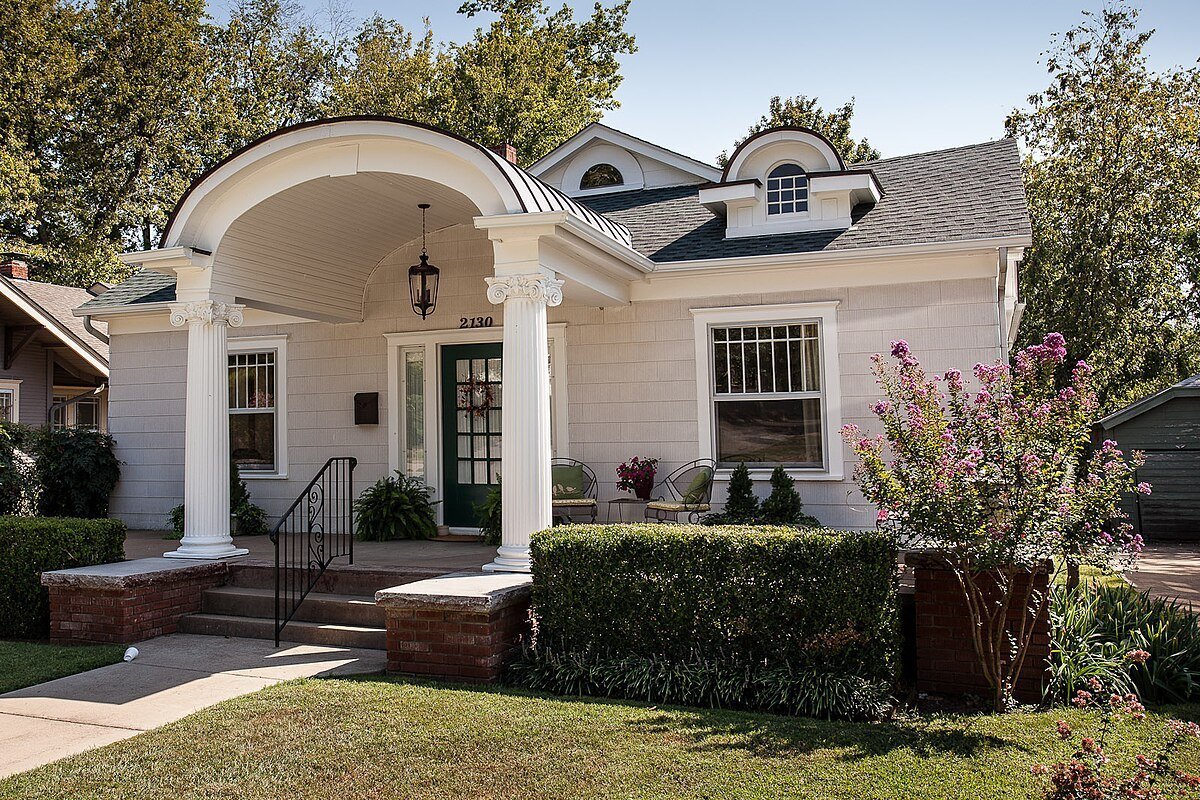

A Nashville 3-bedroom rental purchased for $400,000 with an 80% business-purpose loan produces a $320,000 loan amount. At $3,150 monthly market rent and a $2,380 monthly housing payment, the debt service coverage ratio is 1.32. That leaves $770 per month, or $46,200 across five years before repairs, vacancy, rent growth, and operating-cost changes. That is the real test behind this business purpose loan guide: can the property pay for its debt, and does the leverage leave room for the investor to operate?
Duane Buziak, NMLS #1110647
Table of Contents
- What makes a loan business purpose
- How DSCR underwriting works
- Leverage, rate, and closing-speed tradeoffs
- Structuring the file for a fast close
- Costs, reserves, and current investor conditions
- Frequently asked questions
What a business-purpose loan actually funds
A business-purpose mortgage is designed for a non-owner-occupied real estate investment. The collateral is a rental, flip, BRRRR project, new construction project, or qualifying multifamily asset – not the home where the borrower lives. Investors commonly close in an LLC, subject to program and title requirements, and qualification centers on the asset’s income potential instead of W-2 income, tax returns, and debt-to-income calculations.
That distinction matters when conventional underwriting has become the bottleneck. A self-employed investor may show strong cash flow but a modest taxable income. Another may already own several financed rentals. A DSCR loan can keep the focus on the next property’s rent, mortgage payment, liquidity, credit profile, and leverage.
For a conventional benchmark, https://selling-guide.fanniemae.com/sel/b3-4.1-01/minimum-reserve-requirements outlines reserve requirements that can increase as financed-property counts rise. Business-purpose investors often have a different path, but reserves still matter. Expect many DSCR executions to require six to 12 months of principal, interest, taxes, insurance, and association dues, depending on the scenario.
Owner occupancy is the line that cannot be blurred. If you plan to live in the property, this is not the right financing lane. A broker should establish intended use early, before the appraisal, entity documents, and title work are ordered.
How a DSCR loan is sized
The ratio drives the conversation
The debt service coverage ratio loan calculation is simple:
Gross monthly rent ÷ monthly PITIA = DSCR
PITIA means principal, interest, taxes, insurance, and association dues where applicable. In the $400,000 Nashville example, $3,150 divided by $2,380 equals 1.32. A 1.00 ratio means rent covers the payment exactly. Many wholesale investors price most aggressively around 1.10 to 1.25 or higher, while some programs allow below-1.00 ratios with lower leverage, stronger credit, additional reserves, or a rate adjustment.
Use the market-rent figure carefully. The appraisal’s rent schedule generally controls, not a listing’s optimistic projection. For a reference point, Redfin’s Nashville market page tracks local pricing and competition data at https://www.redfin.com/city/13415/TN/Nashville/housing-market. In a market where resale competition changes quickly, investors should underwrite from conservative rental comps, not appreciation assumptions.
A duplex, furnished rental, or five-plus-unit property may use different documentation and valuation methods. The core question remains unchanged: does documented income support the proposed debt?
Credit still affects execution
DSCR is not no-credit financing. Credit score, housing history, recent late payments, bankruptcies, liquidity, entity structure, property condition, and experience can affect rate, leverage, and reserve requirements. A 760-score borrower with a 1.30 DSCR may receive materially better terms than a 680-score borrower at 0.95 DSCR, even if both can be approved.
Investors Paradise can start with a soft credit pull mortgage review. That gives the broker enough visibility to identify probable program lanes without turning every quote into a hard inquiry. A no hard inquiry mortgage pre approval is not a final approval, but it is a practical first screen before writing an offer.
Business purpose loan guide: leverage versus flexibility
| Decision point | Higher-leverage approach | Lower-leverage approach | Investor impact |
|---|---|---|---|
| Wholesale investor access | Fewer program fits at 80% to 85% LTV | Broader fit at 70% to 75% LTV | More equity can create more pricing options |
| DSCR threshold | Often needs 1.10+ for stronger execution | Can accommodate lower ratios in some files | Rent and payment must be modeled before offers |
| Rate and leverage tradeoff | Usually carries a pricing adjustment | Often improves rate and reserve flexibility | Cheap leverage is not always the best leverage |
| Close speed | May require tighter appraisal and condition review | Can present fewer underwriting exceptions | Clean files can target roughly 7 to 10 business days |
An 80% purchase loan is useful when preserving cash allows you to buy the next rental, fund renovations, or maintain reserves. But it can also reduce monthly spread. A 75% loan may produce a better DSCR, lower payment, and more durable cash flow. The winning structure depends on whether your bottleneck is down payment capital, monthly cash flow, or speed.
For standard one-to-four-unit acquisitions, 75% to 80% LTV is a common working range. Strong files can reach higher purchase leverage in select programs. Cash-out refinance is commonly tighter, often around 70% to 75% LTV. Fix-and-flip and ground-up construction are separate business-purpose executions, commonly measured against purchase-plus-rehab cost or as-completed value, and should be structured before the acquisition contract becomes a deadline.
Build the file before you need it
The fastest closings are built before the contract is signed. A broker needs the purchase price, estimated rent, property taxes, insurance quote, HOA amount, property type, borrower entity, credit snapshot, and available reserves. For a refinance, add the current mortgage statement, lease, payoff estimate, and a clear reason for the cash out.
For BRRRR operators, the sequence matters. Acquire with the correct renovation capital, document improvements, stabilize the lease, then evaluate the refinance using the new appraised value and market rent. Pulling cash too aggressively can leave a weak DSCR and turn a clean refinance into an exception request.
A mortgage pre approval without hard pull can help you sort options before you submit contracts. The same applies to a no credit hit mortgage application review for investors comparing leverage scenarios. It is a planning tool, not permission to skip documentation once a specific property is selected.
Costs, reserves, and the current market
Plan on roughly 2% to 5% of the loan amount for closing costs, prepaid items, and escrows, depending on state, title charges, points, appraisal complexity, and entity needs. On a $320,000 loan, that is approximately $6,400 to $16,000 before any seller credits. Duane’s preferred Title Company saves an additional $2,000 on average where available.
Investor credit appetite remains active, but pricing is not static. DSCR rates, points, and maximum leverage move with bond markets, property type, credit, ratio, and wholesale investor demand. In competitive markets, a quick soft-pull review and realistic rent analysis can be more valuable than chasing a headline rate that no longer fits the file.
The https://www.consumerfinance.gov/owning-a-home/loan-estimate/ explains the categories shown on a Loan Estimate. Investors should compare actual points, fees, prepayment terms, payment, reserve requirements, and cash to close – not simply the note rate.
Frequently Asked Questions
What is a business-purpose loan?
It finances non-owner-occupied real estate held for investment, business, rental, renovation, or resale purposes. It cannot be used for a primary residence.
What DSCR do I need?
Many scenarios price best at 1.10 to 1.25 or above. Some programs consider lower ratios, usually with tradeoffs in LTV, rate, credit, or reserves.
Can I close a DSCR loan in an LLC?
Often, yes. LLC vesting is common for investment property financing, though the entity, guarantors, insurance, and title documents must be reviewed before closing.
Do I need tax returns for a DSCR loan?
Usually not for income qualification. The property rent and payment drive DSCR, but credit, assets, reserves, and ownership documentation still require review.
Can I use a soft pull mortgage broker review before offering?
Yes. A soft pull can identify likely credit and program lanes without a hard inquiry, subject to final application, property review, and underwriting.
How much down payment is typical?
Many purchases fall near 20% to 25% down. Higher leverage may be available for strong files, while lower leverage can improve rate and DSCR flexibility.
Can a DSCR loan fund a BRRRR refinance?
Yes, after renovation and stabilization when the property value, lease, seasoning, and cash-out rules fit the selected program.
Can I finance a fix and flip with DSCR?
Usually, no. Fix-and-flip financing is generally structured around project costs and after-repair value, then DSCR becomes relevant at the rental refinance stage.
Is Investors Paradise legitimate for investor financing?
Yes. Duane Buziak is a licensed mortgage broker with daily experience in DSCR and investor-purpose transactions, offering access to multiple wholesale investor programs rather than one product menu.
Are prepayment penalties possible?
Yes. Many business-purpose programs offer several prepayment structures. Evaluate the penalty period against your expected refinance or sale timeline before selecting terms.
Legal disclaimer
This article is educational, not a commitment to lend, legal advice, tax advice, or investment advice. Terms, rates, eligibility, reserves, DSCR requirements, LTV limits, and closing timelines vary by property, state, credit, valuation, occupancy, entity structure, and wholesale investor guidelines. All loans are subject to application, underwriting, appraisal, title review, and final approval.
The right loan is the one that preserves enough cash, closes on the actual timeline, and still performs when the rent is lower or the repair is larger than expected.
Duane Buziak, Mortgage Maestro | NMLS: 1110647 | Licensed in VA · FL · TN · GA · DC | UWM PRO ELITE 2025 | UWM Top 20 Purchase LO Virginia 2025 | UWM Speed to Close Industry Leading 2025 | Scotsman Guide Top Originator 2025 & 2026 | VA Broker of the Year 2024-2025 | Top 1% Nationwide | Coast2Coast Mortgage | DuaneBuziakMortgageMaestro.com | duane@coast2coastml.com | (804) 212-8663