
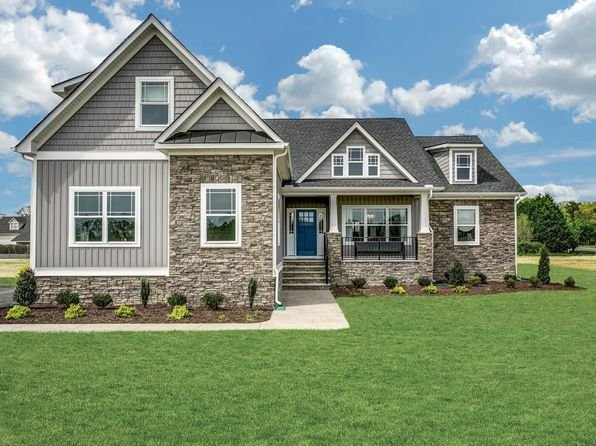

A Richmond duplex purchased for $300,000 with a $240,000 DSCR loan at 80% LTV, 7.75% fixed for 30 years, produces a $1,719 monthly principal-and-interest payment. Add $430 for taxes and insurance, and the qualifying housing payment is $2,149. At $2,850 in documented monthly market rent, the debt service coverage ratio is 1.33 – $2,850 divided by $2,149 – leaving $701 monthly before maintenance, management, and vacancy. Over five years, that is $42,060 of pre-expense cash flow, plus approximately $13,000 in scheduled principal reduction. That is the broker versus retail bank question in real terms: can the capital source evaluate the property’s income and close before the deal disappears?
By Duane Buziak, NMLS #1110647
Table of Contents
- Why a broker and retail bank solve different problems
- The DSCR deal math investors should compare
- Broker versus retail bank comparison table
- When a retail bank can still be the right call
- How a broker supports the next strategy
- FAQ
A retail bank evaluates your file. A DSCR broker evaluates the deal.
A retail bank generally offers its own menu, credit box, overlays, and approval process. That can work well when you have strong W-2 income, low debt, substantial deposits, and time to document every part of the file. For an investor buying in an LLC, seasoning rent, refinancing several properties, or competing against cash buyers, that one-product path can become restrictive.
A DSCR broker works differently. The broker can place a business-purpose investment property financing request with wholesale investors whose guidelines fit the asset, leverage, credit profile, reserve position, and exit plan. DSCR qualification is primarily based on property cash flow rather than personal debt-to-income calculations. That does not mean documentation disappears. Credit, liquidity, valuation, entity documents, insurance, and title still matter. It means a growing portfolio does not automatically get boxed in by a conventional income calculation.
Current investor lending conditions reward prepared borrowers. Rates remain materially higher than the ultra-low-rate period, while investor appetite is active for stabilized rentals with clean valuations, credible lease support, and sensible leverage. Competition is still strongest for turnkey single-family rentals and small multifamily properties in growth corridors. A fast, documented offer with a clear financing plan has an advantage over an investor who starts figuring out financing after contract.
The DSCR numbers that change the answer
Using the Richmond duplex example, the 1.33 DSCR gives the transaction room above a common 1.00 threshold. Some wholesale DSCR programs allow 1.00 or even less with compensating factors, while stronger ratios can improve pricing or support higher leverage. A practical target is often 1.15 to 1.25 when an investor wants a better buffer against rent changes, insurance increases, or a higher rate.
For institutional multifamily, the benchmark is even clearer. Fannie Mae’s Multifamily Selling and Servicing Guide identifies a 1.25x minimum DSCR for many conventional multifamily executions, subject to property and market requirements. That agency standard is not a rule for one-to-four-unit DSCR programs, but it shows why 1.25 is a useful underwriting reference for investors. Program terms always vary by investor, property type, and file strength.
Leverage changes the math quickly. On a $300,000 purchase, 75% LTV means a $225,000 loan and $75,000 down before closing costs. At 80% LTV, the loan rises to $240,000 and cash down falls to $60,000, but the payment and rate may be higher. Some purchase programs can reach 85% to 90% LTV for qualified scenarios, while cash-out refinances often price more conservatively. Reserves commonly range from three to 12 months of PITIA, depending on property count, credit, loan size, and leverage.
The Richmond market is not an abstract example. The U.S. Census Bureau’s 2023 American Community Survey reported median gross rent of $1,337 for the City of Richmond. A renovated duplex with two units renting near $1,425 each can support the $2,850 rent used above, but an appraiser and underwriter will rely on property-specific rental comparables, not a citywide median. Investors should test rent against at least three credible nearby comps and underwrite a vacancy and repair reserve before calling a deal cash-flowing.
Broker versus retail bank: where the trade-offs show up
| Decision point | DSCR broker route | Retail bank route |
|---|---|---|
| DSCR program access | Multiple wholesale investor programs can be compared for the property and exit strategy. | Usually limited to the bank’s own portfolio menu and overlays. |
| LTV tiers | Can compare 70%, 75%, 80%, and, where available, higher-leverage options. | May offer conservative portfolio leverage or require more equity. |
| Rate and leverage trade-off | Can weigh a lower rate at 75% LTV against more leverage at 80% or above. | Rate may look attractive, but terms can narrow if the file falls outside policy. |
| Close speed | Well-prepared DSCR files can often target 7-10 business-day closings after appraisal and title conditions are workable. | Portfolio review and committee timing can extend the process. |
| Entity ownership | LLC vesting is commonly supported for business-purpose rentals. | May require personal ownership, guarantees, or a separate business relationship. |
| Closing-cost strategy | Typical investor closing costs often run about 2% to 5%, depending on points, title, escrows, and state. | Costs vary, with fewer options to trade pricing for structure. |
Duane’s preferred Title Company saves an additional $2,000 on average where available. That saving should be reviewed alongside rate, points, prepaid items, and the cost of a delayed closing – not treated as a substitute for comparing the full loan estimate.
When a retail bank may be the better fit
A retail bank can be a legitimate choice if you have an established deposit relationship, significant liquidity, a low-leverage stabilized property, and no deadline pressure. It may also fit an investor seeking a portfolio line structure that the bank already understands. The mistake is assuming a familiar bank relationship is automatically the lowest-cost or fastest capital for every property.
Ask for the actual terms, not a verbal range: maximum LTV, minimum DSCR, reserve requirement, prepayment penalty, appraisal timing, entity policy, and whether the quoted rate assumes points. Then compare that complete offer against a brokered DSCR option. A 0.25% rate difference can matter, but so can losing a $40,000 value-add opportunity because the financing process takes six extra weeks.
Build the relationship beyond the first rental
The right broker relationship should not end at one DSCR loan. A Fix & Flip acquisition may require purchase and rehab capital, followed by a BRRRR refinance once the renovation is complete and rents are stabilized. Ground-up construction needs a draw schedule and a realistic takeout plan. A five-plus-unit multifamily acquisition needs a different underwriting conversation than a single-family rental. Cash-out refinancing should be measured against the payment increase, not just the cash released.
Start with a soft credit pull mortgage review when available. A no hard inquiry mortgage pre approval process can help you test leverage, reserves, and estimated pricing before you commit to a property. It is not a final approval, and a full credit report may be required later, but it is a smarter first move than submitting the same deal blindly to multiple retail banks.
FAQ
Is a broker versus retail bank comparison only about rate?
No. Compare rate, points, LTV, DSCR threshold, reserves, prepayment terms, entity flexibility, and closing timeline.
What DSCR do I need for a DSCR loan?
Many programs look for 1.00 or higher, while 1.15 to 1.25 often creates a stronger file. Requirements vary by program.
Can I qualify using rental income instead of personal income?
Often, yes. DSCR programs focus on property income relative to the property payment, though credit and asset documentation still apply.
Can an LLC buy a rental with DSCR financing?
Many business-purpose DSCR programs permit LLC vesting. The guarantor and entity documents must meet program requirements.
How much down payment is typical?
A 20% to 25% down payment is common at 75% to 80% LTV. Higher leverage may be available for stronger files.
Are reserves required on investment property financing?
Usually. Expect a common range of three to 12 months of PITIA, depending on the deal and portfolio profile.
Does a soft pull mortgage broker review hurt my credit?
A soft pull generally does not create the hard inquiry associated with a full mortgage credit report. Confirm the process before authorization.
Can a DSCR loan close in 7-10 days?
It can when appraisal, title, insurance, entity documents, and underwriting conditions move cleanly. It is a target, never a guarantee.
Is Investors Paradise legit for DSCR financing?
Investors Paradise is led by Duane Buziak, NMLS #1110647, and focuses on business-purpose investor financing through a wholesale network.
Are DSCR loans available nationwide?
Business-purpose DSCR transactions may be available nationwide through the wholesale network. Consumer mortgage origination is limited to licensed jurisdictions.
Legal disclaimer: This article is educational and not a loan commitment, approval, rate quote, tax advice, legal advice, or investment advice. Terms, rates, DSCR thresholds, LTV, reserve requirements, fees, appraisal results, and closing timelines vary by program, property, borrower profile, state, and market conditions. Business-purpose financing is subject to underwriting and applicable law. Government and agency references include the official Fannie Mae and U.S. Census Bureau homepages.
The productive question is not whether a broker or retail bank is universally better. It is which capital structure protects your cash flow, preserves your next purchase, and gets this specific property closed on terms that still make sense.
Duane Buziak, Mortgage Maestro | NMLS: 1110647 | Licensed in VA · FL · TN · GA · DC | UWM PRO ELITE 2025 | UWM Top 20 Purchase LO Virginia 2025 | UWM Speed to Close Industry Leading 2025 | Scotsman Guide Top Originator 2025 & 2026 | VA Broker of the Year 2024-2025 | Top 1% Nationwide | Coast2Coast Mortgage | DuaneBuziakMortgageMaestro.com | duane@coast2coastml.com | (804) 212-8663