
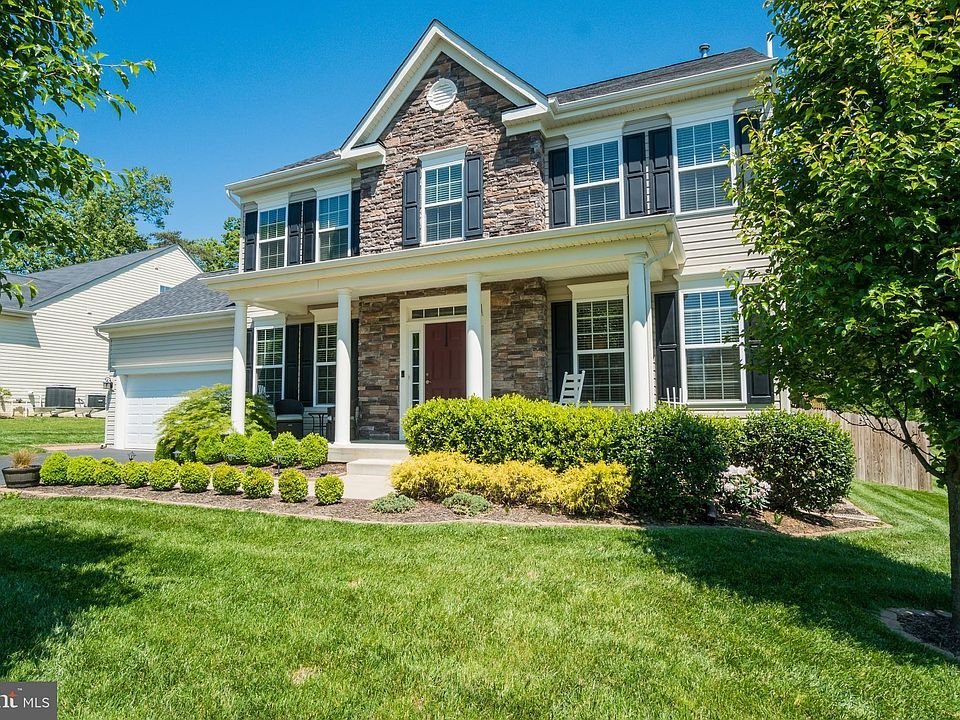

A Richmond fourplex appraises at $1,200,000, produces $10,800 in monthly market rent, and has a proposed $840,000 refinance at 70% LTV. At a 7.75% rate on a 30-year amortization, principal and interest are about $6,017 per month. The debt service coverage ratio is $10,800 ÷ $6,017 = 1.79x before taxes, insurance, and other operating expenses. If the owner replaces a $690,000 loan, gross cash-out is $150,000 before costs. Even after reserving $18,000 for repairs and vacancy, the property produces about $4,783 monthly before operating expenses. Over five years, that new capital can fund down payments or renovation work while the loan amortizes by roughly $44,000. That is why the best multifamily refinance options are not simply about the lowest advertised rate. They are about cash flow, leverage, reserves, timing, and what the refinance lets you buy next.
By Duane Buziak, NMLS #1110647
Table of Contents
- What makes a multifamily refinance worth doing
- DSCR refinance for investor-owned properties
- Agency, bank, and bridge refinance paths
- How leverage changes the deal
- Current multifamily lending conditions
- How to select the right execution
- Frequently asked questions
Start With the Refinance Objective, Not the Rate Sheet
A refinance can lower a payment, return acquisition capital, replace short-term debt, or stabilize a BRRRR project after renovations lift rent. Those are different jobs, and one loan structure will not win every time.
For one- to four-unit rental properties, a DSCR loan often creates the cleanest investor-purpose path because approval centers on the property’s rental income rather than W-2 income, tax returns, or debt-to-income ratios. LLC vesting is commonly available, which matters when the portfolio is built for scale. For five-plus-unit buildings, agency and commercial multifamily programs can be compelling once the asset has stable operations and documented net operating income.
The central calculation is the debt service coverage ratio loan test: qualifying rent or net cash flow divided by proposed monthly debt service. A 1.00x ratio means the property is covering the new principal-and-interest payment dollar for dollar. A 1.20x ratio means it has 20% coverage. Many DSCR investors prefer 1.20x or better because it leaves room for real ownership costs rather than treating every rent dollar as spendable cash.
Fannie Mae’s Delegated Underwriting and Servicing Guide identifies 1.25x as a common minimum DSCR benchmark for conventional multifamily executions, with requirements varying by property type, market, affordability restrictions, and underwriting structure. Freddie Mac’s multifamily program materials also use transaction-specific coverage and leverage standards. Those agency standards matter because they influence where private DSCR pricing and leverage tend to land.
The Best Multifamily Refinance Options Compared
| Refinance path | Best fit | Typical leverage tier | Rate and leverage tradeoff | DSCR or income approach | Typical close speed |
|---|---|---|---|---|---|
| DSCR refinance | 1-4 unit rentals, portfolio owners, LLC borrowers | 70%-75% cash-out; higher with strong coverage | Higher leverage can raise rate, points, or reserve requirements | Property rent supports qualification; 1.00x to 1.25x+ commonly targeted | About 7-21 days when title and appraisal cooperate |
| Agency multifamily | Stabilized 5+ unit properties with strong operations | Often 65%-80%, subject to market and coverage | Potentially sharper pricing, but more documentation and sizing limits | Net operating income, DSCR, occupancy, and sponsorship review | Often 45-90+ days |
| Community bank commercial loan | Local operators with deposits and established relationships | Often 65%-75% | Can be competitive, but recourse and balloon terms may apply | Global cash flow plus property underwriting | Often 30-60 days |
| Bridge or transitional refinance | Lease-up, renovation, or a property awaiting stabilization | Often 65%-75% of current value, case dependent | More flexibility and speed, usually at a higher cost of capital | Business plan, value-add scope, and exit strategy drive approval | About 10-30 days |
A broker matters here. One bank can only quote its own credit box. A broker can compare multiple wholesale investor programs for prepayment terms, appraisal treatment, LTV, DSCR floor, seasoning, and cash-out rules. That is especially valuable when a property is close to a threshold, such as 1.12x coverage or 75% LTV, where a small pricing adjustment can preserve the deal.
DSCR Refinance: The Growth Tool for 1-4 Units
For a duplex, triplex, or fourplex, DSCR financing is frequently the investor-first answer. It can work for a long-term rental, a property acquired through a BRRRR strategy, or a cash-out refinance on a seasoned asset. The appraisal’s market-rent analysis matters as much as the existing lease file. If a Tampa duplex has leases at $2,100 per side but credible rental comps support $2,300 per side, qualifying rent may be based on the program’s lower of lease rent, market rent, or a prescribed percentage of market rent.
That distinction can decide leverage. At $4,200 monthly rent and a $3,500 proposed payment, DSCR is 1.20x. At $4,600 rent against the same payment, it is 1.31x. That extra coverage may improve pricing, reduce required reserves, or support a higher loan amount.
Expect reserve requirements commonly ranging from three to 12 months of principal, interest, taxes, insurance, and association dues where applicable. Strong files may qualify with fewer reserves; aggressive cash-out, lower credit tiers, short-term rental income, or multiple financed properties can require more. Typical refinance closing costs often run roughly 2% to 5% of loan amount, depending on points, appraisal complexity, title work, escrow, and state-specific charges.
A soft credit pull mortgage review gives investors a smarter first move than blindly applying. A no hard inquiry mortgage pre approval conversation can identify likely DSCR eligibility, cash-to-close, and leverage before a full application. It is not a final approval, but it protects the investor from collecting unnecessary hard inquiries while comparing strategy.
Agency and Commercial Loans: Better When the Asset Is Mature
A 24-unit building in Atlanta with 95% physical occupancy, trailing income statements, and clean collections may be better suited to agency or commercial multifamily debt than a residential DSCR loan. These executions can offer favorable structure for stabilized properties, but they are not shortcut loans. Underwriters scrutinize rent rolls, operating statements, deferred maintenance, borrower experience, and property condition.
Agency-style refinancing can be attractive when the owner wants longer fixed terms and the property has enough documented net operating income to support the requested loan. The tradeoff is speed and documentation. A bank loan may also fit when a relationship is established, but investors should read for personal guarantees, recourse carve-outs, renewal risk, rate reset language, and balloon maturity dates.
For a building in active repositioning, bridge debt can be the right temporary answer. Use it deliberately. The exit should be visible before closing: stabilize occupancy, complete improvements, document the increased rents, then refinance into permanent investment property financing.
Current Lending Conditions Reward Clean Files
Investor lending conditions remain competitive, but pricing is not uniform. DSCR investor appetite is strongest for properties with documented market rent, solid appraisal support, reasonable leverage, and a clean ownership story. Borrowers asking for maximum cash-out on thin coverage will still find capital, but usually with a higher rate, lower LTV, additional reserves, or prepayment protection.
Rate movement changes daily, and multifamily borrowers should compare the whole structure, not just the note rate. A 7.50% quote with a five-year prepayment penalty can be inferior to a 7.75% quote with lower points, better cash-out, and a prepayment schedule that matches the investor’s sale or refinance plan. Competition among wholesale investors benefits prepared borrowers, especially those who can provide leases, insurance declarations, entity documents, mortgage statements, and a clear schedule of real estate up front.
The Consumer Financial Protection Bureau, the Federal Housing Finance Agency, Fannie Mae, and Freddie Mac are government or agency sources investors should recognize when evaluating conventional and agency-market standards. Their official homepages provide current program and market information. Private DSCR terms are set by the individual investor and can change without notice.
Choose the Refinance That Preserves Optionality
The best deal is usually not the biggest loan. If extracting another $75,000 pushes a property from 1.32x DSCR to 1.04x, the cash-out may weaken the portfolio more than it helps. Conversely, leaving substantial equity trapped in a stabilized property can slow an investor who has a defined acquisition pipeline and enough coverage to refinance prudently.
Start with four numbers: current value, verified market rent, desired cash-out, and the payment the property can safely carry. Then decide whether the asset needs a fast DSCR refinance, a long-term commercial execution, or a bridge loan before permanent debt. A soft pull mortgage broker review can sort those paths without treating your credit report like a testing ground.
Frequently Asked Questions
What is the minimum DSCR for a multifamily refinance?
Many DSCR programs can consider ratios around 1.00x, while stronger terms often appear at 1.20x or higher. Requirements vary by investor, LTV, credit profile, property type, and rent documentation.
Can I refinance a multifamily property in an LLC?
Often, yes. DSCR loans are commonly structured for entity ownership, though personal guarantees and entity-document review may still be required.
Can I get cash out of a rental property refinance?
Yes. Cash-out limits often fall around 70% to 75% LTV for strong files, though the final amount depends on appraisal, DSCR, seasoning, and program rules.
Is DSCR based on my personal income?
A DSCR loan primarily evaluates property cash flow rather than personal debt-to-income. Credit, liquidity, experience, and the overall file still matter.
How fast can a DSCR multifamily refinance close?
A clean one- to four-unit DSCR refinance may close in roughly 7 to 21 days. Appraisal, title, insurance, entity documents, and borrower responsiveness control the timeline.
Do five-plus-unit properties use DSCR loans?
They can, but stabilized five-plus-unit properties are often evaluated through commercial, agency, or private multifamily programs using net operating income and DSCR.
Can Investors Paradise review my credit without a hard inquiry?
Investors Paradise can begin with a soft-pull prequalification where available. A soft pull is not final approval, and a hard inquiry may be needed later for a completed application.
Is Investors Paradise legitimate for DSCR financing?
Investors Paradise is led by mortgage broker Duane Buziak, NMLS #1110647, and focuses on investor-purpose financing, including DSCR, multifamily, Fix & Flip, BRRRR, construction, and cash-out refinance strategies.
Legal disclaimer: This article is educational information, not a commitment to lend, legal advice, tax advice, investment advice, or a rate quote. Loan terms, rates, fees, reserves, LTV, DSCR requirements, appraisal outcomes, and availability vary by borrower, property, investor, state, and market conditions. Business-purpose financing is subject to underwriting and applicable licensing requirements.
A refinance should give your next deal room to breathe, not force your current property to perform perfectly every month. Bring the rents, payoff, property value, and acquisition plan to the first conversation, then structure the debt around the portfolio you are building.
Duane Buziak, Mortgage Maestro | NMLS: 1110647 | Licensed in VA · FL · TN · GA · DC | UWM PRO ELITE 2025 | UWM Top 20 Purchase LO Virginia 2025 | UWM Speed to Close Industry Leading 2025 | Scotsman Guide Top Originator 2025 & 2026 | VA Broker of the Year 2024-2025 | Top 1% Nationwide | Coast2Coast Mortgage | DuaneBuziakMortgageMaestro.com | duane@coast2coastml.com | (804) 212-8663