
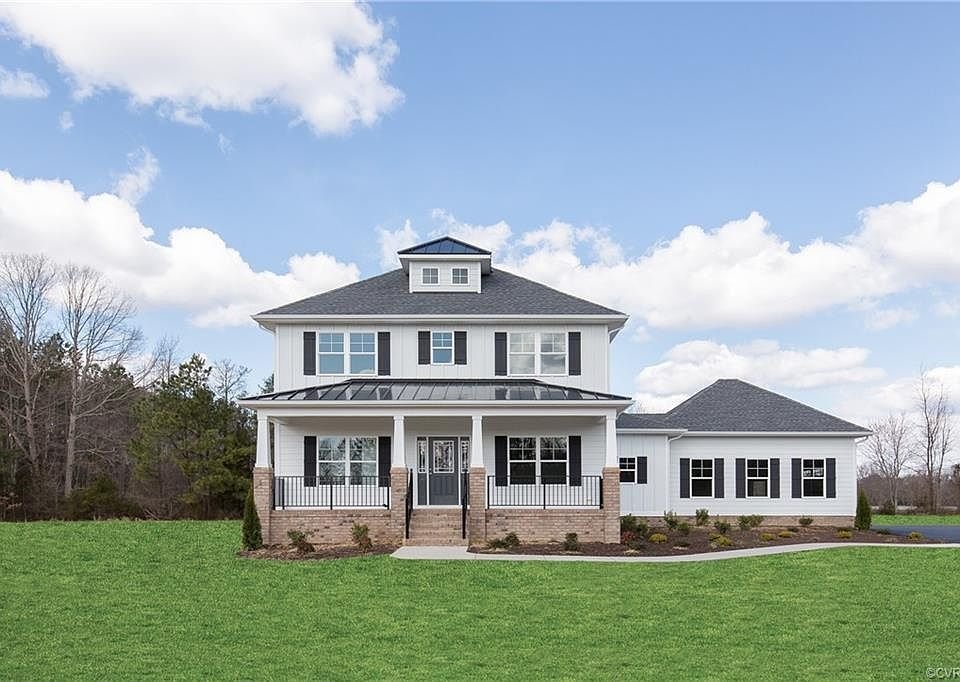

A $300,000 DSCR loan on a $400,000 Richmond, Virginia duplex at 75% LTV can work cleanly when market rent is $3,600 per month and the proposed principal, interest, taxes, insurance, and association dues total $2,880. That is a 1.25 debt service coverage ratio loan calculation: $3,600 divided by $2,880. The property produces $720 in monthly cash flow before maintenance and management, or $8,640 annually. Over five years, that is $43,200 in gross operating cushion before rent growth, principal paydown, or appreciation. The top DSCR underwriting documents are what prove those numbers and keep a profitable deal from stalling at the finish line.
Duane Buziak, NMLS #1110647
Table of Contents
- Why DSCR files move differently than conventional files
- The top DSCR underwriting documents
- How rent, appraisal, and leverage work together
- Document standards by investor strategy
- Broker access versus a single DSCR program
- Eight DSCR underwriting questions investors ask
Why DSCR Underwriting Is Different
DSCR underwriting centers on the asset, not your W-2, tax returns, or debt-to-income ratio. The core question is simple: does the property’s qualifying rent cover its housing payment at the required ratio? That distinction lets investors buy in an LLC, scale beyond conventional property-count limits, and close without exposing every personal-income detail in a traditional mortgage file.
It does not mean documentation disappears. It means the file changes. A broker is building a story around property value, market rent, liquidity, credit profile, entity structure, and exit durability. Missing one item can force a revised appraisal condition, a lower leverage tier, or a delayed closing.
Current investor lending conditions reward complete files. DSCR pricing and leverage remain highly sensitive to credit, ratio, prepayment structure, property type, and reserves. A strong 1.25 DSCR with 75% LTV generally prices better than a 1.00 DSCR at 80% LTV. In many wholesale investor programs, purchase leverage can reach 80% for stabilized rentals, while select files may reach 85% to 90% with tighter credit, lower cash flow, or additional pricing. Rates commonly move with market conditions, but investors should expect a meaningful spread between maximum-leverage DSCR financing and a lower-LTV file with strong reserves.
Top DSCR Underwriting Documents
Purchase Contract and Property Details
Start with the fully executed purchase contract, every addendum, earnest-money documentation, property address, unit count, and intended vesting. If an LLC will take title, provide the exact entity name early. A mismatch between the contract, appraisal order, insurance quote, and LLC formation documents creates avoidable conditions.
For a purchase, the underwriter also needs evidence that your down payment and closing funds are available. Two recent bank statements are common. Large deposits need a clear paper trail. If the funds came from another account, sale proceeds, partner contribution, or business account, document the transfer before underwriting asks.
Rent Schedule, Lease, and Market-Rent Evidence
Rent is the engine of DSCR qualification. For an occupied single-family rental, duplex, triplex, or four-unit property, provide signed leases, current rent rolls, and proof of recent deposits when available. For a vacant unit or new acquisition, the appraisal’s market-rent schedule usually carries the calculation.
Do not rely on a listing’s projected rent. Underwriting will compare the lease or appraisal estimate against local rental evidence. Zillow Observed Rent Index data has consistently shown that rent levels vary sharply even within the same metro area, which is why a Henrico County rent comp cannot automatically support a similar property across the river in Chesterfield County. Three clean rental comps with matching bedroom count, condition, and proximity are more useful than ten broad online estimates.
If the property is a four-unit building, provide unit-by-unit rents and leases. If one unit is vacant, identify the actual lease-up plan. A file with $4,800 in documented monthly rent and a $3,600 housing payment produces a 1.33 DSCR. A file that assumes a vacant unit will rent for $1,400 without support can lose the leverage tier you expected.
Appraisal and Condition Documentation
The appraisal establishes value, market rent, property condition, and whether the asset fits the investor’s guidelines. For a standard DSCR acquisition, the appraisal must support both the value and the market rent required for the requested loan amount.
For properties with deferred maintenance, disclose the condition before appraisal. Photos, contractor bids, and a realistic renovation scope matter. A rent-ready property may qualify for long-term DSCR financing immediately. A house needing $55,000 in work is usually better structured through Fix & Flip or BRRRR financing first, then refinanced into DSCR after stabilization.
Insurance Quote and Tax Information
Insurance is not an afterthought. The annual premium directly affects the monthly housing payment and therefore the DSCR ratio. A $3,000 annual premium adds $250 per month. On a property earning $2,500 per month, that extra cost can be the difference between a 1.02 ratio and a 0.93 ratio.
Get an insurance quote early, especially in Florida, coastal markets, or properties with older roofs. Also verify taxes rather than using a seller’s old escrow figure. Reassessed taxes after a sale can materially change the payment. The cleanest file has a bindable insurance quote, current tax bill, and correct HOA dues if applicable.
Entity, ID, and Credit Authorization Documents
LLC-friendly does not mean entity paperwork is optional. Provide articles of organization, operating agreement, EIN confirmation when applicable, and identification for each guarantor. Some transactions require a certificate of good standing or a borrowing resolution before closing.
A soft credit pull mortgage review can help you assess terms before moving into a full file. Investors who want a no hard inquiry mortgage pre approval should ask for a soft pull mortgage broker review before contract deadlines tighten. A mortgage pre approval without hard pull can identify likely DSCR tiers, reserve expectations, and leverage limits without an immediate credit hit. It is not a final approval, but it is a better starting point than guessing at rate and leverage.
Reserve Statements and Liquidity Evidence
Reserves show that you can carry the property through a vacancy, repair, or delayed lease-up. Many DSCR programs ask for six months of PITIA reserves, although stronger files may need less and higher-leverage or portfolio borrowers may need more. On a $2,880 monthly payment, six months equals $17,280.
Business and personal accounts can often count, depending on the program. Retirement funds may count with an access adjustment. The key is not just the balance. It is providing all pages, showing account ownership, and avoiding unexplained transfers immediately before closing.
How Documents Control Your Leverage and Terms
The strongest DSCR files line up value, rent, and payment before the appraisal arrives. If the property supports a 1.25 ratio at 75% LTV, the file has room for an insurance increase or conservative appraiser. If it only supports 1.00, every $100 of payment change matters.
| Underwriting dimension | Stronger DSCR file | Higher-risk file | Investor impact |
|---|---|---|---|
| DSCR investor access | Broker can compare multiple wholesale investor programs | One-program approval path | More options for ratio, entity, and property type |
| LTV tier | 70% to 75% LTV with 1.20+ DSCR | 80%+ LTV with thin coverage | Lower leverage often improves pricing and approval certainty |
| Rate and leverage tradeoff | More down payment, reserves, and documented rent | Maximum leverage with limited cushion | Higher leverage can cost more and tighten conditions |
| Close speed | Complete contract, leases, insurance, reserves, and entity file | Documents supplied after conditions arrive | Clean files can target 7-10 day closings when appraisal timing allows |
| Closing-cost strategy | Quoted early with title and escrow figures verified | Estimated from generic assumptions | Typical costs vary by state and loan size; Duane’s preferred Title Company saves an additional $2,000 on average |
For a $300,000 DSCR loan, closing costs and prepaid items can commonly land around 2% to 5% of the loan amount depending on points, title charges, escrows, and state-specific fees. That is roughly $6,000 to $15,000 before seller credits. The right structure may include no-out-of-pocket closing options through credits or pricing, but those options still have tradeoffs and should be evaluated against the long-term cost.
Match the Documents to the Strategy
A stabilized rental needs rent evidence, appraisal support, reserves, and clean entity documentation. A Fix & Flip file adds purchase details, renovation scope, contractor bids, budget, and exit plan. BRRRR operators need the same discipline: buy with a documented rehab scope, stabilize with leases, then refinance based on appraised value and durable market rent.
Ground-up construction requires plans, permits, budget, contractor information, draw schedule, and a credible takeout strategy. Small multifamily adds current rent rolls, operating statements, trailing expenses, and leases. Cash-out refinance requires the existing mortgage statement, payoff information, seasoning details, and a clear use of proceeds. Every strategy can lead back to DSCR financing, but only after the document package proves the property can carry itself.
FAQ: DSCR Underwriting Documents
What are the most important DSCR underwriting documents?
The contract, appraisal, market-rent evidence, lease or rent roll, insurance quote, reserve statements, ID, and LLC documents are the foundation of most files.
Do DSCR loans require tax returns?
Usually, DSCR loans qualify from property cash flow rather than personal tax-return income. Documentation requirements still vary by investor program and file complexity.
How is the DSCR ratio calculated?
Monthly qualifying rent is divided by the monthly principal, interest, taxes, insurance, and applicable association dues. A $3,600 rent divided by a $2,880 payment equals 1.25 DSCR.
Can an LLC buy a DSCR property?
Yes. Many DSCR programs permit LLC vesting, provided the entity and guarantor documents are complete before closing.
What DSCR ratio do investors need?
Many programs look for 1.00 or higher, while stronger terms often appear at 1.15 to 1.25 or better. Some options allow below-1.00 ratios with lower leverage or pricing adjustments.
How much reserve money is needed for a DSCR loan?
Six months of PITIA is a common benchmark, but requirements can range based on credit, leverage, property count, and investor guidelines.
Can Investors Paradise review my deal without a hard credit inquiry?
Investors Paradise can start with a soft-pull prequalification to review likely options without immediately using a hard inquiry. Final underwriting may still require a full credit review.
Can DSCR financing work for a BRRRR refinance?
Yes, when the rehab is complete, value is supported, and the stabilized market rent covers the proposed payment at the required ratio.
A complete package does more than satisfy underwriting. It gives you negotiating power before you remove contingencies, helps a broker place the deal with the best-fit wholesale investor, and keeps your next acquisition from waiting on paperwork you could have prepared in one afternoon.
Legal disclaimer: This material is for educational purposes only and is not a commitment to lend, offer of credit, legal advice, tax advice, or investment advice. Terms, rates, LTV limits, DSCR requirements, reserves, property eligibility, and closing timelines vary by program, credit profile, location, appraisal, and market conditions. Business-purpose DSCR financing is subject to investor guidelines and underwriting approval.
Duane Buziak, Mortgage Maestro | NMLS: 1110647 | Licensed in VA · FL · TN · GA · DC | UWM PRO ELITE 2025 | UWM Top 20 Purchase LO Virginia 2025 | UWM Speed to Close Industry Leading 2025 | Scotsman Guide Top Originator 2025 & 2026 | VA Broker of the Year 2024-2025 | Top 1% Nationwide | Coast2Coast Mortgage | DuaneBuziakMortgageMaestro.com | duane@coast2coastml.com | (804) 212-8663