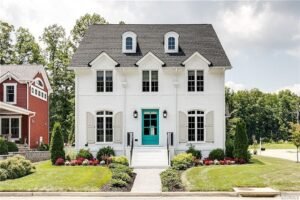


A $300,000 DSCR loan on a $400,000 Richmond, Virginia rental at 75% LTV can tell you exactly why reserves matter. Assume $2,700 monthly market rent, a $2,250 monthly PITIA payment, and a 1.20 debt service coverage ratio. The property produces $450 per month before repairs, vacancy, and management. If the program requires six months of PITIA, the borrower must document $13,500 in reserves. Over five years, the projected $450 monthly spread equals $27,000 before operating surprises – enough to justify protecting liquidity instead of draining every dollar at closing.
This rental reserve requirements guide is built for investors who qualify on property cash flow, not W-2 income. Reserves are not dead money. They are the capital that keeps a DSCR loan, a BRRRR refinance, or the next acquisition from getting derailed by one vacancy, roof claim, or delayed lease-up.
By Duane Buziak, NMLS #1110647
Table of Contents
- What rental reserves mean on a DSCR loan
- How DSCR reserve requirements are calculated
- A worked reserve and leverage example
- Reserve requirements by property and leverage tier
- What counts as eligible reserves
- Current investor lending conditions
- How to avoid reserve-related closing delays
- FAQ
What rental reserves mean on a DSCR loan
Rental reserves are verified liquid or near-liquid funds remaining after your down payment, closing costs, prepaid items, and any required repair escrow are accounted for. Wholesale DSCR investors use them as a durability test: can this property keep paying its debt service if rent stops for a month or a repair hits at the wrong time?
Unlike conventional underwriting, a debt service coverage ratio loan is generally sized around the property. The core calculation is monthly qualifying rent divided by the monthly housing payment, usually principal, interest, taxes, insurance, and association dues when applicable. A $2,700 rent divided by a $2,250 payment equals 1.20 DSCR. Many DSCR programs price best at 1.20 or higher, may allow 1.00 to 1.19 with tighter pricing, and can consider below-1.00 coverage through lower leverage or interest-only structures.
Reserve rules vary by wholesale investor. A common baseline is three to six months of PITIA for a one-to-four-unit rental, with higher requirements for larger balances, lower DSCR, cash-out refinances, short-term rental income, or borrowers with several financed properties. Do not confuse a program’s minimum with a smart operating reserve. The minimum gets the deal approved. The operating reserve keeps the asset from becoming a forced sale.
How DSCR reserve requirements are calculated
The usual formula is simple: monthly PITIA multiplied by the required number of months. On a $2,250 PITIA payment, three months equals $6,750, six months equals $13,500, and 12 months equals $27,000.
What changes the number is the risk profile. A stabilized long-term rental with 1.25 DSCR at 70% LTV is materially different from a 90% leveraged purchase with 1.00 DSCR, a rural appraisal, or a newly renovated short-term rental using projected income. The second deal may still be financeable, but it should not be priced or reserved like the first.
For portfolio investors, some programs require reserves only for the subject property. Others add a requirement for additional financed rentals, often based on a percentage of each property’s unpaid balance or monthly payment. This is where a broker with access to multiple DSCR investors matters. One investor’s reserve overlay can be another investor’s non-issue.
Worked example: preserve leverage without starving the deal
Return to the Richmond single-family rental. The purchase price is $400,000. The loan is $300,000, creating 75% LTV and a $100,000 down payment. Assume closing costs and prepaids total 3.25% of the purchase price, or $13,000. The six-month reserve requirement is $13,500.
The investor needs $126,500 to close and satisfy reserves: $100,000 down, $13,000 costs, and $13,500 retained liquidity. With $140,000 verified after-sale liquid funds, the file works with a $13,500 cushion above the required reserve level. With only $115,000, the investor is short even though the rent supports the loan.
The wrong fix is automatically increasing the loan. Higher leverage can raise the rate, lower the DSCR, trigger mortgage insurance equivalents in certain structures, or push the file outside a program’s LTV ceiling. The better move may be selecting a 70% LTV option, negotiating seller credits where permitted, using a lower-cost title path, or choosing a wholesale investor with a three-month reserve requirement that still fits the property’s profile.
A strong reserve position also gives an operator options after closing. If the property needs a $6,000 HVAC replacement in month four, the investor can fix it without missing payments or tapping a high-rate business credit line. That protects the asset and preserves capacity for the next investment property financing opportunity.
Reserve requirements by property and leverage tier
| DSCR scenario | Typical leverage range | Common reserve expectation | Rate and leverage tradeoff | Typical closing speed |
|---|---|---|---|---|
| 1.20+ DSCR, stabilized long-term rental | 75%-80% LTV | 3-6 months PITIA | Best pricing and broader investor access | About 10-21 days with a clean file |
| 1.00-1.19 DSCR | 70%-75% LTV | 6 months PITIA is common | More rate sensitivity; lower LTV can offset it | About 14-25 days |
| Below-1.00 DSCR or interest-only structure | 65%-75% LTV | 6-12 months PITIA may apply | Higher rate, larger equity position, narrower appetite | About 14-30 days |
| Short-term rental or complex income profile | 65%-75% LTV | 6-12 months PITIA, program dependent | Appraisal and income methodology drive pricing | About 21-30 days |
The table is a planning tool, not a commitment. Individual property type, credit profile, loan size, appraisal, and the selected investor determine final terms. For closing-cost planning, Duane’s preferred Title Company saves an additional $2,000 on average where available, which can preserve cash for required reserves rather than erasing them.
What counts as eligible reserves
Cash in checking, savings, money market accounts, and many brokerage accounts is usually easiest to document. Seasoned funds matter. Underwriters commonly review statements, large deposits, transfers, and asset ownership to confirm that the money is yours and available.
Retirement funds can sometimes count after a documented haircut, but access restrictions matter. Business accounts may work when ownership and access are clear. Gift funds, borrowed reserve money, unverified cryptocurrency balances, and funds that appear immediately before closing can create friction or fail the requirement altogether.
Keep reserve money separate from earnest money and repair capital in your own tracking. For a Fix & Flip or ground-up construction deal, the rehab budget is intended for construction. It should not be assumed to satisfy the post-close liquidity requirement for a DSCR takeout loan. Plan the refinance while you are buying the project, not after the final invoice arrives.
Current investor lending conditions: liquidity wins deals
Investor appetite remains active, but wholesale DSCR pricing is selective. Files with 1.20+ coverage, clean rent support, 70%-75% leverage, and documented reserves generally see more investor options than thin-margin deals at maximum leverage. Rate sheets move with bond markets, loan size, property type, prepayment structure, and whether the file is purchase, rate-term refinance, or cash-out refinance.
Competition for clean rentals is still real in markets such as Richmond, Tampa, Nashville, and Atlanta. That makes speed valuable. A soft credit pull mortgage review can identify a workable DSCR structure without turning early shopping into a no hard inquiry mortgage pre approval problem. The point is not to promise a rate before the property is known. The point is to know your reserve ceiling, target payment, and leverage limit before writing the offer.
A broker can compare multiple DSCR investor guidelines rather than forcing your deal into one bank’s box. That matters when one program wants six months of reserves, another counts brokerage assets differently, and a third offers better leverage but charges more for the risk. The winning structure is usually the one that leaves enough capital for operations after closing, not simply the one with the smallest down payment.
How to avoid reserve-related closing delays
Start with two numbers: your required closing cash and your post-close liquidity. Then add a property-specific repair reserve on top of the underwriting minimum. For a newer turnkey home, that may be modest. For a 1960s duplex with aging mechanicals, six months of PITIA alone may be too thin.
Before submitting an offer, organize the most recent two months of asset statements, identify any large deposits, and avoid moving money between accounts without a paper trail. If your down payment is tied up in another sale, a business account, or a partner contribution, disclose it early. Clean documentation can save days when a 7-10 day close is possible on the right DSCR file.
For BRRRR operators, underwrite the exit conservatively. If the post-rehab rent is projected at $3,000 but current market support is $2,700, model both. If the refinance only works at the top number and leaves no reserves, the project is not ready for maximum leverage. Stabilize the rent, build liquidity, then extract capital with control.
FAQ
What are rental reserve requirements for a DSCR loan?
They are verified funds retained after closing, commonly equal to three to six months of the property’s PITIA payment. Higher-risk files can require more.
Are reserves based on the loan payment or rental income?
Usually on the full monthly PITIA payment, not rent. A $2,250 PITIA payment with a six-month rule requires $13,500.
Can I use brokerage funds as DSCR reserves?
Often yes, subject to the selected wholesale investor’s documentation rules and any asset haircut. Cash is generally the simplest reserve asset.
Do DSCR reserves have to stay in my account after closing?
They are generally verified for approval and closing. Sensible investors keep them available because repairs and vacancy do not follow underwriting calendars.
Does a higher DSCR reduce reserve requirements?
Sometimes. A 1.25 DSCR and lower LTV may qualify for a lighter reserve requirement than a 1.00 DSCR maximum-leverage file, but guidelines vary.
Can an LLC use a DSCR loan?
Many business-purpose DSCR programs allow vesting in an LLC. Entity documents, ownership structure, and guarantor requirements still need review.
Can Investors Paradise review my deal without a hard credit inquiry?
A soft pull mortgage broker review may be available for prequalification, helping you evaluate options before a full application requires additional credit steps.
What if I do not have enough reserves?
Lower the LTV, reduce requested cash-out, document additional eligible assets, negotiate allowable credits, or choose a different investor program. Do not drain operating capital just to force a closing.
The investor with reserves is not sitting on the sidelines. They are positioned to hold through a problem, negotiate from strength, and fund the next deal without letting one property control the portfolio.
Legal disclaimer: This article is for general educational purposes only and is not a loan approval, credit decision, legal advice, tax advice, investment advice, or a commitment to lend. DSCR loan terms, rates, LTV limits, reserve requirements, eligibility, and closing timelines vary by property, borrower, investor, market conditions, and program guidelines. All financing is subject to underwriting approval.
Duane Buziak, Mortgage Maestro | NMLS: 1110647 | Licensed in VA · FL · TN · GA · DC | UWM PRO ELITE 2025 | UWM Top 20 Purchase LO Virginia 2025 | UWM Speed to Close Industry Leading 2025 | Scotsman Guide Top Originator 2025 & 2026 | VA Broker of the Year 2024-2025 | Top 1% Nationwide | Coast2Coast Mortgage | DuaneBuziakMortgageMaestro.com | duane@coast2coastml.com | (804) 212-8663