
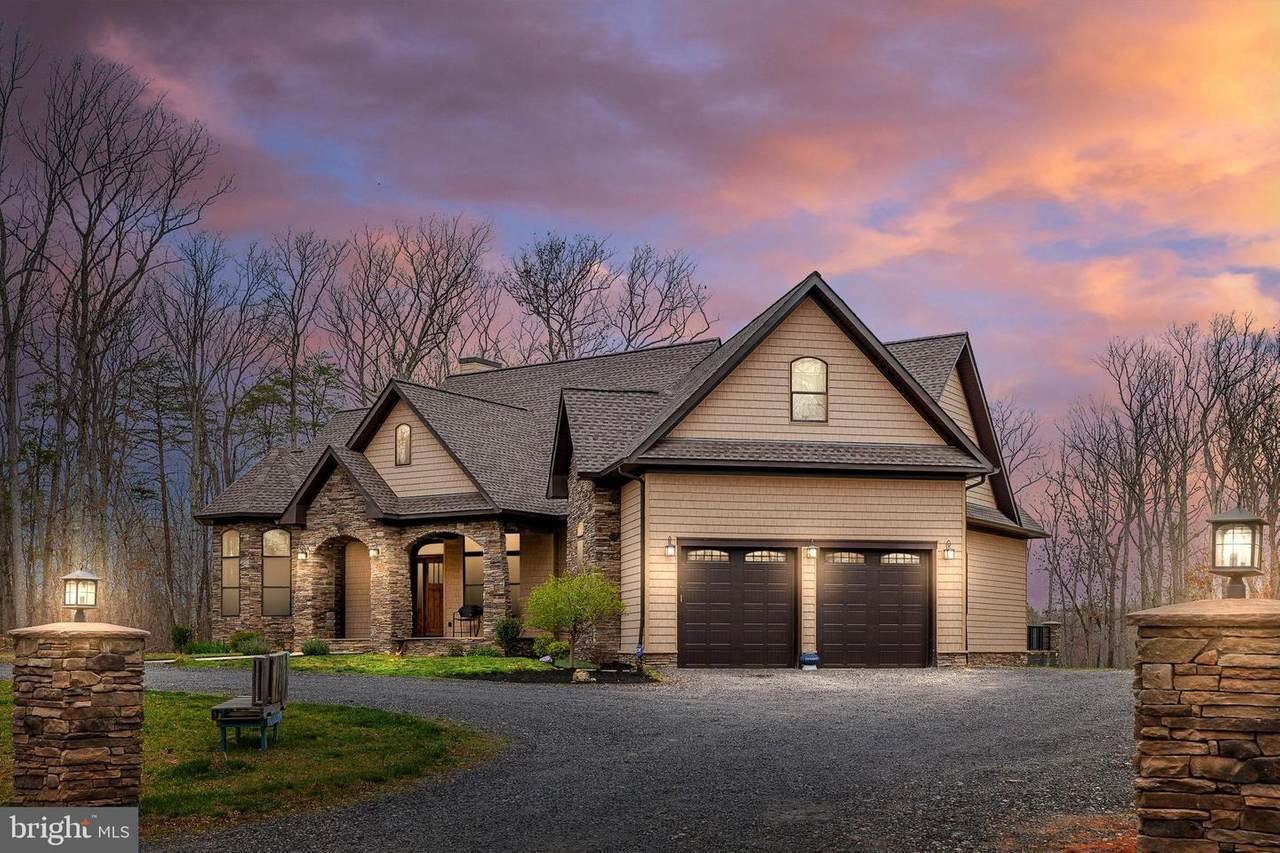

A Richmond, Virginia investor buys a stabilized duplex for $400,000 through a newly formed LLC with a $320,000 DSCR loan at 80% LTV. Verified market rent is $4,000 per month, while the proposed principal, interest, taxes, insurance, and association dues total $3,200. That produces a 1.25 debt service coverage ratio and $800 monthly pre-maintenance cash flow. Over five years, that is $48,000 in projected gross cash flow before repairs, vacancy, management, and capital expenses – while the investor preserves $320,000 of acquisition leverage instead of tying up all-cash capital. That is what LLC mortgage eligibility should solve: getting the entity, rent, leverage, and reserve structure aligned before a good deal becomes an expired contract.
By Duane Buziak, NMLS #1110647
Table of Contents
- What LLC mortgage eligibility actually means
- The LLC and borrower structure
- DSCR math that determines approval
- Leverage, rates, reserves, and closing speed
- A Richmond duplex underwriting example
- Common LLC eligibility mistakes
- FAQ
What LLC Mortgage Eligibility Actually Means
LLC mortgage eligibility is not simply whether your company has an EIN and an operating agreement. For business-purpose rental financing, the question is whether the property and the entity fit a DSCR investor program’s underwriting box.
A DSCR loan qualifies primarily on property cash flow, not your W-2 income, tax returns, or personal debt-to-income ratio. The entity can hold title, while one or more members typically sign a personal guarantee and complete credit review. That distinction matters for investors scaling past the point where conventional financing, personal DTI, and document collection start slowing acquisitions.
A clean LLC setup helps, but it does not override a weak deal. A lender will still evaluate the property type, appraisal, market rents, loan-to-value ratio, credit profile, liquidity, occupancy, insurance, title, and exit strategy. A rental that cannot cover its proposed housing payment will have fewer leverage options, a higher rate, more reserve requirements, or no fit at all.
For context, conventional investment-property guidelines generally cap one-unit purchase financing at 85% LTV under the Fannie Mae Selling Guide. DSCR programs through a wholesale investor network can commonly offer 80% purchase leverage for a strong rental profile, with select scenarios reaching higher leverage when pricing, credit, and reserves support it. The tradeoff is straightforward: more leverage usually means a higher rate, stronger DSCR requirement, or both.
The Entity Setup That Keeps an LLC Deal Moving
An LLC does not need years of operating history to buy a rental. Many investor-purpose programs allow a newly created single-purpose entity. But the paperwork needs to match the transaction from contract through closing.
Expect to provide articles of organization, an EIN confirmation, an operating agreement, and a certificate of good standing when applicable in the state of formation. The operating agreement should identify the members and show who is authorized to borrow and sign. If ownership is changing, do it before underwriting rather than trying to repair entity documents the week of closing.
The purchase contract should name the LLC or permit assignment to the LLC. Insurance must list the correct entity as insured, and title must match the borrower exactly. A common avoidable delay is ordering insurance in an individual’s name when the note and deed of trust will be in the company name.
Personal guarantees are normal in DSCR lending. The LLC owns the asset, but the guarantor’s credit still affects pricing and eligibility. A 740-plus score can open stronger leverage and rate tiers. A 680 score may still work, but the investor should expect either lower LTV, a pricing adjustment, or a larger reserve requirement. Credit is not ignored – it simply is not the main income-qualification engine.
DSCR Math That Determines Approval
The basic formula is simple:
DSCR = monthly qualifying rent ÷ monthly PITIA payment
PITIA means principal, interest, taxes, insurance, and association dues where applicable. Some programs use the appraiser’s market rent on Form 1007, while others can consider an executed lease, depending on the transaction and program. Short-term rental qualification may use an appraiser-supported rental schedule or third-party revenue analysis, but it is more sensitive to property location and program rules.
In the $400,000 Richmond duplex example, the $4,000 qualifying rent divided by the $3,200 PITIA payment equals 1.25 DSCR. At a 1.00 ratio, the property breaks even on the housing payment. At 1.20 or 1.25, it has more room for pricing and leverage. Ratios below 1.00 can still be financeable through some no-ratio DSCR options, but usually at lower leverage or a higher rate.
Do not confuse a qualifying ratio with true operating cash flow. The 1.25 ratio does not include maintenance, management, turnover, utilities paid by the owner, or capital replacements. A disciplined investor underwrites those separately. Approval math gets you to closing; operating math keeps the portfolio healthy afterward.
Leverage, Rates, Reserves, and Closing Speed
Investor lending conditions remain competitive when the deal has clean rent support, reasonable leverage, and a decisive borrower. Wholesale DSCR investors are actively competing for stabilized rentals, especially one-to-four-unit properties with 1.10-plus DSCR, 720-plus credit, and 75% to 80% LTV. Current pricing is rate-sensitive: a higher coupon can support higher leverage, while a lower rate often requires more cash in the deal or a stronger ratio.
A realistic DSCR rate range may be approximately 7.25% to 8.75%, depending on credit, LTV, property type, prepayment structure, and whether the ratio is above or below 1.00. Rates and points move daily, so a quote is only useful when it is tied to a specific property, rent estimate, and closing timeline.
| Decision Point | Strong DSCR Profile | Borderline Profile | Investor Impact |
|---|---|---|---|
| DSCR investor access | 1.20+ ratio, 720+ credit | Below 1.00 ratio or lower credit | More wholesale options versus narrower pricing |
| Purchase leverage | 75%-80% LTV | 65%-75% LTV | Higher leverage preserves capital but can raise rate |
| Rate and leverage tradeoff | Lower rate with more equity or stronger rent | Higher rate to retain leverage | Compare payment, cash flow, and refinance plan |
| Reserve requirement | Typically 3-6 months PITIA | Often 6-12 months PITIA | Liquidity can determine final approval |
| Close speed | About 7-10 business days with clean file | 15-25 days with repairs or document issues | Entity and insurance errors cost contract time |
| Title costs | Standard settlement charges apply | State and transaction dependent | Duane’s preferred Title Company saves an additional $2,000 on average |
Closing costs commonly run about 2% to 5% of the loan amount, including origination, appraisal, title, recording, prepaid items, and escrows where required. On the $320,000 example, that is roughly $6,400 to $16,000 before any seller credits or negotiated concessions. Investors should also plan for reserves, which are separate from down payment and closing costs.
Richmond Duplex Example: From Contract to Cash Flow
Richmond remains a practical example because duplexes in neighborhoods such as Northside or parts of Henrico can offer rent diversification without immediately moving into commercial multifamily underwriting. If one unit turns over, the second unit can still offset a meaningful share of debt service.
Assume the appraiser supports rents of $2,000 per side. The total $4,000 rent supports the $3,200 PITIA payment at 1.25 DSCR. The investor brings $80,000 down on the $400,000 purchase, plus estimated closing costs and reserves. A six-month reserve requirement would equal $19,200 based on the $3,200 monthly payment.
If the investor instead pushes to 85% leverage, the loan becomes $340,000. The payment rises, potentially reducing DSCR toward 1.10 or lower depending on the note rate and taxes. That may still close, but it is not automatically better. The extra $20,000 of leverage needs to earn more than its payment and pricing cost in the investor’s next deployment.
Zillow’s rental-market research and local appraiser rent schedules are useful starting points, but neither replaces a deal-specific rent analysis. Underwriting will rely on the program’s accepted documentation, not a listing site’s optimistic projected rent.
Where Investors Lose LLC Mortgage Eligibility
The most common problem is treating the LLC as the qualification. It is only the ownership vehicle. Weak rent support, an aggressive appraisal value, undisclosed ownership changes, insufficient reserves, or a late insurance quote can derail an otherwise financeable transaction.
The second problem is waiting for a hard credit inquiry before knowing whether the DSCR math works. A soft credit pull mortgage review can identify likely credit tiers without immediately impacting the borrower’s score. That is the value of a no hard inquiry mortgage pre approval conversation: assess the deal structure first, then move to a full application when the numbers and contract are real.
A soft pull mortgage broker can also compare multiple investor programs instead of forcing every deal into one product. For a BRRRR operator, the first loan may be acquisition and rehab financing, followed by a DSCR cash-out refinance after stabilization. For a flipper or ground-up builder, the exit should be modeled before the short-term loan closes. Multifamily investors with five or more units may need a different underwriting lane, but the same core discipline applies: documented income, defensible expenses, sufficient liquidity, and a clear exit.
FAQ: LLC Mortgage Eligibility
Can a new LLC get a DSCR loan?
Yes. Many business-purpose programs allow newly formed LLCs when entity documents, guarantor credit, property income, and reserves meet guidelines.
Do I need tax returns for an LLC DSCR loan?
Usually not for income qualification. DSCR underwriting focuses on property rent relative to the proposed payment, though documentation requirements vary.
Can I buy a rental in an LLC at 80% LTV?
Often, yes. Strong rent coverage, credit, liquidity, and property quality commonly support 75% to 80% LTV tiers.
What DSCR ratio do I need?
Many programs price most favorably around 1.10 to 1.25 or higher. Some permit ratios below 1.00 with lower leverage or higher pricing.
Does an LLC protect me from a personal guarantee?
No. The entity owns the property, but DSCR loans commonly require one or more members to provide a personal guarantee.
How much cash reserve is required?
Plan for at least 3 to 6 months of PITIA on a stronger file. Lower DSCR, higher leverage, or multiple financed properties can require more.
Can a soft credit pull be used before applying?
Yes. A mortgage pre approval without hard pull can help identify credit and leverage options before you authorize a full credit report.
How fast can an LLC DSCR loan close?
A clean stabilized rental can close in roughly 7 to 10 business days. Appraisal issues, entity corrections, insurance, and title conditions can extend that timeline.
LLC financing works best when you treat the entity documents, rental evidence, reserve plan, and exit strategy as one package. Bring the deal in early, stress-test the payment before you write the offer, and let the property cash flow – not a pile of personal income documents – lead the financing conversation.
Legal disclaimer: This article is for educational purposes only and is not a commitment to lend, an offer of credit, legal advice, tax advice, or investment advice. Loan terms, rates, points, LTV, DSCR requirements, reserves, and eligibility are subject to change and final underwriting approval. Business-purpose investor financing is not consumer mortgage financing. Consult qualified legal, tax, insurance, and investment professionals before making decisions.
Duane Buziak, Mortgage Maestro | NMLS: 1110647 | Licensed in VA · FL · TN · GA · DC | UWM PRO ELITE 2025 | UWM Top 20 Purchase LO Virginia 2025 | UWM Speed to Close Industry Leading 2025 | Scotsman Guide Top Originator 2025 & 2026 | VA Broker of the Year 2024-2025 | Top 1% Nationwide | Coast2Coast Mortgage | DuaneBuziakMortgageMaestro.com | duane@coast2coastml.com | (804) 212-8663