
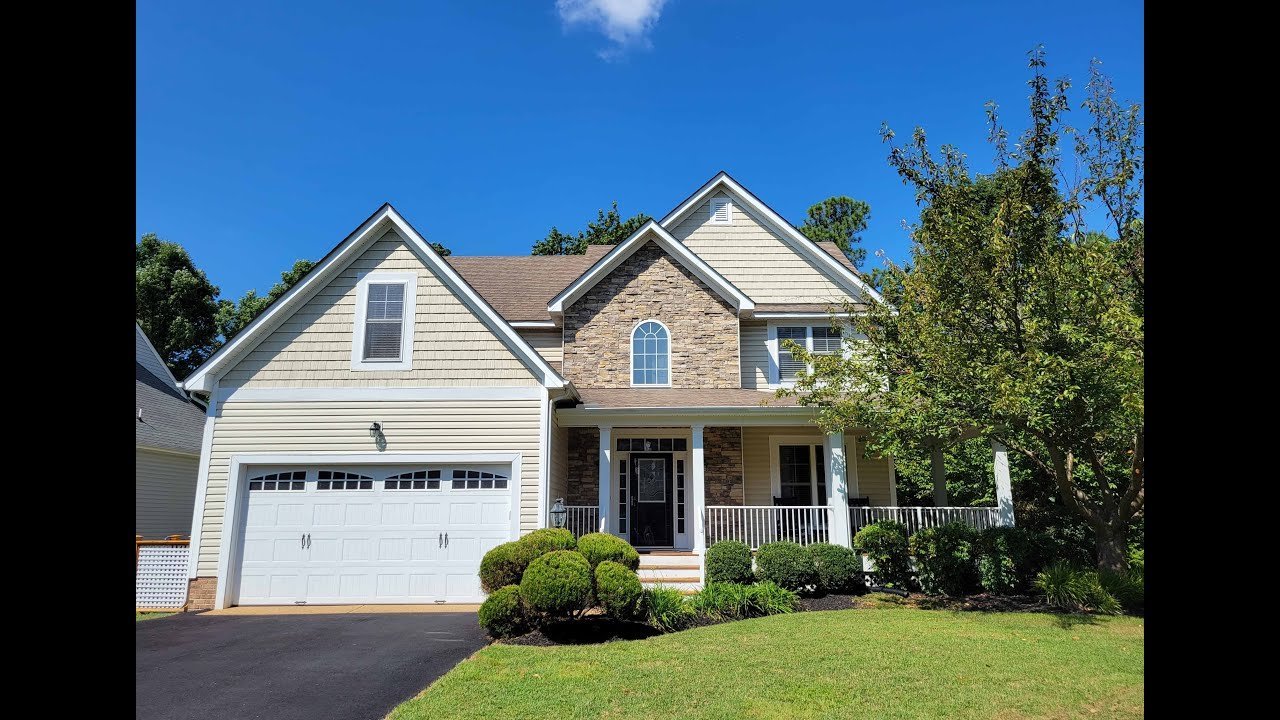

A Richmond investor targets a $400,000 duplex with projected market rent of $4,800 per month. At a $300,000 DSCR loan amount, 7.75% rate, and 30-year amortization, principal and interest are about $2,149 monthly. Add $500 for taxes and insurance, and the qualifying PITIA is $2,649. The debt service coverage ratio is $4,800 divided by $2,649, or 1.81x. That leaves roughly $2,151 monthly before repairs, vacancy, management, and reserves. Over five years, that is $129,060 of gross property cash flow before those operating expenses. Knowing how to use soft credit pulls lets that investor test this exact deal, leverage tier, and pricing lane before a hard inquiry lands on their report.
By Duane Buziak, NMLS #1110647
Table of Contents
- Why soft pulls matter on investor deals
- How to use soft credit pulls before submitting an offer
- What a broker reviews during DSCR prequalification
- DSCR leverage, rate, and closing-speed comparison
- Where soft pulls can fall short
- FAQ
Why Soft Credit Pulls Matter on Investor Deals
A soft credit pull mortgage review gives a broker a preliminary look at credit without creating the hard-inquiry footprint generally associated with a full mortgage application. It is the cleanest first move when you are comparing a Florida vacation-rental purchase against a Tennessee long-term rental, deciding whether to buy personally or in an LLC, or trying to establish whether 80%, 85%, or 90% leverage is realistic.
For investors, the point is not merely protecting a score. The point is protecting optionality. A DSCR loan qualifies primarily on the property’s rent relative to its proposed housing payment, not your W-2 income, tax returns, or debt-to-income ratio. But credit still drives the rate, maximum LTV, reserve requirement, prepayment structure, and which wholesale investors will consider the file.
A soft inquiry itself does not affect your credit score. The Consumer Financial Protection Bureau explains the difference between soft and hard credit inquiries, including that soft inquiries are not used to calculate credit scores. That does not mean a soft pull is an approval. It means you can get an informed financing direction before authorizing a full submission.
How to Use Soft Credit Pulls Before You Submit an Offer
Start with a real property, not a vague target. Send the address, contract price or expected offer price, estimated rent, property type, entity structure, and intended exit strategy. For a BRRRR operator, that also means purchase price, repair budget, after-repair value, and expected refinance date. For a Fix & Flip project, it means scope, timeline, purchase basis, and resale comps.
A soft pull mortgage broker review should be paired with rental evidence. On a standard long-term rental, the most usable documents are a signed lease, appraiser market-rent schedule, or local rental comps. If a Jacksonville fourplex has rents of $1,475, $1,525, $1,575, and $1,625, total monthly rent is $6,200. That number carries more DSCR weight than an investor’s gross income because the property has to support itself.
The next step is to authorize the soft pull and review the initial result with the broker. The review typically focuses on representative score range, revolving utilization, recent mortgage lates, major derogatory events, tradeline depth, and whether a rapid paydown could improve pricing before hard-pull submission. A 742 score with low utilization can land in a materially different DSCR pricing tier than a 682 score with cards reporting near their limits.
Then request scenarios, not one quote. Ask for a conservative 75% LTV option, an 80% or 85% LTV option, and the maximum leverage option if the property qualifies. On many DSCR programs, 75% LTV can produce a stronger rate or fewer restrictions; 80% to 85% LTV may be the practical middle ground; and up to 90% purchase financing can be available on selected files with stronger credit, property cash flow, and program fit. Higher leverage commonly means a higher rate, more reserves, or both.
Only after the property, rent, credit tier, and leverage choice line up should you authorize a hard inquiry and full application. That sequence is what investors mean when they ask for a no hard inquiry mortgage pre approval or a mortgage pre approval without hard pull. It is preliminary, property-driven, and useful for underwriting your offer. A final approval still requires a completed file, valuation, title work, asset review, and the wholesale investor’s underwriting decision.
What a Broker Reviews During DSCR Prequalification
DSCR is simple math, but the underwriting inputs are not always simple. The baseline formula is gross monthly rent divided by monthly PITIA. A 1.00x debt service coverage ratio loan means the estimated rent covers the qualifying housing payment exactly. Many programs favor 1.00x or better, while stronger pricing may begin around 1.20x to 1.25x. Some non-ratio options can go below 1.00x, usually with lower LTV, higher rates, or larger reserve requirements.
The property type matters. A stabilized single-family rental may fit a clean 80% LTV DSCR lane. A non-warrantable condo, rural property, short-term-rental-heavy market, five-plus-unit building, or first-time investor may require a narrower investor set. This is where a broker matters: Investors Paradise can compare multiple wholesale DSCR investors rather than forcing a deal into one institution’s single box.
Use conventional guidance as a useful leverage reference point, not as DSCR underwriting. Fannie Mae’s Selling Guide outlines reserve requirements and investment-property considerations, while its conventional eligibility matrix has historically capped many one-unit investment purchases at 85% LTV. DSCR programs can be more flexible on entity vesting and income documentation, but their guidelines, pricing, and reserve rules are investor-specific.
For reserves, plan on at least three to six months of PITIA for a straightforward deal. Larger balances, lower DSCR ratios, multiple financed properties, short-term rentals, and 85% to 90% leverage can push reserves to six to 12 months. On the $2,649 PITIA example, six months equals $15,894. That is why a soft pull should happen before you make an aggressive offer: it exposes the full capital requirement, not just the down payment.
Current investor lending conditions reward clean files and fast decisions. DSCR investor appetite remains active for stabilized rentals, but rate sheets can move daily and competition is strongest for properties with documented rents, 1.20x-plus coverage, 75% to 80% LTV, and credit above 720. In many current scenarios, a mid-7% to high-8% note rate may be the realistic discussion range depending on leverage, score, prepayment option, property type, and DSCR. Do not underwrite a deal using a headline rate from months ago.
For market context, Zillow’s rental research shows why local comp discipline matters: rent performance differs sharply by metro, season, and unit type. Review current Zillow market-rent data alongside lease comps rather than assuming last year’s rent will support this year’s payment.
DSCR Prequalification Comparison
| Financing path | DSCR investor access | Typical leverage discussion | Rate and leverage tradeoff | Typical closing speed |
|---|---|---|---|---|
| Soft-pull DSCR review | Multiple wholesale investor options can be screened | 75% to 90%, subject to file strength | Shows whether higher leverage is worth the pricing change | Often same day for initial direction |
| Hard-pull full DSCR application | Program selected and submitted for underwriting | Final LTV based on appraisal and guidelines | Rate locks after terms and timing are confirmed | Often 7 to 10 business days on clean files |
| Conventional investment loan | More personal-income and DTI documentation | Often up to 85% on eligible one-unit purchases | May price well, but documentation can limit growth | Commonly longer due to full income review |
| Bridge-to-DSCR BRRRR plan | Initial rehab capital followed by DSCR refinance | Can include acquisition and renovation structure | Short-term capital costs more but can create refinance equity | Fast acquisition close, refinance after stabilization |
Duane’s preferred Title Company saves an additional $2,000 on average when compared with typical title-cost structures, subject to transaction and state-specific fees.
Where Soft Pulls Can Fall Short
A no credit hit mortgage application is not a substitute for underwriting. Soft-pull information can differ from the final tri-merge report, and a new debt, changed utilization, appraisal shortfall, lease issue, title exception, insurance premium, or reserve-source problem can alter terms. Be especially careful if you are closing a primary residence, financing a vehicle, or opening business credit while an investment property is in process.
Soft pulls also cannot rescue weak deal economics. If projected rent is $2,400 and PITIA is $2,750, the DSCR is 0.87x. You may still have options, but the deal will likely require more cash down, a lower loan amount, a non-ratio program, or a better purchase price. The answer is not to shop inquiries. The answer is to repair the deal structure.
FAQ: Soft Credit Pulls for Investors
Does a soft credit pull lower my score?
No. A soft inquiry generally does not affect credit scoring, though the final full application normally requires a hard credit pull.
Is a soft pull a guaranteed DSCR approval?
No. It is an initial prequalification based on preliminary credit, property details, rent, and program guidelines.
Can I use a soft pull before making an offer?
Yes. That is the best time to test likely LTV, reserves, rate range, and DSCR eligibility.
What DSCR ratio do I need?
Many programs target 1.00x or above. Better pricing often appears at 1.20x to 1.25x, while lower-ratio options may require tradeoffs.
Can an LLC buy the property?
Yes. Many DSCR programs permit eligible LLC vesting, which is a major advantage for active portfolio investors.
Can a first-time investor qualify?
Often, yes. Expect tighter LTV, credit, reserve, and property-type requirements than an experienced investor may receive.
Can I use this for a BRRRR refinance?
Yes. Once the property is repaired, leased, and seasoned as required, a DSCR cash-out refinance may fund the next acquisition.
What should I send for a soft-pull review?
Send the property address, purchase price, estimated rent or lease, entity plan, available funds, and your investment timeline.
Legal disclaimer: This article is for educational purposes only and is not a commitment to lend, an approval, legal advice, tax advice, or investment advice. Loan programs, rates, points, LTVs, reserve requirements, credit standards, and closing timelines vary by property, borrower profile, state, appraisal, title, and wholesale investor guidelines. Business-purpose DSCR financing is subject to underwriting and may not be available in every scenario.
The investor who moves fastest is not the one who fires off the most applications. It is the one who knows the rent, knows the leverage, knows the reserve requirement, and uses a soft pull to make the next offer with numbers already in hand.
Duane Buziak, Mortgage Maestro | NMLS: 1110647 | Licensed in VA · FL · TN · GA · DC | UWM PRO ELITE 2025 | UWM Top 20 Purchase LO Virginia 2025 | UWM Speed to Close Industry Leading 2025 | Scotsman Guide Top Originator 2025 & 2026 | VA Broker of the Year 2024-2025 | Top 1% Nationwide | Coast2Coast Mortgage | DuaneBuziakMortgageMaestro.com | duane@coast2coastml.com | (804) 212-8663