
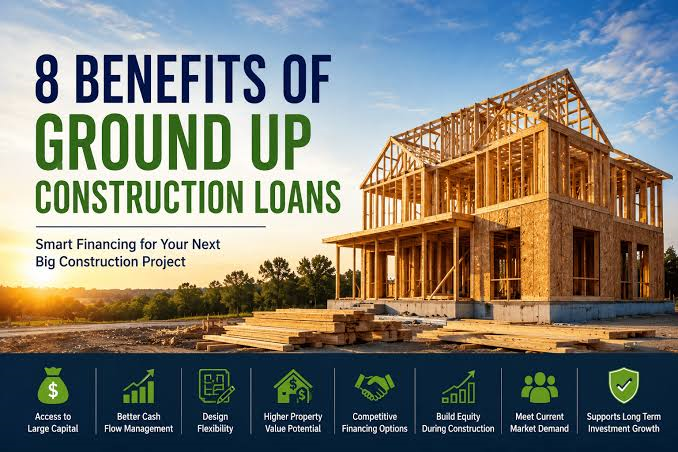

Ground-up construction financing is a type of real estate financing used to fund the development of a new property from an undeveloped or cleared site.
Depending on the lender and loan structure, financing may cover eligible costs such as:
- Land acquisition
- Site preparation
- Construction materials
- Labor
- Permits and fees
- Architectural and engineering costs
- Certain soft costs
- Other approved development expenses
Construction loans are typically short-term and may distribute funds in stages, or draws, as construction milestones are completed.
How Does Ground-Up Construction Financing Work?
The process generally begins with the borrower developing a detailed construction plan and financial budget. The lender evaluates the proposed project, borrower qualifications, construction team, property value, budget, and expected marketability.
Once approved, the loan may be funded according to an agreed draw schedule rather than providing the entire loan amount upfront.
As construction progresses, inspections may be performed before additional funds are released.
A typical process includes:
- Identify and evaluate the development site.
- Create architectural plans and construction budgets.
- Obtain necessary permits and approvals.
- Select qualified contractors and professionals.
- Apply for construction financing.
- Close on the loan.
- Receive construction funds through scheduled draws.
- Complete the project.
- Sell, refinance, or otherwise execute the project’s exit strategy.
The exact process varies by lender, property type, location, and project complexity.
What Can Construction Loans Finance?
The eligible uses of construction financing depend on the specific loan program.
Some financing structures may cover land acquisition and construction costs, while others may finance construction on land the borrower already owns.
Potential project expenses can include:
Land and Acquisition Costs
If the land is being purchased as part of the project, financing may potentially include the acquisition cost, subject to lender guidelines.
Construction Costs
This can include materials, labor, subcontractors, and other direct construction expenses.
Soft Costs
Architectural, engineering, permitting, legal, and other professional costs may be eligible under certain programs.
Contingency
Some construction budgets include a contingency reserve to help address unexpected project costs. Whether this can be financed depends on the lender and loan structure.
Benefits of Ground-Up Construction Financing
Access to Development Capital
Construction financing can provide the capital necessary to move a development project from plans to completion.
Structured Funding
Draw-based financing allows funds to be released as construction progresses, helping align financing with project needs.
Potential to Create New Value
Developing a property can allow investors to create value through new construction rather than simply purchasing an existing asset.
Flexible Exit Strategies
Depending on the project, the completed property may be sold, refinanced, or retained as a long-term investment.
What Are the Requirements?
Construction lenders generally want to understand both the project and the people responsible for completing it.
Requirements can vary, but lenders may consider:
- Borrower’s credit profile
- Available equity or down payment
- Construction experience
- Contractor qualifications
- Project plans
- Construction budget
- Property appraisal
- Expected completed value
- Permits and approvals
- Market conditions
- Exit strategy
- Cash reserves
A detailed and realistic construction budget is particularly important because cost overruns can significantly affect a project’s profitability.
How Much Does Ground-Up Construction Financing Cost?
The cost of construction financing depends on the lender, project size, location, borrower qualifications, leverage, loan term, and market conditions.
Potential costs can include:
- Interest
- Origination fees
- Closing costs
- Appraisal fees
- Inspection fees
- Legal and title expenses
- Extension fees
- Other lender charges
Because construction projects can experience delays, investors should also budget for additional interest and carrying costs if the project takes longer than expected.
Risks of Ground-Up Construction Financing
Ground-up development carries several risks that investors should evaluate before beginning a project.
Construction delays can increase labor, material, and financing costs.
Cost overruns can reduce expected profit margins and may require additional capital.
Market changes can affect the property’s completed value, rental income, or resale demand.
There is also exit risk. If a project was designed to be sold but market conditions weaken, the investor may need to hold or refinance the property instead.
A conservative financial model and adequate contingency reserves can help investors prepare for unexpected challenges.
How to Choose a Construction Lender
When comparing lenders, consider more than the interest rate.
Important factors include:
- Maximum loan amount
- Loan-to-cost requirements
- Loan-to-value requirements
- Land financing options
- Draw schedule
- Construction monitoring process
- Interest rate and fees
- Loan term
- Extension options
- Closing timeline
- Experience with similar projects
- Exit requirements
A lender with experience in the specific type of development can potentially make the construction financing process more efficient.
Final Thoughts
Ground-up construction financing can provide the capital needed to develop a new property from the initial site through completion. For qualified investors and developers, it can be an important tool for creating new real estate assets and potentially generating value.
However, successful development requires more than securing financing. Investors should carefully evaluate land costs, construction expenses, timelines, market demand, financing costs, and exit strategies before moving forward.
With a realistic budget, experienced construction team, appropriate financing structure, and well-planned exit strategy, ground-up construction financing can help turn a development concept into a completed real estate project.