
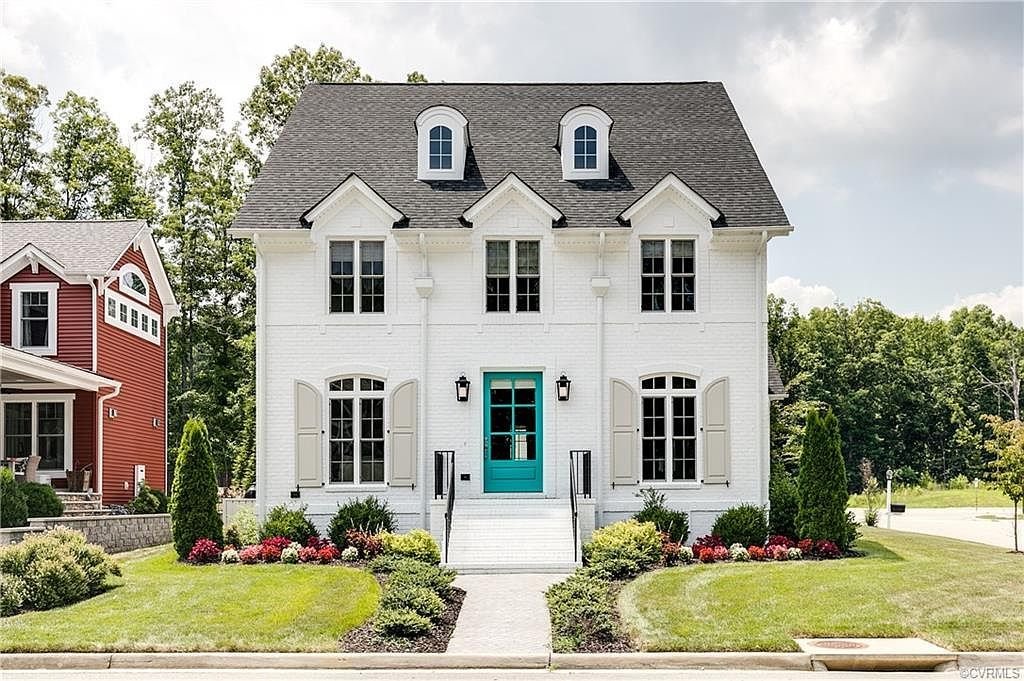

I’m Duane Buziak Mortgage Maestro (NMLS #1110647), and the most common bridge loan exit strategy problems are a sale or refinance that takes longer than the loan term, an after-repair value that comes in lower than projected, and a refinance that fails to qualify. Here is what one of them costs. Illustrative only, not a quote: you buy a house for $300,000, put $60,000 into the rehab, and take a 12-month bridge loan. The sale slips three months. At an assumed $180,000 balance and an assumed 10% interest cost, that is $1,500 a month of interest, or $4,500 over three months. Add up to $500 a month of taxes, insurance and utilities and the delay costs about $6,000, and you are now deciding whether to ask for an extension.
This article covers how each of these failures happens, how to build a backup exit, and how to plan before you close.
By Duane Buziak, NMLS #1110647
What Exit Strategy Problems Actually Look Like on a Bridge Loan
A bridge loan is short-term financing, usually interest-only, that is repaid by selling the property or refinancing into long-term financing. Your exit strategy is the plan for that repayment. The maturity date is the day the loan comes due, and the balloon payoff is the full remaining balance owed on that day, not a small final installment.
Every exit problem has the same root: the cash needed to retire the loan has not arrived by maturity. It shows up in three forms:
- Sale delay: the house is finished but not sold in time.
- Value shortfall: the after-repair value (ARV) lands below your projection, so the sale or refinance produces less cash than planned.
- Refinance failure: the long-term loan does not qualify on value, rent, seasoning or reserves.
Walk the opening example month by month. Using the same assumptions ($180,000 balance, assumed 10% interest cost, interest-only), each month carries $1,500 of interest. Taxes, insurance and utilities on a vacant property might add $0 to $500 more in my illustration, so a month of delay runs roughly $1,500 to $2,000. Month 12 is the planned payoff. Month 13 costs $1,500 to $2,000, month 14 another $1,500 to $2,000, and by month 15 you have spent $4,500 to $6,000 you did not budget for. That is before any extension fee, which varies by loan.
The misconception I correct most often is that the exit plan is a line on the application. It is the actual source of repayment. I shop your loan across multiple wholesale lenders, and each one looks at whether your exit plausibly repays the balance. Options and approval depend on your file, so a thin exit story shapes the answer you get.
Why Do Flips and Rehabs Miss Their Sale Timeline?
Delays rarely come from one dramatic event. They accumulate:
- Permit and inspection backlogs that stall work you cannot legally continue.
- Contractor overruns and change orders that push completion past your listing date.
- A buyer whose financing or appraisal falls through after you thought you were under contract.
Each one can cost a month or more, and they stack.
The quieter risk is comparable sales. ARV is an estimate built from nearby sold homes, not a fact. If the market softens between your purchase and your listing, the comps you underwrote no longer describe what a buyer will pay.
Here is the arithmetic. Illustrative only, not a quote. Assume a $180,000 payoff, $180,000 of your own cash in the deal ($360,000 total cost minus the loan), and combined agent fees and seller closing costs of 7% of price (an assumption for the example).
- At the projected $450,000: costs are $31,500, leaving $418,500. Subtract the $180,000 payoff and you have $238,500. Subtract your $180,000 cash and the result is $58,500, before interest and carrying costs.
- At $420,000: costs are $29,400, leaving $390,600. Subtract the payoff and you have $210,600. Subtract your cash and the result is $30,600.
A $30,000 price miss cut profit by $27,900, nearly half. The loan still gets repaid in this case because leverage is moderate. On a deal financed closer to the full ARV, the same miss can leave you short at the closing table.
Market speed matters too. Local days-on-market figures change month to month, so I do not quote one here. If you want a number for your area, use a current, neutral source such as your local MLS data and note the date you pulled it.
Why Does a Refinance Exit Fail, and Where Does DSCR Fit?
Many bridge exits are refinances into a rental loan, often a DSCR loan. DSCR stands for debt service coverage ratio: monthly rental income divided by the monthly housing payment, which covers principal, interest, taxes, insurance and any HOA dues. Minimum ratios, reserve requirements and seasoning rules vary by wholesale lender and program, so treat everything here as a concept to confirm against your file.
A refinance exit tends to break in four places:
- Value: the appraisal comes in too low to reach the loan-to-value needed to pay off the bridge.
- Rent: market rent is too low for the ratio the program wants.
- Seasoning: the program requires you to have owned the property for a set period before it will refinance on a new value.
- Reserves: you lack the cash on hand the program expects after closing.
Here is the ratio in practice. Illustrative only, not a quote. Market rent of $2,400 against a $2,100 total monthly payment gives $2,400 / $2,100 = 1.14. Now change one input:
- The rent appraises at $2,200 instead: $2,200 / $2,100 = 1.05.
- Insurance and taxes push the payment to $2,300: $2,400 / $2,300 = 1.04.
- Both happen: $2,200 / $2,300 = 0.96, below 1.0.
A property that looked comfortably rentable now carries a ratio many programs would not accept, and you may be left with a bridge loan and no takeout.
This is why BRRRR investors have to be careful. The refinance is the whole strategy, not a finishing step, so test it before you buy, not after the rehab is done. Run the rent, the likely payment and the needed loan amount on day one. For the mechanics, see my DSCR loan guide, and for the programs I arrange, see my investor loan programs page.
What Extension, Backup Exit and Cost Options Exist When the Exit Slips?
When the exit slips, these are the options, roughly in the order I walk investors through them:
- Loan extension. Not automatic. It depends on the loan terms and the current state of the file, and it can carry fees and changed terms.
- A second bridge or different short-term loan. This refinances the clock but starts new closing costs and underwriting.
- Switching from sale to rental refinance. If the numbers support a DSCR loan, you hold the property instead of selling it.
- A partial price reduction. Sometimes selling at a lower price costs less than another quarter of interest.
On extensions, read the note and ask before closing. Whether one is offered, what it costs and what conditions apply vary by loan, and I will not assert figures here.
The cost comparison below uses the same illustrative property. The fixed columns are principal and interest, property tax, insurance, PMI if any, and total monthly cost. Check property tax on your county assessor’s site for the actual parcel.
- Bridge loan, interest-only: P&I $1,500 (assumed) | property tax $325 | insurance $200 | PMI none | total monthly cost $2,025, plus utilities.
- Long-term rental loan: P&I $1,575 (assumed) | property tax $325 | insurance $200 | PMI none | total monthly cost $2,100.
The monthly cost is similar. The difference is that a tenant at $2,400 can carry the second one, while the bridge has no income behind it and a due date.
The exit options themselves compare like this:
- Sale exit: fits flippers with solid comps. Documentation: contract, rehab scope, comps. Credit approach: soft pull preview first, then a full review subject to credit approval and underwriting guidelines. Down payment: set by the program and confirmed on your file.
- DSCR refinance exit: fits landlords and BRRRR investors with a rentable property. Documentation: lease or rent estimate, appraisal, entity documents. Credit approach: same soft pull preview first. Down payment: as the program states.
- Bank-statement or non-QM exit: fits self-employed investors whose tax returns understate income. Documentation: bank statements instead of full returns, with program-specific requirements. Credit approach: same soft pull preview first. Down payment: as the program states.
How Do You Stress-Test an Exit Before You Close?
A deal that only works on the first-case projection does not have an exit, it has a hope. Before you commit, run these four tests and confirm the plan still repays the loan:
- Add three months to the timeline and recalculate interest and carrying costs.
- Cut your ARV by 5 to 10 percent and recheck net proceeds after payoff and costs.
- Raise the rehab budget by a contingency of your choosing, then see what that does to cash needed.
- Lower the rent estimate and recompute the DSCR.
Reserves are the cash you hold to keep paying while the exit is delayed. As a concept, size them to at least the three-month delay from your first test, plus your rehab contingency. Lender reserve requirements vary by program, so confirm yours rather than assuming.
For market context, use two official sources and record the retrieval date yourself on the day you underwrite. I have not reproduced a figure here because both update on their own schedules.
- Item: national rental vacancy rate | Figure: pull the latest release | Source: U.S. Census Bureau Housing Vacancy Survey | As-of date: note the quarter and your retrieval date.
- Item: Fair Market Rent for your target county | Figure: pull the current fiscal year value | Source: HUD Fair Market Rents | As-of date: note the fiscal year and your retrieval date.
Then gather your documents early:
- Purchase contract.
- Rehab scope and budget.
- Comparable sales.
- Lease or rent estimate.
- Entity documents if you buy through an LLC.
- Proof of reserves.
What Is the Step Path From Deal Analysis to a Soft Pull Pre-Approval?
- Analyze the deal and both exits, the primary and the backup, using the stress tests above.
- Pick the program that fits the plan: a fix and flip bridge loan, a bridge-to-DSCR path, or construction financing.
- Gather the documents listed in the previous section.
- Run the NoTouch Credit Pull soft pull pre-approval, which previews your options without touching your credit, subject to credit approval and underwriting guidelines.
- I shop your loan across multiple wholesale lenders and compare your options.
The structural difference between a broker and a single-company program is simple. Here are the facts, nothing more:
- Factor: products available. Independent broker: I can compare programs across multiple wholesale lenders. Kiavi: offers its own investor loan products through one company.
- Factor: who you apply with. Independent broker: you work with me, and I arrange the placement. Kiavi: you apply directly to the company.
- Factor: fit when a file is unusual. Independent broker: I can look at more than one program’s guidelines. Kiavi: your file is measured against that company’s program.
Timeline depends on your file, the appraisal and title. Approval depends on the file, and nothing is guaranteed.
This fits investors with a clear exit and reserves. It does not fit a deal that only works if everything goes perfectly. I am licensed in VA, FL, TN, GA, DC, NC, SC, MD, TX, KY and WV, and I do not arrange financing outside those states.
A Bridge Loan Is Only as Sound as Its Backup Exit
A bridge loan is only as sound as its exit and its backup exit. If your plan needs a sale in month 12, ask what you do in month 13. If it needs a DSCR refinance, test the ratio before you buy. I have helped investors build both paths into the file before closing, and that planning is the most useful part of my work.
As Duane Buziak Mortgage Maestro, I carry a 5.0 rating across more than 2,000 verified reviews on all platforms, and I was named a Scotsman Guide Top Originator in 2025 and 2026, VA Broker of the Year in 2024 and 2025, and UWM PRO ELITE in 2025.
Ready to fund your next deal with an award-winning broker who knows investor financing? Preview your loan options with a soft pull that won’t touch your credit, and get tailored fix-and-flip, DSCR, BRRRR or construction financing from a broker who stays with you for life. Pre-approval is subject to credit approval and underwriting guidelines. Call me at 804-212-8663.