
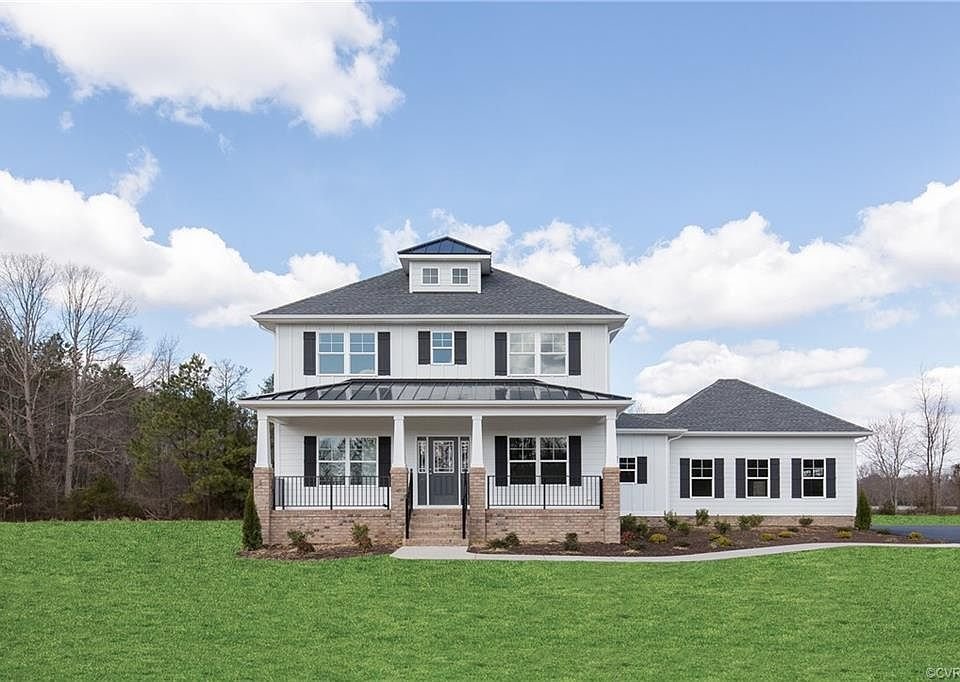

A $375,000 Tampa rental purchased with a $300,000 DSCR loan at 80% LTV can qualify on $2,700 monthly market rent against a $2,100 monthly PITIA payment. That produces a 1.29 DSCR ($2,700 ÷ $2,100) and $600 per month in property-level cash flow before repairs, vacancy, and management. Hold that spread for five years and the property produces $36,000 in gross cash flow, before rent growth, principal reduction, or appreciation. That is the practical answer to how to qualify using rental cash flow: make the property carry its own debt service.
By Duane Buziak, NMLS #1110647
DSCR financing is not conventional underwriting with a different label. A conventional file starts with your W-2, tax returns, debt-to-income ratio, and employment history. A debt service coverage ratio loan starts with the asset: verified market rent compared with the proposed principal, interest, taxes, insurance, and association dues.
Table of Contents
- The DSCR calculation that drives approval
- How to qualify using rental cash flow at different leverage levels
- Rent comps, reserves, and documentation
- DSCR broker access versus one-product lending
- Current investor lending conditions
- FAQ
The DSCR Calculation That Drives Approval
The base formula is simple:
DSCR = monthly qualifying rent ÷ monthly PITIA payment
A 1.00 ratio means rent exactly covers the debt payment. At 1.20, the property produces 20% more rent than debt service. At 0.90, rent covers 90% of the payment and the investor may need a lower loan amount, a larger down payment, a rate adjustment, or a program built for lower DSCR.
For the Tampa example, assume a $300,000 30-year loan with an estimated $1,950 principal-and-interest payment, $250 in taxes, $125 in insurance, and no HOA. Total PITIA is $2,325, not $2,100. If the appraiser-supported market rent is $2,700, the actual qualifying ratio is 1.16. The deal may still be strong, but this is why serious investors calculate the full housing expense before writing an offer.
Many DSCR investors prefer 1.00 to 1.25 DSCR at 75% to 80% LTV. Some wholesale programs allow up to 85% LTV for a stronger ratio, and select purchase programs can reach 90% financing when the property, borrower profile, reserves, and pricing all support it. Higher leverage generally means a higher rate, more points, a lower maximum loan amount, or all three.
A practical target is 1.20 DSCR at your projected loan terms. It gives breathing room if insurance rises, taxes reset after purchase, or a rent estimate comes in below the number you expected. It is not the only path to approval, but it is the path that keeps your portfolio from becoming rate-sensitive the moment operating costs move.
How to Qualify Using Rental Cash Flow at Different Leverage Levels
Your offer price, down payment, rate selection, and rent evidence work together. Investors often make the mistake of treating DSCR as a pass-or-fail metric. It is really a sizing tool.
If a property rents for $2,400 per month and the DSCR program requires 1.00 coverage, total PITIA generally needs to stay at or below $2,400. If the program wants 1.20 coverage, keep PITIA near $2,000. That $400 difference can determine whether you use 80% LTV, bring another 5% down, accept a slightly higher rate, or negotiate the purchase price lower.
For a Richmond duplex, suppose each unit rents for $1,450, creating $2,900 in total monthly rent. At a 1.15 DSCR threshold, the target maximum PITIA is $2,522. If the proposed payment is $2,690, the file is not automatically dead. A broker can test a lower LTV, an interest-only period where available, another fixed-rate option, or a different investor whose DSCR calculation and reserve policy better fit the asset.
That access matters. A broker is not limited to one institution’s credit box. Investors Paradise places DSCR and business-purpose files through a wholesale investor network, matching leverage, property type, entity structure, and time-to-close requirements to the actual deal.
Rent Comps, Reserves, and Documentation
The appraiser’s market-rent conclusion often controls the qualifying income, not the rent you hope to collect. For a vacant property, expect a market-rent schedule and comparable listings to matter. For an occupied property, an executed lease and documented deposits can strengthen the file, though each investor has its own rules.
Use three credible rent comps before making an offer. Match bedroom count, property condition, parking, neighborhood, and whether utilities are included. A renovated three-bedroom in Tampa may command $2,700 while an unrenovated nearby three-bedroom supports only $2,250. Underwriting will not give full credit for a premium rent without evidence.
Zillow Observed Rent Index data is useful as a market-level check, but a DSCR approval is driven by property-specific rent support. Source: Zillow Research, Zillow Observed Rent Index. Pair broad market data with current local listings, an appraiser’s rent schedule, and signed leases when available.
Reserves are the next pressure point. A common range is three to six months of PITIA for one-to-four-unit rentals, while larger loan balances, lower DSCR, short-term rentals, cash-out refinances, and portfolios can require six to 12 months. On a $2,400 PITIA payment, six months of reserves equals $14,400. Those reserves may be held in personal or business accounts depending on the program and entity structure.
Closing costs commonly land around 2% to 5% of the loan amount, including appraisal, title, escrow, lender fees, prepaid items, and points where applicable. On a $300,000 loan, that is roughly $6,000 to $15,000 before seller credits. A no-out-of-pocket closing option can sometimes be structured through pricing or credits, but it does not make costs disappear. It changes where they are paid.
DSCR Broker Access Versus One-Product Lending
| Decision point | Single-product approach | Brokered DSCR approach | Investor impact |
|---|---|---|---|
| DSCR lender access | One credit box and one rent policy | Multiple wholesale DSCR investors | More options when ratio or property type is tight |
| LTV tiers | Often limited to standard leverage | Commonly 75%-80%, with select 85%-90% programs | Down payment can be balanced against cash flow |
| Rate and leverage tradeoff | Few ways to restructure terms | Compare rate, points, prepayment terms, and LTV | Choose the cost structure that fits the hold plan |
| Close speed | Process can be rigid and slower | Clean files may target 7-10 day closings | More credibility with sellers and agents |
| Title costs | Varies by provider | Duane’s preferred Title Company saves an additional $2,000 on average | Lower transaction friction on qualifying deals |
Current Investor Lending Conditions
Investor appetite remains active for stabilized one-to-four-unit rentals, especially properties with documented rents, clean insurance history, and DSCR above 1.00. The tradeoff is pricing discipline. As rates and bond-market spreads move, DSCR pricing can change quickly, and high-LTV or lower-ratio files receive the sharpest adjustments.
Expect rates, points, and prepayment terms to be evaluated together. A lower note rate may carry points or a longer prepayment penalty. A higher rate can preserve liquidity through lower upfront costs. For a BRRRR operator planning a refinance after stabilization, flexibility may be more valuable than squeezing out the lowest possible note rate on day one.
This is also where a soft credit pull mortgage review creates an advantage. A soft pull mortgage broker can review the profile without the damage of a hard inquiry when program fit is still being tested. That is different from a final approval, which may require a full credit review, but it gives investors a no hard inquiry mortgage pre approval path before they commit to a deal.
Fix & Flip, ground-up construction, and multifamily loans do not replace DSCR financing. They feed it. Buy the distressed asset with short-term capital, execute the scope, stabilize rents, then use a DSCR cash-out refinance or long-term rental loan to recycle capital. The exit must be underwritten before the acquisition closes.
FAQ
Can I qualify for a DSCR loan without W-2 income?
Often, yes. DSCR underwriting primarily evaluates rental income versus PITIA, although credit, liquidity, experience, and property eligibility still matter.
What DSCR ratio do I need?
Many programs target 1.00 to 1.25. Stronger ratios can support better leverage or pricing, while lower ratios usually require stronger compensating factors.
Does projected rent count on a vacant property?
It can. The appraiser’s market-rent schedule and comparable rentals typically establish qualifying rent for a vacant long-term rental.
Can I buy in an LLC?
Yes. Many DSCR programs are LLC-friendly, though personal guarantees and entity documentation are commonly required.
How much down payment should I expect?
Plan for 20% to 25% on many standard DSCR purchases. Higher leverage up to 85% or select 90% programs may be available with stronger qualifications and adjusted pricing.
Are reserves required for investment property financing?
Usually. Three to six months of PITIA is common, and six to 12 months may apply to larger, lower-DSCR, or portfolio transactions.
Will a soft pull hurt my credit?
A soft credit pull mortgage review generally does not create a hard inquiry. Confirm the process before authorizing credit access.
How fast can a DSCR loan close?
A complete, appraisal-ready file can sometimes close in 7-10 days. Insurance, title, appraisal timing, entity documents, and property complexity can extend that timeline.
The investor who wins more deals is not always the one offering the highest price. It is the one who knows the rent, sizes the debt correctly, protects reserves, and has the exit lined up before the contract is signed.
Legal Disclaimer: This article is for educational purposes only and is not a commitment to lend, a loan approval, legal advice, tax advice, or investment advice. Terms, rates, LTV limits, DSCR requirements, reserves, fees, property eligibility, and closing timelines vary by borrower, property, investor program, market conditions, and underwriting. All loans are subject to credit and collateral approval.
Duane Buziak, Mortgage Maestro | NMLS: 1110647 | Licensed in VA · FL · TN · GA · DC | UWM PRO ELITE 2025 | UWM Top 20 Purchase LO Virginia 2025 | UWM Speed to Close Industry Leading 2025 | Scotsman Guide Top Originator 2025 & 2026 | VA Broker of the Year 2024-2025 | Top 1% Nationwide | Coast2Coast Mortgage | DuaneBuziakMortgageMaestro.com | duane@coast2coastml.com | (804) 212-8663