
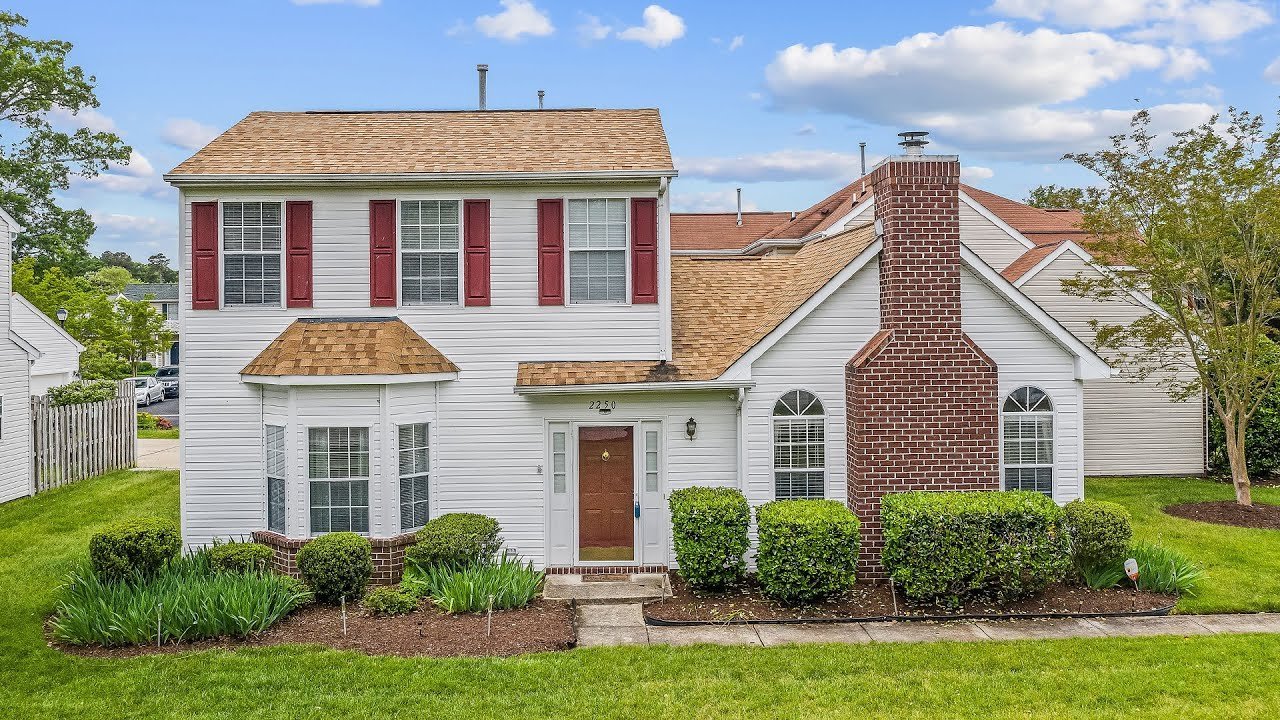

A Tampa investor buys a $300,000 two-bedroom condo for a long-term rental, puts 25% down, and finances $225,000 with a 30-year DSCR loan at 7.25%. Principal and interest is about $1,535 per month. Add $340 in taxes, $95 in insurance, and a $410 HOA payment, and the qualifying monthly property expense is $2,380. At $2,800 monthly rent, the debt service coverage ratio is 1.18. That leaves $420 monthly before maintenance, vacancy, and management – or $25,200 across five years. Add roughly $12,700 in scheduled principal reduction, and the five-year impact is approximately $37,900 before appreciation.
So, can DSCR loans fund condos? Yes – when the unit, the HOA, the insurance profile, and the rental income all fit the specific DSCR program. Condos are financeable, but they are not interchangeable with detached rentals. A strong rent number can still lose to a weak condo project, a restrictive lease policy, an unbudgeted special assessment, or an HOA payment that pushes DSCR below the program minimum.
Duane Buziak, NMLS #1110647 works these issues upfront through a wholesale investor network, not a single-product shop. The objective is simple: qualify the asset on its rental performance, preserve leverage where the numbers support it, and identify deal-killing condo restrictions before appraisal and underwriting consume the contract period.
Table of Contents
- Why condos qualify differently under DSCR
- The condo numbers that determine approval
- DSCR loan leverage, rates, and closing speed
- Project-level risks that can stop funding
- A Tampa condo underwriting example
- How to structure the offer and prequalification
- Frequently asked questions
Why DSCR Loans Can Fund Condos
A debt service coverage ratio loan is investment property financing that evaluates whether rent supports the property payment. Personal tax returns, W-2 income, and debt-to-income ratios are often not the center of the decision. The core calculation is monthly qualifying rent divided by the program’s qualifying monthly housing expense.
For a condo, that expense usually includes principal, interest, property taxes, insurance, and HOA dues. Some capital sources also scrutinize lease-up costs, master insurance deductibles, special assessments, litigation, and owner-occupancy inside the project. That is why a condo with a 1.25 DSCR can be weaker than a single-family rental at 1.05 if the condo association has unresolved financial problems.
Most DSCR programs target a minimum ratio around 1.00 to 1.20, depending on credit, loan size, occupancy type, short-term-rental policy, and leverage. A ratio of 1.00 means rent equals the qualifying payment. Higher ratios usually create better pricing or allow more leverage. A lower-ratio option may exist, but it generally costs more in rate, points, or required equity.
The rental figure can come from an appraiser’s market-rent schedule, an executed lease, or a specialized short-term-rental analysis where the program permits it. For a Tampa two-bedroom condo, current asking-rent comparisons commonly run from roughly $2,350 to $2,800 depending on location, parking, amenities, and waterfront access. Zillow and Realtor.com listings are useful screening tools, but the appraiser’s supported rent is the figure that drives the final file.
The Condo Numbers That Determine Approval
The first number is the HOA dues. Investors sometimes underwrite a $2,500 rent against a $1,800 mortgage payment and call the deal a 1.39 DSCR. If the HOA is $450 and the remaining taxes and insurance add $325, the actual qualifying expense is $2,575. The real ratio is 0.97, and the deal has changed completely.
The second number is leverage. A clean, warrantable-style project with a 1.20-plus DSCR may support 75% to 80% loan-to-value, subject to the wholesale program, credit profile, loan balance, and reserves. At 70% to 75% LTV, more condo options and better rate structures often appear. Above 80% LTV, options narrow quickly, and a lower rate is rarely the right priority if the property barely cash flows.
Reserves matter too. A common requirement is six months of the full housing payment for one financed investment property, with additional reserves for multiple financed rentals or lower DSCR. On the worked example, six months of $2,380 equals $14,280. Reserves are usually verified assets, not necessarily cash spent at closing.
Current investor lending conditions remain competitive, but the best execution is not automatically the lowest advertised rate. In August 2026, quoted DSCR note rates often vary from the mid-6% range into the 8% range based on LTV, DSCR, credit, prepayment terms, condo type, and whether the property is long-term or short-term rental. Wholesale investor appetite is strongest for stabilized rentals with documented market rent, clean HOA documents, and conservative leverage.
DSCR Condo Funding Compared With One-Source Financing
| Decision point | Brokered DSCR approach | Single-source program approach |
|---|---|---|
| Funding-source access | Multiple wholesale DSCR investors can be matched to condo policy, rental strategy, and leverage. | One program’s condo restrictions control the outcome. |
| LTV tiers | Commonly 70% to 80% for stronger files, with options based on DSCR and project review. | May cap leverage earlier when condos fall outside its preferred profile. |
| Rate and leverage tradeoff | Compare lower-rate, lower-LTV options against higher-leverage structures and points. | Limited ability to trade structure for a better overall deal. |
| Close speed | Well-documented files can target 7 to 10 business days after appraisal and HOA items are ready. | Timing depends on one underwriting queue and one condo-review process. |
| Entity structuring | LLC vesting is commonly available for business-purpose rentals. | Entity rules may be more restrictive or require a later transfer. |
Project-Level Risks That Can Stop a Condo Deal
The unit is only half the collateral. The association is the other half. Start by requesting the HOA budget, current dues, insurance declarations, rental rules, special-assessment history, litigation disclosure, and any pending capital projects. A $15,000 assessment for roofing or structural work can erase the benefit of a high-LTV loan even if the appraisal value is strong.
Rental restrictions deserve the same attention. Some associations require annual leases, impose waiting periods before leasing, limit the number of rental units, or prohibit short-term occupancy. Do not build a DSCR strategy around projected nightly revenue until the association documents say that use is allowed and the selected program accepts it.
Insurance is another pressure point. Coastal Florida condos can carry large master-policy deductibles, changing premiums, and HOA budget volatility. The Federal Housing Finance Agency tracks broader housing-finance conditions, but investors should use the project documents and the actual insurance quote for transaction-level underwriting. If the HOA is underinsured, the broker needs to know before locking a structure around a payment that will not survive final review.
Tampa Example: Make the Offer Match the Financing
Return to the $300,000 Tampa condo. The investor has $75,000 for down payment, $14,280 in reserves, and approximately $9,000 to $13,500 for closing costs, prepaid items, appraisal, and any points selected. The lease market supports $2,800, but the appraiser comes in at $2,700. The ratio becomes $2,700 divided by $2,380, or 1.13.
That is still workable in many 75% LTV DSCR structures, but it is not the same file as the original 1.18 ratio. If the HOA rises by $100, DSCR falls to about 1.09. The investor can respond by increasing the down payment, negotiating the price, accepting a different rate or prepayment structure, or choosing a unit with lower dues. This is why experienced investors underwrite condos with a margin, not with a spreadsheet that works only at the top rent comp.
A soft credit pull mortgage review can establish likely pricing and leverage without forcing a hard inquiry at the first conversation. That no hard inquiry mortgage pre approval process is particularly useful when an investor is comparing multiple condos, because the association documents and rent assumptions may change from building to building. A mortgage pre approval without hard pull is not a final approval, but it gives you a credible acquisition range before making offers.
Use the Condo Purchase to Build the Next Deal
A condo DSCR loan can be the entry point to a larger investor relationship. After stabilization, a cash-out refinance may recover capital if value and rent support it. For a BRRRR operator, the same brokerage relationship can extend to purchase, rehab funding, refinance, and the next acquisition. Fix and flip, ground-up construction, and multifamily financing require different underwriting, but the discipline remains the same: match the capital structure to the property’s business plan before you sign the contract.
The cleanest condo files arrive with the purchase contract, lease or rent comps, HOA contact information, dues amount, insurance details, entity documents if applicable, and liquidity statements. That preparation is what protects a 7-to-10-day close target. It also gives the broker room to compare DSCR investors instead of trying to force a condo into the first available program.
Frequently Asked Questions
Can DSCR loans fund condos in an LLC?
Yes. Many business-purpose DSCR programs permit LLC vesting, usually with a personal guaranty and entity documentation. Exact eligibility depends on the selected program and state requirements.
What DSCR ratio is needed for a condo?
Many programs look for 1.00 to 1.20 or higher. Better ratios generally improve pricing, leverage, or both.
Are HOA dues included in DSCR calculations?
Usually, yes. HOA dues are commonly part of the qualifying monthly property expense, which is why they can materially reduce borrowing power.
Can a DSCR loan finance a short-term-rental condo?
Potentially, if both the HOA and the selected DSCR program allow short-term rentals. Confirm the association rules before relying on projected revenue.
How much down payment is typical?
A 20% to 30% down payment is common. Strong files can reach higher leverage, while lower DSCR, larger balances, or condo complexity can require more equity.
Do DSCR condo loans require reserves?
Yes, often six months of qualifying payments, with more required for multiple financed properties or riskier leverage tiers.
How fast can a condo DSCR loan close?
A prepared file can target 7 to 10 business days after appraisal and HOA documentation are available. Condo-project review can extend that timeline.
Does a soft pull guarantee final approval?
No. A soft pull mortgage broker review is a preliminary qualification tool. Final approval depends on appraisal, title, HOA review, assets, insurance, and full program underwriting.
Legal disclaimer: This material is for educational purposes only and is not a commitment to lend, an approval, legal advice, tax advice, investment advice, or a guarantee of terms. Loan programs, rates, fees, DSCR requirements, LTV limits, reserve requirements, and property eligibility can change without notice. All loans are subject to credit, appraisal, title, asset, insurance, occupancy, entity, and underwriting approval. Investors should consult their attorney, tax professional, insurance advisor, and real estate professionals before making an investment decision.
A condo can be an efficient cash-flow acquisition when the rent, HOA, project documents, and leverage all agree. Get the HOA package and real rent comps first, then size the DSCR loan around the numbers that will still work after underwriting gets involved.
Duane Buziak, Mortgage Maestro | NMLS: 1110647 | Licensed in VA · FL · TN · GA · DC | UWM PRO ELITE 2025 | UWM Top 20 Purchase LO Virginia 2025 | UWM Speed to Close Industry Leading 2025 | Scotsman Guide Top Originator 2025 & 2026 | VA Broker of the Year 2024-2025 | Top 1% Nationwide | Coast2Coast Mortgage | DuaneBuziakMortgageMaestro.com | duane@coast2coastml.com | (804) 212-8663