
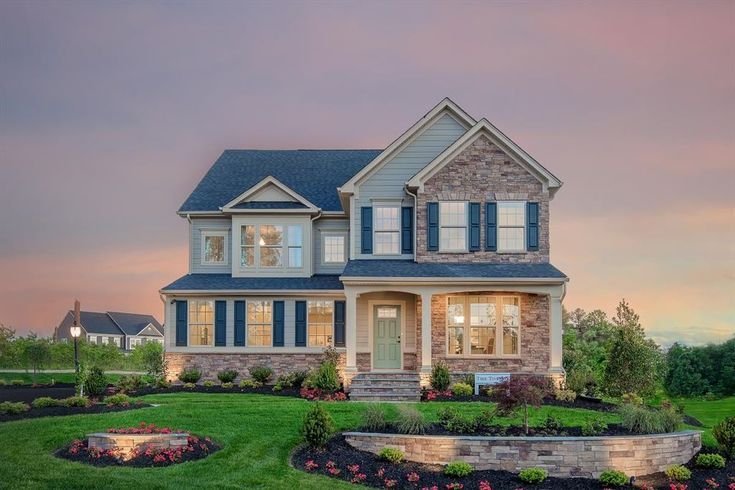

A Richmond investor buys a $400,000 duplex with a $320,000 DSCR loan at 80% LTV. At 8.25% on a 30-year fixed term, principal and interest is about $2,403 monthly; add $522 for taxes and insurance, and the qualifying payment is $2,925. With documented market rent of $3,500, the debt service coverage ratio is 1.20, leaving $575 monthly before maintenance and vacancy. Over five years, that is $34,500 in pre-maintenance cash flow plus roughly $13,000 in principal reduction. That math is why hard money versus bridge loans is not just a rate question. It is a question of whether the property has a credible rental exit.
By Duane Buziak, NMLS #1110647
Table of Contents
- What separates hard money from bridge loans
- The numbers: cost, leverage, and speed
- When hard money fits a deal
- When a bridge loan fits a deal
- Build the DSCR refinance exit first
- FAQs for investors
What Hard Money Versus Bridge Loans Really Means
Hard money and bridge loans are often marketed as different products, but there is substantial overlap. Both are short-term, business-purpose financing tools built for investors who need speed, asset-based underwriting, renovation capital, or a fast path to acquisition before permanent financing is available.
The practical distinction is usually the deal profile. Hard money is commonly the more aggressive option for a distressed property, a heavy rehab, a first-time flip, or an acquisition where the as-is condition prevents conventional or DSCR financing. It is generally underwritten against the purchase price, renovation scope, after-repair value, sponsor liquidity, and execution track record.
A bridge loan is usually more appropriate when the asset already has a defined stabilization event ahead: lease-up, cosmetic repositioning, inherited-tenant cleanup, a delayed sale, or a refinance into a DSCR loan. Bridge capital can still fund rehab, but its pricing and leverage often improve when there is meaningful in-place value, a cleaner property condition, and a straightforward exit.
The label is less important than the capital stack. A broker should identify the acquisition basis, rehab dollars, ARV, realistic rent, cash reserves, and refinance path before selecting the short-term product.
The Numbers: Cost, Leverage, and Speed
| Decision point | Hard money | Bridge loan | What it means for the investor |
|---|---|---|---|
| Best use | Heavy rehab, distressed acquisition, fast flip | Stabilization, lease-up, short hold before refinance | Match the loan to the business plan, not the marketing label. |
| Leverage tiers | Often 80%-90% of purchase plus rehab coverage, subject to ARV limits | Commonly 70%-80% of current value or cost, with higher leverage for strong files | More leverage usually means more points, a stronger guarantor profile, or lower proceeds elsewhere. |
| Rate and points | Often about 10.5%-14.5%, plus 2-4 points | Often about 8.5%-12.5%, plus 1-3 points | Rates move with leverage, asset condition, credit, reserves, and market appetite. |
| Close speed | Commonly 7-10 business days on a clean file | Often 10-21 days, though experienced sponsors can move faster | Speed depends on appraisal, title, insurance, entity documents, and scope review. |
| DSCR lender access | Usually an exit strategy, not the initial loan | Frequently designed around a future DSCR refinance | A broker can shop multiple wholesale DSCR investors instead of one institution’s single program. |
| Closing-cost planning | Points, interest reserves, draw fees, title, appraisal | Points, interest reserves, title, appraisal, possible extension fees | Duane’s preferred Title Company saves an additional $2,000 on average, subject to transaction details and availability. |
A 12-month hard money loan at 12.5% with three points can be entirely rational if it captures a $75,000 renovation spread and protects a time-sensitive purchase. It is a poor fit when the investor expects to hold for two years but has no rent-ready refinance plan. The expensive loan is not always the one with the higher rate. The expensive loan is the one that forces an extension, a rushed sale, or a capital call.
Current investor lending conditions reward clean exits. Wholesale capital remains available for strong single-family rentals, 2-4 unit properties, and seasoned operators, but higher-leverage files face closer scrutiny on insurance, liquidity, renovation budgets, and rent support. For many well-qualified DSCR borrowers, 75%-80% purchase leverage remains a workable tier, while 85% or higher leverage can carry materially higher pricing or stricter reserve requirements.
When Hard Money Is the Better Tool
Use hard money when condition is the obstacle. A property with a failed kitchen, water damage, missing flooring, or a vacant shell may not qualify for a long-term rental loan on day one. A hard money structure can finance acquisition and rehabilitation, then allow the investor to refinance after the property is safe, rentable, and appraised at its improved value.
Consider a Tampa BRRRR purchase at $250,000 with a $70,000 renovation and a projected $410,000 ARV. If a program funds 85% of purchase and 100% of rehab, the investor can control the project with $212,500 toward acquisition and $70,000 in rehab proceeds, subject to an ARV cap. The underwriting focus is not a W-2. It is whether the scope, contractor budget, timeline, ARV comps, and reserves support the business plan.
Hard money is also useful when the seller needs certainty. A 10-day close with proof of funds can beat a higher offer tied to a 30-day conventional financing contingency. But speed does not excuse bad math. Budget a realistic contingency, often 10%-15% of rehab, and calculate at least one extension scenario before signing the contract.
When a Bridge Loan Is the Better Tool
Bridge financing works best when the asset has value today but needs a short period to become financeable at better long-term terms. Think of a Virginia Beach fourplex that is structurally sound but under-rented, a small multifamily property awaiting completed leases, or a clean rental that needs $25,000 of turnover work before stabilization.
The bridge borrower should know exactly what creates the exit: signed leases, completed repairs, market rents, seasoning, or an appraisal supported by closed sales. A vague promise that values will rise is not an exit plan.
For rental investors, bridge should be paired with DSCR analysis immediately. Many DSCR programs look for a ratio of 1.00 to 1.20 or higher, depending on the property, credit profile, LTV, and program. Fannie Mae’s conventional investment-property guidance also illustrates why rental underwriting is documentation-heavy, including reserve requirements that can increase with multiple financed properties. Review the applicable guidance at https://selling-guide.fanniemae.com/sel/b3-4.1-01/minimum-reserve-requirements.
Build the DSCR Refinance Exit First
A DSCR loan qualifies primarily on the property’s rental income rather than your personal debt-to-income ratio. That makes it a practical permanent-financing exit for investors using LLC-friendly structures, growing portfolios, or reinvesting business cash flow. It does not mean no underwriting. Credit, LTV, property type, insurance, title, reserves, and rent evidence still matter.
On the Richmond duplex example, $3,500 rent divided by $2,925 PITIA equals a 1.20 DSCR. If rents only appraise at $3,150, the ratio drops to 1.08. That may still fit some programs, but likely with a lower maximum LTV, higher rate, or more reserves. Build the deal to survive conservative rent, not optimistic rent.
For local context, Zillow’s rental data is a useful first-pass benchmark, but underwriting relies on the appraisal’s market-rent conclusion or eligible lease documentation. Investors can review Richmond rental trends at https://www.zillow.com/rental-manager/market-trends/richmond-va/. A broker should compare that broad market signal against the actual bedroom count, condition, school zone, parking, and competing rental inventory around the subject property.
Before choosing either short-term loan, answer four questions in writing: What is the realistic stabilized rent? What payment will the DSCR refinance use? How much cash remains after down payment, rehab, and closing? What happens if the project takes 90 days longer? Those answers determine whether leverage is productive or dangerous.
A soft credit pull mortgage review can give an investor early visibility without damaging credit. A no hard inquiry mortgage pre approval is especially useful when you are comparing a hard money purchase structure, bridge terms, and a permanent DSCR loan before making offers. The goal is not merely a fast approval. It is a capital plan that survives underwriting and protects the next acquisition.
Frequently Asked Questions
Is hard money the same as a bridge loan?
No. Both are short-term investor loans, but hard money usually targets heavier rehab or distressed assets, while bridge loans more often support stabilization and a defined refinance or sale event.
Which costs less, hard money or bridge financing?
Bridge financing often costs less when the property is in better condition and the exit is clear. Hard money may cost more because it takes on renovation, condition, and execution risk.
Can I use hard money for a BRRRR project?
Yes. Many BRRRR operators use hard money for purchase and rehab, then refinance into a DSCR loan once repairs and market rents support the payment.
What DSCR do I need to refinance a bridge loan?
A 1.00 to 1.20 ratio is a common target range, but the exact threshold varies by wholesale investor, LTV, credit, property type, and reserve profile.
Can an LLC get a DSCR loan?
Often, yes. DSCR and other business-purpose investment property financing can commonly be structured in an LLC, subject to program requirements and personal-guarantee terms.
How much cash reserve should I keep?
Plan for down payment, closing costs, renovation contingency, carrying costs, and several months of payments. Six months of PITIA is a prudent benchmark for many investors, even when a program requires less.
Are rates fixed on bridge and hard money loans?
Many short-term loans use fixed note rates for their initial term, but terms vary. Always confirm extension pricing, default interest, draw fees, and prepayment provisions before closing.
Can I get a mortgage pre approval without hard pull?
A soft pull mortgage broker review may provide early qualification guidance without a hard inquiry. Final underwriting can still require a full credit report and complete documentation.
The best financing choice is the one that lets you buy decisively, finish on budget, and refinance from strength rather than urgency. Run the exit numbers before you submit the offer.
Legal disclaimer: This article is for general educational purposes only and is not a commitment to lend, a rate quote, legal advice, tax advice, or investment advice. Loan programs, rates, LTV limits, DSCR requirements, fees, reserves, and eligibility are subject to change and final underwriting. Business-purpose DSCR financing availability varies by state, property type, borrower profile, and wholesale investor guidelines.
Duane Buziak, Mortgage Maestro | NMLS: 1110647 | Licensed in VA · FL · TN · GA · DC | UWM PRO ELITE 2025 | UWM Top 20 Purchase LO Virginia 2025 | UWM Speed to Close Industry Leading 2025 | Scotsman Guide Top Originator 2025 & 2026 | VA Broker of the Year 2024-2025 | Top 1% Nationwide | Coast2Coast Mortgage | DuaneBuziakMortgageMaestro.com | duane@coast2coastml.com | (804) 212-8663